How to treat protruding eyes in parrot fish? Hangtai Aquarium shares methods
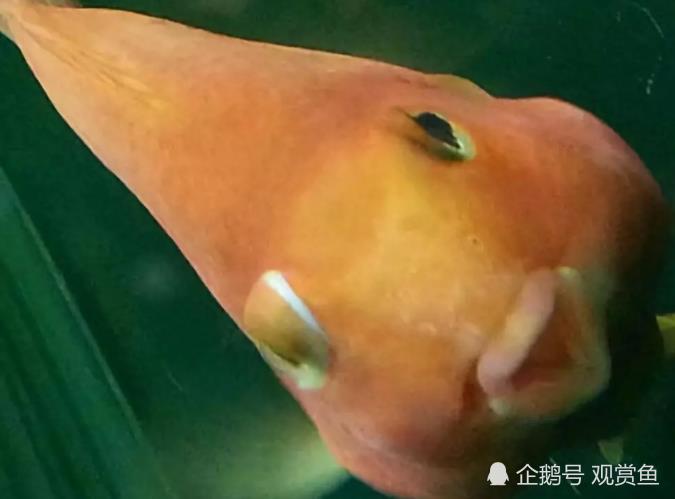
Parrot fish are a relatively common ornamental fish, easy to keep, with bright red body color, and very popular with the public. However, improper operation during the raising process can trigger diseases, the most common being head rot, white spot disease, and exophthalmos. So today let's talk about treatment measures for parrot fish suffering from exophthalmos.
The early stage of exophthalmos is not obvious, and if you do not observe carefully it is really hard to notice. Later, when it becomes slightly more serious, the left and right eyes differ in size, or even become clouded. If you find such a situation, you must not blindly use medication. Think back a little: what measures did you take earlier that caused the fish's eyes to protrude? This is very key. Did you change the water? Change the filter media? Add new fish? Understand the cause clearly, check the symptoms, and then treat it in a targeted way.
I.Causes
1. The eye membrane is injured and invaded by Mycobacterium tuberculosis and Vibrio.
2. Poor water quality or nitrogen gas entering the fish body.
3. Swollen eyeballs can be caused by many reasons: white spot disease, edema, parasitic cataract (caused by various flukes, such as Diplostomum) and bacterial infection.
After understanding the causes, check the symptoms.
II. Symptoms of infection
1. One or both eyes of the fish become covered with a cloudy film and show a whitish appearance. The fish may show signs of stress, and the body color may be abnormal, or they may behave just like normal fish.
2. In the initial stage, the eye membrane shows a white cloudy phenomenon, the eyeball is turbid, mostly in one eye.
3. In severe cases, the eye swells and grows white cotton-like conical matter.
III. Treatment methods
Confirm the problem, identify the cause, and treat as soon as possible to prevent harm to the nervous system.
1. Bacterial infection
For treatment, first change one third of the water, and add an appropriate amount of coarse salt to raise the temperature and observe whether there is improvement. If there is no improvement, first disinfect the fish tank with methylene blue, then use yellow powder for a medicated bath. If the eyeball is turbid, recovery is slower, and it will take about three to five months to be treated. If the swelling disappears, the dosage can be reduced or stopped.
2. Caused by poor water quality
First strengthen water quality and filtration efficiency. Antibiotics can be used for treatment: put 3 tablets of oxytetracycline per 100 liters of water, change 1/3 of the water every day and replenish the medication. Medication for 5~7 days can bring improvement. Or apply erythromycin eye ointment to the affected area 2~3 times a day until the condition improves.
3. Salt bath
Prepare a sufficient amount of coarse salt (special aquarium salt). When changing water, add coarse salt at five thousandths. The method is to drain one quarter of the water (at most one third can be drained). At this time the amount of water in the tank is relatively small. Calculate how many tons the water volume is at this time, and multiply by five thousandths to get how many kilograms of coarse salt to add. It is best to sprinkle the salt into the upper filter compartment, and do not interrupt the filtration cycle and aeration.
This is what we call a salt bath. After one hour, fill the tank with water. As long as the temperature difference is basically the same, it does not necessarily need to be sun-dried. Generally I mix hot water from the water heater with cold water and then pour it into the fish tank. Operate this way once every two days. For example, if you change the water and add salt today, repeat it the day after tomorrow. Then by the third time the swollen eyes will basically disappear. The fourth time there is no need to add salt again. If it still has not recovered, continue repeating. To stabilize water quality, the feeding amount should be halved. It should be noted that this should not be confused with head holes. Some fish have eye swelling caused by ulceration of head holes, which can be distinguished. Once the head holes are treated, the eye swelling will disappear. Although salt has a very good anti-inflammatory effect, too much will irritate the affected area and easily cause discomfort to the fish. If the dosage cannot be controlled well, do not try it easily.
The above is not an official treatment method. If everyone has better treatment methods, you are welcome to give advice. We will humbly learn. Thank you. I hope the above can help everyone.