How to find orchids in the mountains? Learn these few points and you won't come back empty-handed
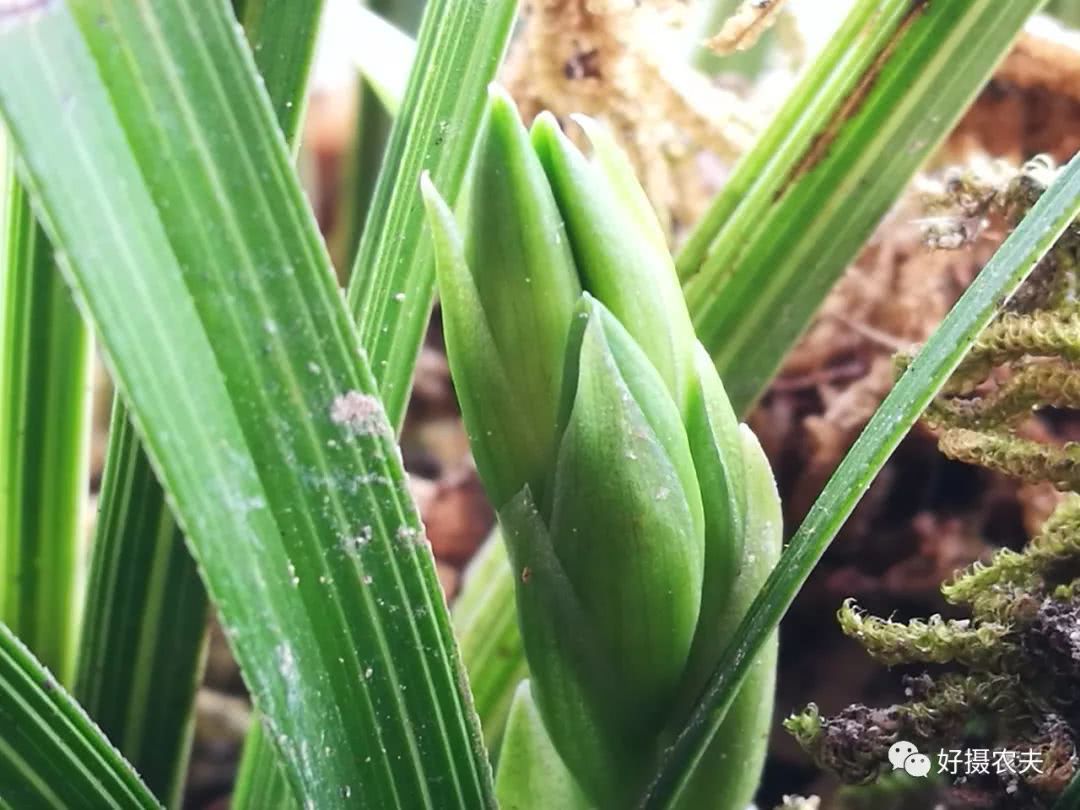
Wild orchids are increasingly loved by orchid enthusiasts. City friends gaze at orchids and sigh, while orchid enthusiasts in rural areas and suburbs look for opportunities to go up the mountains to find orchids, just to find one orchid they like. Finding wild orchids requires some experience, otherwise even if you enter a treasure mountain you will go home empty-handed.
Before going up the mountain, look at the tree species on the mountain. If it is a Chinese fir forest or a shrub forest, then there is no need to climb, because even if you tire yourself into a dog you will not find a single orchid leaf. Orchids like to grow under pine forests and broadleaf forests. The shrubs must not be too dense. Overly dense shrubs affect the ventilation of orchids, so no orchids will grow in these forests.
It is best if the mountain range runs north-south; on the slope facing east it is relatively easy to find good orchids. Because the morning dew on the east-facing side dries quickly, and in summer the sunlight reaches behind the mountain in the afternoon. In the morning the orchids photosynthesize fully, the orchid plants can accumulate more nutrients, and the flowers bloom with a stronger fragrance. Orchids like this kind of environment. Although orchids may also be found facing north and west, there are relatively few, and the flower quality and fragrance are also not very good. The Cymbidium goeringii in the picture above is under a broadleaf forest. In winter, after the leaves have all fallen, the light transmittance is very good, while in summer it is shaded by green shade and exceptionally cool.
If there are places on the mountain slope shaped like an "eagle beak protrusion" or "forehead protrusion," good orchids are likely to be there. Because these places have better ventilation and the soil is relatively dry and refreshing. The orchid clumps found are mostly clumps of several dozen shoots, and the flower buds produced may even number several dozen or up to a hundred.
On both sides of mountain streams there are often good Cymbidium goeringii, but Cymbidium faberi rarely grows in these places. This is because Cymbidium goeringii likes humid environments more than Cymbidium faberi. This kind of humid environment plus fertile humus soil means the leaf shape of Cymbidium goeringii is mostly very attractive, and there are even broad-leaved dwarf varieties, and the flower quality is not bad either. The Cymbidium goeringii in Figure 2 is a twin-flower, and Good Photography Farmer found it on an eagle-beak rock beside a mountain stream.
Cymbidium faberi prefers places with good ventilation, and its requirement for environmental humidity is not as high as that of Cymbidium goeringii. In places with denser tree shade, the Cymbidium faberi found has relatively plump and strong flower stalks, while in places with poor tree shade (high light transmittance), the Cymbidium faberi found has a greater number of flower stalks and a more lasting fragrance. It can thus be seen that sunlight is a natural fragrance enhancer for orchids. The Cymbidium faberi in the picture above was found on a mountain slope 5 m down from the summit.
Wild orchids have been listed as nationally protected plants. Good Photography Farmer takes orchid enthusiasts into the mountains only to appreciate the beauty of orchids, so by no means dig them up without authorization.