The five major schools of Chinese bonsai each have their own characteristics - who comes out on top?
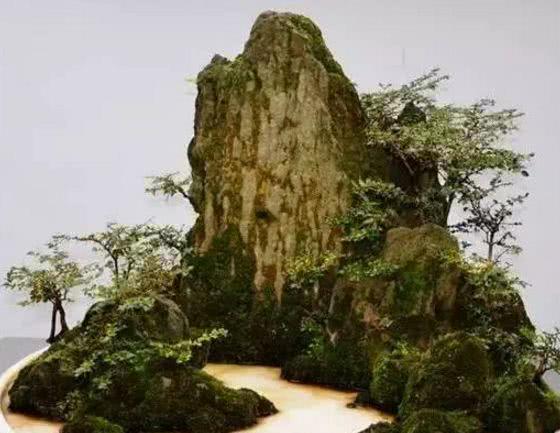
There are many bonsai schools in China, with five traditional factions: 1 the Lingnan school represented by Guangzhou, 2 the Sichuan school represented by Chengdu, 3 the Su school represented by Suzhou, 4 the Yang school represented by Yangzhou, 5 the Shanghai school represented by Shanghai. Let's take a detailed look at them:
The Guangdong bonsai, which is garden-centered, is called the Lingnan school because of its location in Lingnan. Under the influence of the Lingnan Painting School, during the formation of the Lingnan Bonsai Academy, the Lingnan Painting School formed a unique composition based on "pruning and branching", creating a "quite gorgeous, elegant, and bold" character. The themes of creation are either natural or based on paintings. They created tree bonsai with distinctive local characteristics, such as the Xiumao Xiongqi tree, the tall Fushu, wild and natural, and the short, dry, dense and leafy.
Sichuan bonsai has a strong regional character and style. Its tree bonsai: displays the characteristics of Qiuqu and Canggu Xiongqi, embodying the spiritual connotation of suspended roots, claws and large trees. The emphasis is placed on the rhythm and cadence of shaping and production, with brown silk and flat shoes as the main parts, and clipping and binding integrated into one. Its landscape bonsai: displays the magnificence and danger of the Bayu landscape. It has the basic principles of "rising, downloading, turning, merging, descending, knotting and walking", forming a towering, steep, and deep mountain landscape.
The Su school is mainly composed of bonsai trees. It is quaint and simple, old and healthy, with a lively flavor, harmonious scenes, and thought-provoking. Su school bonsai breaks away from traditional shaping techniques and adopts the technique of "coarse tying and fine pruning". Its pruning is also based on the principle of maintaining its beautiful and natural appearance, and only cutting off or removing some "hairtip" young buds became the main feature of Su school bonsai. In the process of Pansha, Su school bonsai strives to conform to nature and avoid affectation. In addition, the nature of "topping" is also unique to Su school bonsai.