Tips for Catching Rice Field Eels: How to Tell Rice Field Eel Holes from Snake Holes
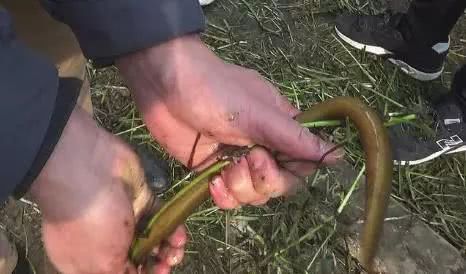
Mentioning rice field eels reminds me of when I was a child, after the fish pond in front of our house was drained, leaving just a little water in the pond, many of the neighborhood kids would gather in groups to look for loaches. If you could find a rice field eel, it was a huge win, because after going home, the stir-fried eel my mother made was absolutely delicious. But rice field eels really are not easy to catch. Not only do they hide in mud holes, but their bodies are also slippery, making them very hard to grab. Sometimes a rice field eel you had in your hands would slip away in a careless moment.
Although rice field eels are hard to catch, that does not stop people from loving them. Rice field eels are delicious and have few bones, with tender and tasty meat. Rice field eels also have high nutritional value, being rich in protein, calcium, iron, and so on, as well as rich in vitamins, and are very beneficial to the human body. They also have certain medicinal value. Rice field eels help replenish qi and blood, reduce inflammation, and disinfect. Of course, such a delicious food as rice field eel is not cheap on the market either.
The Habits of Rice Field Eels
If you want to find rice field eels, you first need to understand their living habits and the characteristics of their habitat. Like loaches, rice field eels have very strong adaptability and can live in mud. They can be found in ponds, rice paddies, and small ditches. The places where rice field eels live generally have at least two holes: one used for breathing, usually about 10 cm from the water surface, and the other used for escape. The holes also vary in size, and the length of the hole is generally three times the length of the rice field eel. Rice field eels generally hunt at night, so fishing for them at night is more likely to succeed.
Now let us look at how to find rice field eel holes
When I was a child, besides going back to the fish pond to catch rice field eels, there was another place where rice field eels often appeared, and that was the rice paddy. Rice field eels often appear in rice paddies, but they are not easy to catch. What I feared most as a child were the leeches in the rice paddy. Rice field eel holes in rice paddies are generally easiest to spot around Minor Heat. If you see a lot of white bubbles in the rice paddy, then there is definitely a rice field eel hole there!
At this time the rice in the paddy is not yet very tall, so the holes are easier to see. Generally, the two holes of a rice field eel are one large and one small. The small one is usually on the field ridge, but it is too small to be easily found. The other hole is in the rice paddy and is a bit larger, with a relatively smooth opening. If you observe the water surface, there will be slight ripples, and some will have white foam, so there is definitely a rice field eel inside! (However, this kind of rice field eel is mostly spawning. If the rice field eel is caught, the newly hatched baby eels will also die.)
But be careful not to mistake a snake hole for a rice field eel hole, or you will get bitten. Snake holes are generally on the field ridges above the water surface, and are mostly dry holes with relatively rough openings, while rice field eel holes are mostly wet holes with smooth openings.
In addition, rice field eels are also often found in cracks between stones. Generally, the older the stone cracks are, the more likely they are to contain rice field eels. However, if there is thin mud inside the stone cracks, then rice field eels are unlikely to be there, because the rice field eels will swim back and forth, making them hard to find.
But nowadays rice field eels are already hard to find, and there are fewer in the rice paddies than before. Many ponds also do not have as many fish as before. In addition, I suggest that if you catch a rice field eel that is too small, it is better to release it.