Crop disease control requires distinguishing between fungi and bacteria and using pesticides accordingly.
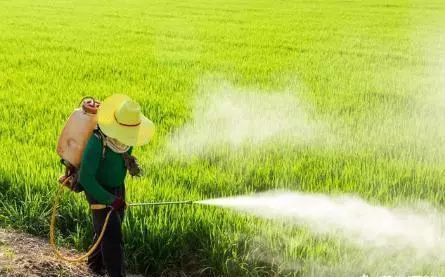
First, after a crop is infected by fungi, lesions of various shapes appear, and the lesions produce mold-like or powdery substances of different colors, with no off-odor. After damage by bacteria, the lesions on the leaves have no mold-like or powdery substances. From this, you can judge whether the crop is diseased due to fungal infection or bacterial infection, and then take different countermeasures accordingly. In addition to this.
Bacterial diseases also have several characteristics: the lesions are very thin and easily rupture or perforate; roots, stems and leaves rot easily and have an off-odor; after fruits are infected by bacteria, they develop scabs with raised surfaces. Among infectious crop diseases, more than 80% are fungal diseases.
Besides the harm from bacteria and fungi, there are also viral diseases, physiological diseases and pesticide damage. Viral diseases generally show up on young leaves; there are not many types, but the harm is relatively great, and they are difficult to control; physiological diseases are generally not contagious.
So what are the fungal diseases?
Clubroot and powdery scab, downy mildew, powdery mildew, smut and rust induced by smut fungi and rust fungi, root rot and stem base rot, Fusarium wilt and Verticillium wilt caused by pathogens of the class Sporomycetes, anthracnose caused by Colletotrichum, dry rot caused by spherical shell fungi, and so on, all belong to fungal diseases. Under humid environmental conditions, fungal diseases produce mycelium and spores.
What are the bacterial diseases?
The symptom of bacterial diseases is pus-like exudate, which causes necrosis, rot, deformity and other symptoms, and the lesions are mostly angular.
Fludioxonil is currently the seed-treatment fungicidal ingredient with the broadest spectrum, the highest fungicidal efficiency and also the highest price in the world. The current price of fludioxonil is about 1.5 million yuan per ton at 100% concentration.
In fact, by inhibiting the transfer related to glucose phosphorylation and inhibiting the growth of fungal mycelium, it ultimately causes the pathogen to die. It can efficiently control wheat bunt, snow mold, sheath blight, root rot, take-all, glume blotch and flag smut; corn stalk rot, stem base rot and damping-off; cotton seedling blight, red rot, anthracnose, black root rot and seed rot; soybean and peanut seedling blight and root rot; rice bakanae disease and seedling blight; rapeseed blackleg; potato seedling blight.
Besides using fludioxonil to control fungal diseases, chlorothalonil and mancozeb have significant efficacy against damping-off and downy mildew; thiophanate-methyl, carbendazim and prochloraz can efficiently control seedling blight, Fusarium wilt and brown spot; organic copper, inorganic copper, streptomycin and zhongshengmycin can control smut, powdery mildew, leaf blight, bacterial wilt and so on.
For bacterial diseases, agricultural streptomycin, leaf blight azole, trichloroisocyanuric acid, zhongshengmycin, copper formulations, neomycin and thiophanate-methyl are generally used for control. Wuningmycin (tetramycin) has high activity against bacterial diseases and is non-toxic to humans and livestock, making it a relatively competitive biological fungicide. When thiodiazole-copper is used to control bacterial lesions on vegetables, melons and fruits, dilute 500-600 times, and the control effect is relatively good. Ethylicin is also a relatively common agent for controlling bacterial diseases.
This is Science Promoting Agriculture. You are welcome to add a follow and learn together.