Potato planting time is approaching, and choosing a good variety is key
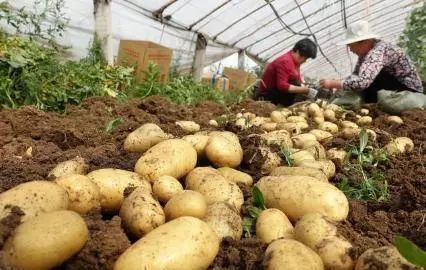
We call potatoes "tudou" locally, and children especially love to eat them. Potatoes also have a very high yield, so they are not only loved by growers but also very welcome in the market. Potatoes have now become the fourth largest staple food in our country, so it is fair to say the market is quite good.
Potatoes are highly adaptable, so most regions in our country can grow them. However, because the climate varies from region to region, the planting time also differs. Take our area as an example,
Our area is located in the Central Plains, and potatoes are generally planted in spring or autumn. Spring planting usually starts in February or March, while autumn potatoes are generally planted in August, which is the period starting now.
However, potato planting times in other regions of our country differ somewhat. For example, in the southwestern region of our country, such as Guangxi and Yunnan, potatoes are generally planted from October to November. In the Jiangsu-Zhejiang area, spring potatoes are planted from January to February, and autumn potatoes are planted in September.
Because temperatures are relatively low in the Northeast and Northwest regions, potatoes are generally grown for one season each year from April to May. So potato planting times vary from region to region. Growers must consider the local climate characteristics and plant according to local conditions.
Here are some more facts about potato cultivation.
Potatoes like a cool growing environment, so in the cold Nordic region potatoes became a local staple food. The most suitable growing temperature for potatoes is around 15 degrees. They like loose, fertile sandy soil, and the soil only needs to be kept moist.
How do you grow potatoes well?
The first step to growing potatoes well is the seed issue: you need to choose potato varieties with good disease resistance. And according to the characteristics of the local growing environment, choose potato varieties with a relatively long growing period. In addition, you need varieties with good stress resistance and no disease. When cutting seed potatoes, pay attention to disinfection. If you accidentally come across a bad potato, you need to change the knife, or disinfect it again. Each seed piece must have at least two eyes.
Before planting, the soil needs to be prepared, and potatoes are not tolerant of continuous cropping, which can easily lead to soil-borne diseases in potatoes. Sufficient base fertilizer needs to be applied. Generally, each mu of land needs about 3000 kg of organic fertilizer, plus about 70 kg of compound fertilizer. When planting, pay attention to the planting density. Generally, planting 2500 potato plants per mu is enough.
The quality of fertilization directly affects the later yield of potatoes. Generally, fertilization is carried out when potatoes have grown to about 15 cm, usually together with intertillage and weeding. About 5 kg of urea can be applied as a topdressing per mu. When potatoes have grown to about 40 cm, a second topdressing of about 4 kg of nitrogen fertilizer can be applied. In addition, potatoes, like sweet potatoes, are crops that favor potassium fertilizer. Generally, during the tuber-promoting period of potatoes, about 10 kg of potassium sulfate fertilizer is applied as a topdressing.
After potatoes enter the flowering stage, a foliar fertilizer of monopotassium phosphate can be applied as a topdressing about once every two weeks, at a concentration of 0.3%-9.5%. Generally, about 50 kg is needed per mu.