Chinese agriculture is facing unprecedented challenges, and the current state of agriculture, rural areas and farmers is worrying.
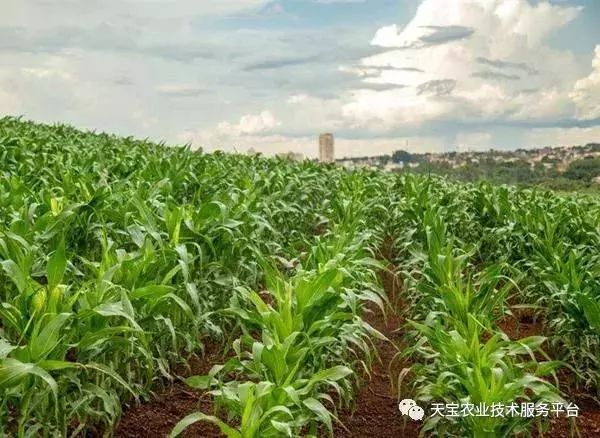
Chinese agriculture is enduring unprecedented challenges! This is not alarmist talk, but a real situation. Specialized farmers devoted to rural areas look up to the sky and sigh: What is going on now? Is industry really feeding back into agriculture, or is industry striking agriculture? The current state of agriculture, rural areas and farmers is worrying!
A large-scale pig farmer surnamed Liu once took us into his farm and gave a detailed introduction to the scale and management techniques of the operation. Then he talked about his 18 years of farming experience, then about the national support policies of recent years, and finally expressed his helplessness. He concluded: "I believe you have also seen the operating conditions of the surrounding pig farms, chicken farms, ecological chicken farms and so on; 80% of them have gone bankrupt." Another large-scale grower of Chinese medicinal herbs was also at his wit's end. He had grown Chinese medicinal herbs for 21 years in succession, experienced sexual propagation of Gastrodia elata, and in the end Gastrodia elata sold at the price of radishes; he contracted 1200 mu to grow turmeric, but in the end the price fell so much that it did not cover the labor cost of digging; he grew Bletilla striata and propagated it year by year, and now has 186 mu of Bletilla striata, but the price dropped 5-fold, and he directly felt like jumping off a building.
Agriculture today is enduring various challenges:
Declining enthusiasm for growing grain: affected by market rules, more and more farmers have begun to realize that farming is also a way to make money. When they feel that investing manpower and material resources in the land yields no profit, they reduce investment in the land, or even leave it abandoned, and focus their main energy on how to make money and how to leave rural areas. This is especially true of the new generation of farmers.
Reduction of land: basic farmland has been decreasing year by year in the process of urbanization and metropolitanization. Land used for high-speed rail and expressway construction, large-scale land use for relocation, land for mineral development, land occupied by hydropower stations, and land for factory construction are quietly eroding large areas of basic farmland.
Declining soil fertility: because capital investment in land continues to decline and livestock raising has decreased, the use of farmyard manure and organic fertilizer has decreased year by year, and a decline in soil fertility is unavoidable.
Water conservancy facilities exist in name only: in many old irrigation districts, the land has not been irrigated for many years because water fees are too expensive. Irrigation facilities have aged and lost their function. Some fields cannot be irrigated because of falling water levels, making it difficult to raise yields.
Declining multiple cropping index: for example, wheat is rarely seen again in southern Shaanxi, and in parts of the Guanzhong region there is only one season of corn. They are unwilling to spend more energy and time on the land, and two seasons a year have become a single season.
Industrial pollution: factory wastewater and exhaust gas cause air pollution, soil pollution and water pollution, affecting crop yields and quality.
Genetically modified food: large imports of genetically modified grain have caused domestic grain prices to fall. Some experts advocate that the state will increase the area for promoting genetically modified grain crops, which has damaged farmers' enthusiasm for growing grain.
Dependence on industrial food: more and more people like industrial food. Almost all snacks are made from genetically modified raw materials, that is, grain imported from abroad, and consumption of domestically produced grain has fallen severely. People increasingly pursue high-quality food. Imported American rice, Thai rice, American high-gluten wheat and so on are gradually entering every family's dining table, and domestic grain is relatively in surplus.
The labor force's longing for urban life is irreversible: the new generation of farmers all yearn for urban life, and no matter how hard it is, they are willing to struggle in the city. This change is the result of farmers' choices. On the one hand, cities offer more and more employment opportunities; on the other hand, institutional reform provides guarantees for farmers to enter the cities. When farmers enter the cities, the long-standing problem in rural China of too many people and too little land will be alleviated to a large extent, farmers' incomes will continue to rise, and rural poverty will be greatly reduced. In this sense, farmers entering the cities is farmers' choice and one of the ways for them to improve their welfare. Farmers entering the cities is not forced, but active. At the same time, at the current stage of China's economic development, farmers entering the cities often means only the young and middle-aged labor force of the household entering the cities, not the whole family, because the cost of living for the whole family in the city is too high. Farmers have chosen a family livelihood model of "semi-farming and semi-working based on intergenerational division of labor," in which young children go to the cities to work or do business while elderly parents stay in the village to farm. At present, about 70% of farmer households in China have chosen such a family livelihood model. This allows farmer households to obtain both farming income and wage income at the same time, while the cost of living in rural areas is relatively low, so farmer households have economic savings every year. A life with savings is a relatively comfortable life. At the same time, under this "semi-working and semi-farming" family livelihood model, left-behind elderly people and left-behind children inevitably appear. A large number of young and middle-aged laborers entering the cities causes rural hollowing out, and the social structure that previously maintained farmers' basic production and living order has also begun to change.
Are the people around you also facing problems like these? Do you have good ideas and suggestions? You are welcome to leave us a message and communicate with us!
This article was edited and compiled by the Guotai Jiamei technical team.
When reprinting, you must indicate the source in the following format.
Article source: Tianbao Agricultural Technology Service Platform (ID: zhxdnyjs)
Reference materials:
"Chinese Agriculture Is Enduring Unprecedented Challenges! The Current State of Agriculture, Rural Areas and Farmers Is Worrying!" Baijiahao, Fresh Rural Affairs
"[Close Reading] Rural China Is Undergoing Unprecedented Changes" People's Daily Literature and Art
Editor for this issue: Zhou Haiming, Wang Yunting