The Number One Storage Problem: Upgrade the Outdated Cabinets in Chinese-Style Modern Kitchens Without Spending Money
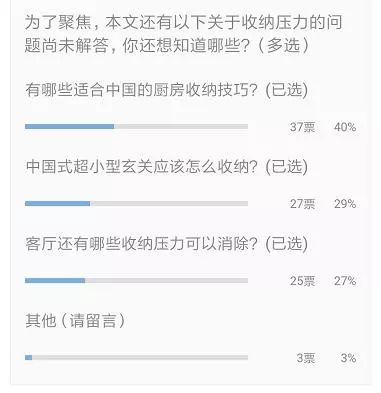
In a survey the other day,
40% of readers agreed that the Chinese-style kitchen is the most storage-stressed area of the home,
today Fox is here to talk about the kitchen storage at Fox's place.
Fox's home is a fully rented 120-sq-m two-bedroom,
of course, when renting it was carefully chosen,
at least at the same price point the renovation was done with relatively more care.
What was most exciting at the time was having a big kitchen,
a two-line layout, with two rows of worktops on the left and right,
the upper cabinets alone numbered 9.
But after renting it, Fox discovered that storage was not convenient.
Either "the drawers are too shallow," so only small things can go in,
or "the depth is too great," so a lot of space is wasted.
via echo_art___french_style_home@ins
Today's kitchens in Japan generally look like this.
It's not hard to see
that it's actually quite similar to our two-line kitchen,
but because it's semi-open,
it instead loses half of its upper-cabinet storage space.
In the picture there are only 3 upper cabinets,
those awkward upper-cabinet spaces that women can hardly reach,
are simply given up.
Instead, the focus is on strengthening under-counter storage.
Today Fox will talk about:
1. How to store bulky cookware like frying pans and stew pots?
2. How to store numerous small items like bowls, plates and water bottles?
3. How to improve storage in kitchen upper cabinets?
Domestic kitchen drawers are too shallow - how to store cookware?
via poron0411@ins
As can be seen from the first picture,
Japanese drawers generally come as 1 shallow and 1 deep,
which not only makes it easy to store cookware upright,
but also has dedicated divider rods,
so pot lids and cutting boards can be stored.
If, like at Fox's home, you didn't take this into account,
and instead made 3 shallow drawers,
then there's definitely no way to store cookware like that.
Under the stove is the most prime storage zone.
If you're renovating anew, it's best to make the kind of drawers described above,
but if, like at Fox's home, shelves have already been built,
you can refer to Fox's workaround storage method.
Use IKEA VARIERA pot lid organizers to divide the space under the cabinet,
and you can still store frying pans upright.
It's not as convenient as a drawer to take out, without having to bend over,
but it's still passable.
The problem is the stew pots and soup pots on the upper level,
which are quite a bit more troublesome than drawers.
To take out the enameled cast-iron pot inside,
you first have to move out the Corning pot in front.
At present Fox is still thinking of a better storage method.
via meguri.k@ins
If the drawers at home are deep enough,
you wouldn't have this worry.
At the same time, things like the baking tray of an electric grill can also be stored upright,
making selection and access very convenient.
via chikuwabooco@ins
Another way is not to use shelves, but to switch to a narrower sink storage rack.
Although it's not upright,
and the storage capacity is a bit smaller,
it can still hold five or six pieces of cookware.
via emiyuto@ins
There are also some families with one-line kitchens,
who often don't have that many cabinets,
but instead have a large storage rack.
The bottom level can be made into a cart,
which can then store a rice cooker and the like.
Otherwise, without a steam deflector,
the rice cooker can only be placed on the countertop,
and cannot be used inside a cabinet.
Too few drawers - how to store numerous small items like bowls, plates and water bottles?
via meguri.k@ins
The practicality of shallow drawers
mainly lies in being suitable for storing small items like bowls and plates.
But drawers cost a bit more than shelves,
so domestically shelves are still used more at present.
Upper cabinets are not as handy as drawers, but they can also be improved.
Fox's improvement method
is to use a dish divider rack
to divide the upper cabinet into an upper and a lower level,
the deeper upper level for bowls,
the shallower lower level for plates.
Although the storage capacity is not as large as a drawer of the same volume,
it still counts as a small improvement.
Many people may also have a headache over storing food containers.
An earlier article once mentioned
that for stacked storage in the kitchen, you must follow the "replaceable" principle,
that is, pulling out the top layer is the same as pulling out the bottom layer.
Otherwise, in actual use you'll surely be driven crazy moving things around.
However, Fox also plans to further improve the storage of food containers,
because quite a few plastic food containers on the left were bought earlier,
and really should be gradually replaced with glass food containers.
The advantage of plastic food containers is nothing but a low price,
but the drawbacks are that they "cannot store oily foods,"
and "cannot go in the dishwasher,"
which is super useless.
If switched to "three sizes of glass food containers - large, medium and small,"
daily access can also save some time and trouble in choosing.
(Fox is lazy enough, right~)
You might think that stacking the same kind together is indeed a bit handier to use,
but it still wastes a big chunk of space.
So Fox also focused on strengthening "storage deep on the shelves."
Things like water cups and travel mugs are quite numerous,
but "not used very frequently," so as long as you can find them when needed, that's fine.
This spot is the edge area farthest from the stove,
whose drawback is that the depth is even greater than the width, making it very impractical.
It can only be used to store things not closely related to cooking.
IKEA VARIERA storage boxes come in two sizes, 170mm and 240mm,
Nitori's similar version comes in two sizes, 170mm and 85mm,
combining to give 6 different width combinations,
which can suit cabinets of different widths
and make use of the depth.
via noz__ie
Of course, if there are enough drawers,
you can also use drawers + file boxes to store water cups, lunch boxes and the like,
while also storing the cleaning supplies related to them.
How to improve storage in kitchen upper cabinets?
One characteristic of Chinese kitchens is having many upper cabinets,
and the space utilization of kitchen upper cabinets is mainly about height.
Besides the "dividing" and "stacking" mentioned above,
Fox's upper cabinets also use this kind of tall jar for storage,
for job's tears, soybeans, peanuts and other
breakfast ingredients.
Not only are there many kinds stored,
but taking them out isn't laborious either.
lifewithboys@ameba
Since women's height generally can't reach the top level,
another way is to tie cotton rope onto storage baskets,
This way, it can replace a handle.
via meguri.k@ins
Finally, if conditions allow,
when renovating, try to use this kind of flip-up door,
as it will be easier to open and close.
This article is the 3rd in Fox's series "What kind of storage is truly usable,"
Starting from this series,
Fox will only introduce storage methods that he judges to be truly suitable for China's current apartment layouts and economic conditions.