Detailed Explanation of Key Techniques for Greenhouse Strawberry Cultivation
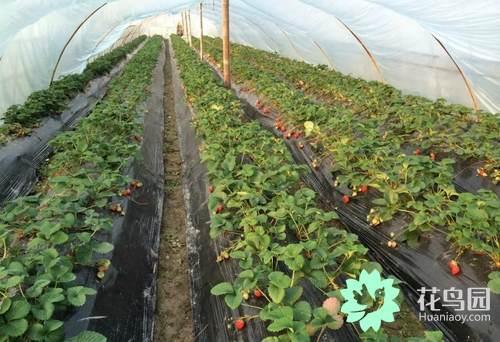
Strawberry is a very delicious and sweet fruit, and it can be said to be the most popular fruit in our country. It is not only famous domestically but also abroad. It can be used in the processing and making of various foods, and its nutritional value is very rich. In recent years, the strawberry planting industry has been flourishing, and cultivation techniques have gradually improved. Greenhouse strawberry cultivation is also very popular because it allows strawberries to become profitable faster. Below, the editor will tell everyone about greenhouse strawberry cultivation techniques!
I. Soil Preparation and Variety Selection
First, we need to choose the planting site. For strawberry planting, the terrain should be relatively flat, and the altitude can be somewhat higher. The soil requirement is that it should be loose and breathable with good drainage. When preparing the soil, fine sand can be mixed into the soil, which can improve the soil's drainage and breathability. For disinfecting the land, phoxim emulsifiable concentrate can be sprayed, and it can also prevent and control damage from some pests such as white grubs and cutworms.
II. Timely Planting and Greenhouse Covering
In order to be able to bring them to market before the Spring Festival, the transplanting time should be chosen in the first ten days of September each year. When this time comes, the strawberries can be transplanted into the greenhouse. During transplanting, they should be planted as they are moved; if they are not planted for a long time, the seedlings will have problems. After determining the row spacing, they can be transplanted, about 12,000 plants per mu. After planting, we need to water them every day. Watering at planting is very important. In addition, we must ensure that all exposed roots are buried in the soil during transplanting. The greenhouse covering time is November.
III. Temperature and Humidity Management
The optimal temperature for the growth and development of strawberry fruit is between 18-25 degrees, so controlling the temperature in winter and spring is somewhat difficult. We need to build a greenhouse within a greenhouse inside the main greenhouse, and then lay down plastic film. Only in this way can we ensure that the daytime temperature is 28-30 degrees and the minimum nighttime temperature is above 5 degrees. If the temperature exceeds 30 degrees, we need to take ventilation measures to cool it down, so ventilation is very important.
IV. Intertillage and Soil Loosening
Intertillage and soil loosening is a step that many crops require. This step is very important. Intertillage and soil loosening can better facilitate the decomposition of organic matter. Some poorly growing and aging leaves should be cut off to reduce the consumption of nutrients, which is more conducive to the development of strawberry fruit.
V. Pest and Disease Control
There are not many pests and diseases in greenhouse strawberries, but prevention still needs to be done well, mainly focusing on agricultural control. When selecting seedlings, good ones should be chosen. Selecting some disease-resistant varieties and cultivating them will result in fewer pests and diseases. Then the land should undergo appropriate and reasonable crop rotation. After strawberries bloom, it is not suitable to apply pesticides immediately, as the impact is very great. If gray mold is found, carbendazim wettable powder can be used for treatment. The best time for harvesting is from 8 to 10 in the morning and from 4 to 6 in the afternoon.
The above are the scientific greenhouse strawberry cultivation techniques. Have you all learned them? Greenhouse cultivation techniques are very popular, and they allow others to eat strawberries even during seasons when strawberries are not normally eaten. Their profitability is also very high.