Flowers Can Change Color Too: Bloom Colors That Shift at the Drop of a Hat
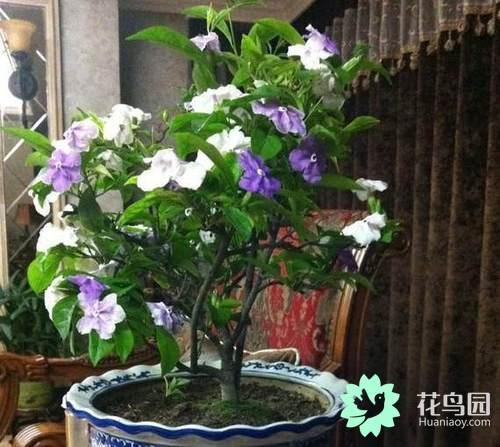
As the saying goes, the world is full of wonders, and even a single flower can display different colors. In fact, flowers can "change faces" too. Today let's take a look at the little secrets behind those flowers that can change color.
1. Brunfelsia (Brunfelsia pauciflora)
Brunfelsia usually blooms in spring and autumn. Each flower is purple in the early stage of blooming, then turns pale blue-green, and finally turns white, so it also symbolizes yesterday, today and tomorrow. The reason Brunfelsia changes color is fairly simple: the anthocyanins in the petals volatilize easily. Generally speaking, the sunnier the weather, the faster and more obvious the color change.
2. Japanese honeysuckle (Lonicera japonica)
Japanese honeysuckle is arguably the most common color-changing flower in everyday life. Japanese honeysuckle is a vine, usually blooming in spring, generally white first and then yellow. When the flowers are in full bloom, seeing the two colors of gold and silver is exactly where the name "honeysuckle" comes from.
3. Rangoon creeper (Combretum indicum)
Rangoon creeper is also called "four gentlemen". It can display white, pink and red, and sometimes can complete its color change within a single day. The principle behind the Rangoon creeper's color change is similar to that of Brunfelsia: the white flowers open at night, which can attract moths; the next day they turn bright red, which is also meant to attract butterflies, bees and other animals to pollinate them, helping reproduction.
4. Cotton rose (Hibiscus mutabilis)
Cotton rose opens in autumn, and its color changes once a day: white, yellow, pink, red. It can be said to be the flower with the most color changes in the world. Its color change also comes from changes in the anthocyanins and acids contained in the petal cells.