Succulent forms are wildly imaginative - why do they grow so strangely?
Many friends who have just fallen into the succulent rabbit hole mostly picture succulents as beautiful and adorable, so cute you cannot put them down at first glance. But today, the editor will show you the other side of succulents, where they are bizarre and varied beyond imagination - their looks and habits overturn your impression of traditional plants, and some are even downright odd!
| Tony |
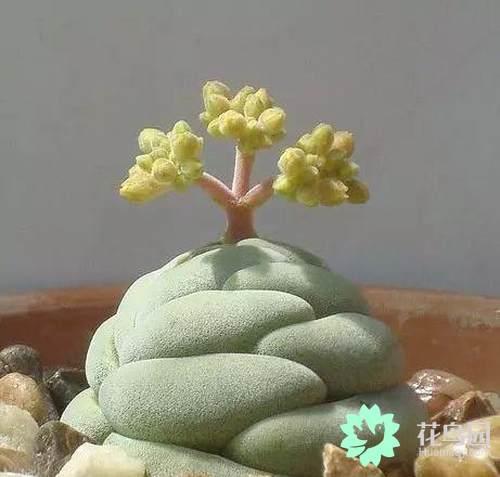
This small Crassula, commonly known as Tony, looks a lot like little piles of poop! Especially in its native habitat on the arid rocky flats of South Africa, its color blends into the surrounding environment, and without a careful look you would really think it was animal droppings. The thick white leaves are opposite, tightly arranged, with a rough, granular surface. It blooms tiny cream-yellow flowers, very cute!
| Pagoda |
The top view of this succulent looks like a monster with its bloody mouth wide open about to eat someone. The gray-green leaf surface is rough and granular, the leaves are opposite, tightly arranged layer upon layer, and seen from the side it looks like a tower, sparking wild imagination.
| Mountain Rose |
This "rose that never withers" has already become the top choice for gifts on Valentine's Day. The rose-like part is not a flower, but its leaves. The fleshy leaves of the Mountain Rose are alternate and arranged in a rosette.
In the hot season, they enter dormancy, and at this time the leaves wrap tightly together, looking just like rosebuds about to bloom, usually lasting for several months.
| King Air Plant |
This young lady with a head of silver curly hair is actually quite domineering. Commonly known as the King Air Plant, it does not need soil to grow; by absorbing moisture and nutrients from the air, it can grow luxuriantly and even produce bright flowers! A blessing for plant killers!
| Broodleaf Kalanchoe |
This succulent is called Jin Die, also known as stick-leaf kalanchoe or stick-leaf mother of thousands. The leaves are slender, fleshy and stick-shaped, and many adventitious buds grow along the leaf edges, just like little butterflies resting there, very cute.
Why is it called "falling to the ground and taking root" or "mother of thousands"? Because these little butterflies, once mature, detach from the mother plant and drop to the ground, and as long as the environment is suitable, they quickly take root and grow.
Things reverse when taken to extremes. This interesting habit can sometimes cause trouble, because they really grow far too easily!
| Little Wine Cup |
This plant that looks like a little wine cup is also one of the succulent army, and its name is Little Wine Cup. The wine-cup-like holder is its fleshy leaf, with edges curled up like a lotus leaf into the shape of a wine cup, and red flowers grow in strings in the center of the leaves, very bizarre.
| Loach Palm |
Now look at this oddball. This succulent called Loach Palm has tiny leaves that wither and dry up very early, remaining like small thorns on the cucumber-like segmented fleshy stems, much like loaches darting around in the soil, right?!
| Trachyandra tortilis |
Trachyandra tortilis does not yet have an official Chinese name (in fact, many succulent names are just customary), this alien plant like a piece of kelp has broad leaves permed into big wavy curls, and with the changing seasons it can even show a dazzling pink, very fashionable, right?
|Synaptophyllum Juttae|
No Chinese name, but is it really okay to grow yourself into a lump of melted red candle? This adorable thing in the Aizoaceae family is distributed in Namibia. Its fleshy opposite leaves clasp the stem, and covered with a waxy surface in brilliant red, so it looks very much like drips of wax.
| Baseball Plant |
These green things that look like sea urchins are called Baseball Plants. The stripes are their 8 vertical ribs, with a row of small raised blunt teeth in between, as if knitted. Baseball Plant truly lives up to its name!
| Bunny Ears |
These cute little rabbits, scientifically named Monilaria moniliforme, are so adorable you will drool! The little rabbits are relatively tolerant of water and afraid of drought. They like semi-shady environments. Under full sun, the rabbit ears will soften and droop, and generally after a night of recovery and adjustment, they will stand up again the next day.
Watching its process from sprouting to growing rabbit ears is so healing...
Draw a self-portrait for the little rabbit
These unusually shaped succulents - do you want to grow one too?
But some special succulents are rather hard to buy
The editor has also attached a guide to common succulent plants
Friends who do not know which kind to grow
Can refer to these
▼