A Detailed Guide to Amomum villosum Planting Techniques and Management Methods
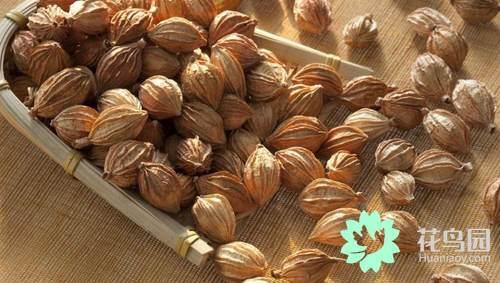
Amomum villosum is a herbaceous plant whose fruit can be used as medicine; during its growing period it also provides a good greening effect, and it is a subtropical plant that loves heat and humidity. It is cultivated artificially in the Guangdong and Guangxi regions of China. Today we will take you through what needs attention when cultivating Amomum villosum.
1. Site selection
There are particular requirements for where Amomum villosum is planted: the selected site must have high humidity and high temperature, yet direct sunlight must be avoided, and the area should be relatively open. The soil must be highly fertile with a notable capacity to hold nutrients, able to retain the fertilizer that is applied, so it is best if the soil has a certain stickiness. Try not to choose low-lying areas, as these easily accumulate severe standing water and harm the plants.
2. Sowing
Before sowing, the seeds must first be pre-treated: dry them in the sun twice, then soak them in water. The soaking water should not be very cold; soaking for about three days is generally enough to let the seeds absorb sufficient moisture, and any longer will cause damage. To make drainage and irrigation convenient, it is recommended to arrange the land into strips. Before planting, the land must be fertilized, preferably with a mix of farmyard manure and chemical fertilizer, applied to every plant. The fertilizer amount is about one ton per mu.
3. Transplanting
Timing is very important when transplanting; generally, around May is more suitable, as both the temperature and humidity at this time are relatively suitable for moving seedlings. When transplanting seedlings, it is best to keep a little soil on the roots for warmth, or the roots can be manually coated with muddy water for warmth. The planting holes should be about 30 cm deep, with a density of 800-1200 plants per mu; in colder weather, weeds are also needed to cover the seedlings to protect them from the cold.
4. Fertilizer and water
Amomum villosum has relatively high requirements for fertilizer and water. The core principle of fertilizing is many times with small amounts. During the seedling stage, there is no need to be too frequent, otherwise it is easy to over-apply; fertilizer can be applied according to the degree of leaf growth, fertilizing once every three leaves grown, and once the plant starts to have 10 leaves, it needs to be stabilized at once every 20 days. In the early stage, the fertilizer for Amomum villosum should be kept as organic fertilizer as much as possible; in the later stage, more nitrogen fertilizer can be supplemented. Each fertilization should be accompanied by watering.
5. Management
During the flowering period of Amomum villosum, weeding is not recommended, so normal weeding should be done only before and after flowering. Also, because the roots of Amomum villosum grow relatively shallow and mostly show a net-like distribution, a hoe is not recommended for daily weeding; small weeds are best pulled out, while larger weeds can be cut off to destroy the roots. Dead and diseased remaining plants should be cleaned up in time to avoid the spread of disease.