What to do when marigolds only grow leaves and do not bloom? Care for them this way and flowers will fill the pot
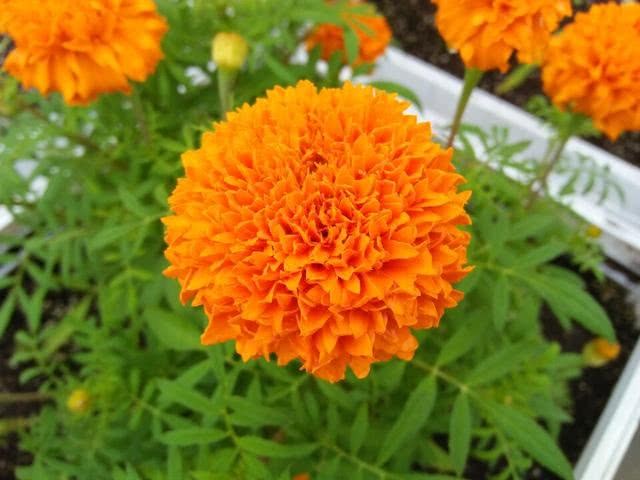
Marigold, also known as honeycomb chrysanthemum, stinking hibiscus, and marigold lantern, is an annual herbaceous plant of the genus Tagetes in the Asteraceae family. It is now the season when marigolds are in full bloom, yet many flower lovers have found that their marigolds only grow leaves and do not bloom. What is the reason? What should be done if marigolds do not bloom? Let us explore this together below.
When do marigolds bloom
Marigolds bloom from July to October each year, and their flowering period is very long, sometimes lasting until mid-November before the flowers fade. Their flower color is yellow or orange-yellow, the flowers are large and brightly colored, with layer upon layer of petals, and the flower shape is full and very beautiful.
Why do marigolds only grow leaves and not bloom
Insufficient light
Marigolds like a growing environment with sufficient light and suitable temperature. If there is not enough light during care, the plant will become leggy and grow weak, resulting in fewer flowers. Therefore, during care, we need to pay attention to placing marigolds in a sunny place for cultivation.
Improper temperature
The suitable temperature for marigold growth is 15-25°C, and the suitable temperature during the flowering period is 18-20°C. The relative air humidity of the growing environment is required to be 60-70%, and the winter temperature should not be lower than 5°C. When the summer high temperature is above 30°C, the plant will become leggy, the stems and leaves will be loose, and there will be fewer flowers. Therefore, in order to promote better flowering of marigold plants and extend the flowering period, maintaining a suitable temperature during the flowering period is very important.
Improper fertilization
When fertilizing marigolds, you must master fertilization techniques and must not apply too much fertilizer, especially nitrogen fertilizer; otherwise, marigolds will also be affected in flowering because the plant grows too luxuriantly, and may even never bloom. A certain amount of base fertilizer can be applied when planting marigolds, so that marigolds branch more, which can increase the number of flowers.
Timely pruning
Before marigolds bloom, some side buds can be removed to reduce nutrient consumption. The remaining buds will have sufficient nutrient supply, and the flowers will also be more brightly colored. After marigold flowers fade, timely prune off the residual flowers and withered flowers, prune the branches and leaves, and at the same time pay attention to pest control, so that they can bloom again.