Northeast China rice prices vary widely, and here are the reasons behind it
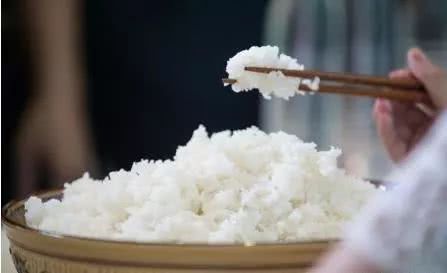
As for the authenticity of Northeast China rice on the market, everyone should not doubt it too much. It should be said that the rice labeled as Northeast China rice on the market is basically genuine. However, the scope of Northeast China rice is still very broad, and the price differences among different Northeast China rice varieties are mainly reflected in quality, region, brand and other aspects. If it were truly limited to the Northeast region, it could be said that all the Northeast China rice on the market meets the criteria.
Due to its regional characteristics, Northeast China has a high latitude, a long rice growth period, large day-night temperature differences, and relatively fewer pests and diseases. The quality and taste of its rice are also relatively much better, superior to southern rice in many aspects, and it is generally welcomed by the market. Even so, there is no need for the market to pass off southern rice as Northeast China rice. The reason for being so certain is that the output of Northeast China rice is indeed quite high.
The price of southern rice is also not really low, and many high-quality southern rice varieties are not inferior to Northeast China rice in quality. The reason Northeast China rice is so famous is more due to the influence of a few specialty rice varieties from Northeast China, such as Panjin rice and Wuchang rice from Northeast China.
Northeast China rice output is abundant
Friends who follow China's grain situation should be fairly clear that in 2017, Heilongjiang's grain output surpassed Henan for the first time to rank first among all provinces in China in grain output. The grain output of the entire Northeast region is also quite large, which is why it is called China's grain base. Rice output is naturally also quite high, thanks to Northeast China's vast territory and fertile land. Rice yield per unit area can exceed 1,000 jin, and since the rice planting area in Northeast China is also relatively large, total output is naturally very well guaranteed.
Rice prices
From the market conditions I have learned about, the price of Northeast China rice in supermarkets is not high either. Ordinary Northeast China rice is priced at 2.1-2.4 yuan per jin, while southern rice is basically priced at 2-2.3 yuan per jin. Moreover, most rice in Northeast China is japonica rice with shorter grains, while southern rice is indica rice with longer grains, making them relatively easy to distinguish. There is no point in passing one off as the other, because you cannot earn more money from it. Why bother doing something so laborious?
Brand effect of Northeast China
When people think of Northeast China rice, they regard it as synonymous with high-quality rice. However, in fact, not all Northeast China rice from any region can sell at a high price. As mentioned above, ordinary Northeast China rice is only a little over 2 yuan per jin. But if we look carefully, we will find that Wuchang rice from Northeast China can sell for 4 yuan per jin or even higher, and Panjin rice can also sell for more than 3 yuan per jin.
As for the fake Northeast China rice flooding the market, Science Agriculture believes it is more likely concentrated in ordinary Northeast China rice being passed off as Wuchang rice or Panjin rice.
In summary, Science Agriculture does not believe there is that much counterfeit Northeast China rice on the market. At least this rice still lives up to the meaning of the word "Northeast." However, according to the actual situation, cases of passing off rice as these well-known rice brands may occur more often. Or there may be cases of passing off old rice from Northeast China as fresh rice, or passing off inferior goods as good ones to deceive consumers.
In a word, it is very difficult to buy high-quality rice at a cheap price. The so-called idea of being both good and cheap exists more in ideals. Otherwise, how could businesses survive if they cannot make a profit? After all, businesses are not charities.
This is Science Agriculture. You are welcome to follow, and let us grow our knowledge together.