Sow and propagate portulaca this way for fast growth and nonstop blooms
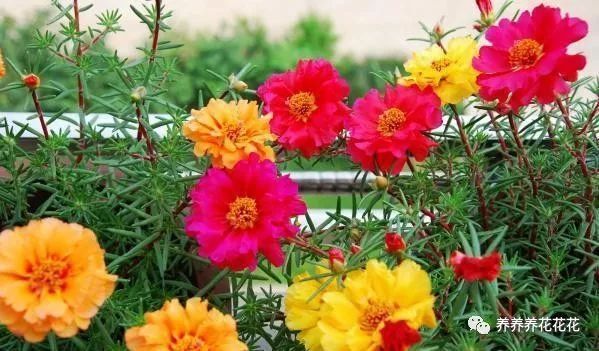
If you want to grow portulaca, let me teach you the sowing and cutting methods for fast growth and nonstop blooming
A gardening friend asked which month is best for planting portulaca and what to pay attention to when planting. Portulaca is very easy to grow, and Xiao Qi has also grown quite a few varieties. Most are perennial root types, and there are both double-petaled and single-petaled ones. Around here, people call it "macha cai."
Generally, if you sow portulaca from seed, spring is the best time. It sprouts most easily at around 20°C. When sowing, you can skip covering it with soil and just scatter the seeds on the surface of the potting soil, or you can cover them with a very thin layer of soil. After misting thoroughly with a spray bottle, they will sprout on their own. Grow them for two months, and they will quickly bloom. However, some varieties, such as many of the perennial double-petaled types, do not produce seeds when grown at home. So we rely on cuttings to propagate them.
Propagating from cuttings is also very easy. As long as it is during the growing season, you can take cuttings at any time. You just need to cut off a branch and put it in a cool, ventilated place to dry for a bit. After drying for about a day, once the wound at the bottom has begun to heal, insert it directly into loose soil, water it thoroughly, and place it in a spot with bright indirect light. It will grow roots in about three days, and within a few days the top of the branch will produce flowers. It roots very easily.
Some gardening friends say, why do the bottoms of my cuttings always rot? It is because you did not dry the wound at the bottom. Letting the wound dry before taking cuttings is the method with the highest survival rate and the fastest results. If portulaca does not grow well, it is because your soil is no good. If the soil is not breathable, it easily becomes compacted, and especially during the small summer rainy season it is prone to rotting. The main reason is root rot, which gradually spreads upward from the roots and causes the entire branch to rot.
Xiao Qi loves growing flowers and updates flower-growing videos and knowledge every day. If you also love growing flowers, follow Xiao Qi and help share and support. Xiao Qi thanks everyone here!
If you love growing flowers, followWeChat official account: Yang Yang Yang Hua Hua Hua (hcqzj521)More flower-growing knowledge is waiting for you