What animals lose isn't just habitat - it's also time
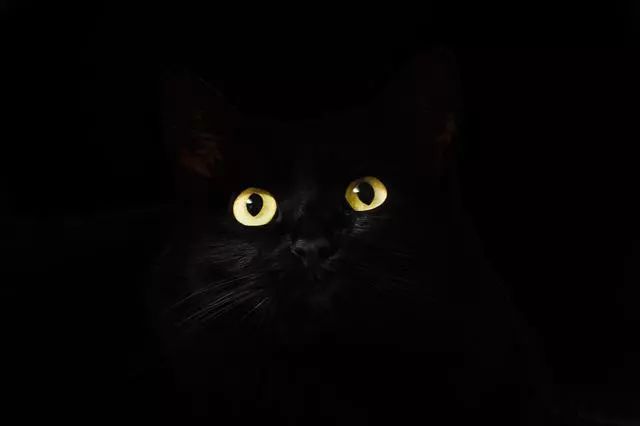
When you squint your way to the bathroom in the middle of the night, then stumble all the way back, your cat will definitely fix those glowing eyes on you:"Heh, blindie". Although human night vision is far inferior to a cat's, we can still just barely see in the dark. This is because our eyes have rod cells, which can sense dim light and help us stay active at night.
The poop-scooping servant is too weak! Image: pixabay
Corresponding to rod cells are cone cells; the former are more sensitive to light and are mainly used fornight vision, while the latter are mainly responsible forrecognizing colorand are more useful during the day. Rod cells make up as much as 95% of our retina, far outnumbering cone cells. But humans are mostly active during the day, so why do our eyes have so many rod cells suited to nighttime activity?
Dinosaurs drove mammals into the darkness
Mammals have relatively many rod cells, perhaps because mammalsin the distant past werenocturnal animals. As early as 1942, Gordon Lynn Walls, an expert in physiological optics and optometry, proposed the "nocturnal bottleneck" hypothesis. According to this hypothesis, mammals oncein order toavoid dinosaurs active during the daychose a nocturnal life, so most mammals today are still nocturnal. And even for diurnal animals like us humans, there are still so many rod cells in our eyes.
Poor mammals. Image: Ferahgo the Assassin / wikimedia
So, was it the extinction of the dinosaurs that caused mammals to change from nocturnal animals into diurnal animals? Kate Jones of University College London in the UK believes this is really hard to determine, because fossil evidence is too scarce, and animal behavior is also very difficult to infer from fossils. However, Professor Jones's research still found a close link between the disappearance of dinosaurs and mammals beginning to be active during the day. He also believes that primates, as the first mammals to adapt to daytime life, also had more time to evolve and adapt.
Imagine the situation when dinosaurs ruled the Earth - going out in broad daylight was simply suicide,delivering a free lunch to dinosaurs. After the extinction of the dinosaurs, mammals may no longer have needed to cower in the night. However,we are now forcing other animals back into the darkness。
"I'll just quietly graze at night." Image: pixabay
Humans show up, animals walk at night
A study published in the journal Science found that, affected by human activity, 62 species of animals reduced the time they spent active during the day. People have long discovered that animal habitats are constantly shrinking because of human influence, but unexpectedly, now,animals' time has also been taken from them by us。
Human activities with higher levels of disturbance, such ashunting, road building, urbanizationand so on, mostly occur during the day. Even seemingly mild activities such ashiking and watching wildlifecan also change animals' habits. The study found that although human activities affect different species differently, overall, these animals' nighttime activity time increased by an average of 1.36 times. The animals studied included elephants, moose and lemurs, among others, and were not limited by body size, habitat type, or whether they were carnivores or herbivores.
Coyotes, tigers and wild boars were affected by human mountaineering, farming and urbanization, respectively. Image: Kaitlyn M. Gaynor et al. /Science(2018)
In the short term, this change by the animals may be a cautious choice, because it avoids direct conflict with humans. However, for animals originally mainly active during the day that shift into the darkness, theirability to forage and protect themselves will inevitably be greatly reduced。
In addition, some other animals may alsoget caught in the crossfire through no fault of their own: coyotes in California, USA, originally preyed on diurnal creatures such as birds and squirrels, but now they spend more time sleeping during the day, and the species they feed on have switched to small nocturnal animals; mice and rabbits saythe pressure to survive is even greater. The researchers believe more animals are likely to be affected.
Humans now look so high and mighty, but don't forget those indelible marks on our bodies; they hint at our once humble identity of surviving by hiding in the dark. Now, humans don't need to carry out any violent destructive behavior against animals; just by showing up, many animals willtremblingly hide in the darkness。
Why must animals make things hard for other animals? (Editors: Ent, Li Zi, lava)
This article is authorized for republication from I Am a Scientist iScientist.
I Am a Scientist
iScientist
id: IamaScientist
"I am a scientist, and I do science communication."
Calendar Girl's avatar for today
Canidae, bush dog
This article was first published on Guokr.com I Am a Scientist iScientist