How do you grow pothos so it branches heavily and has long vines? Master these points and you can do it too
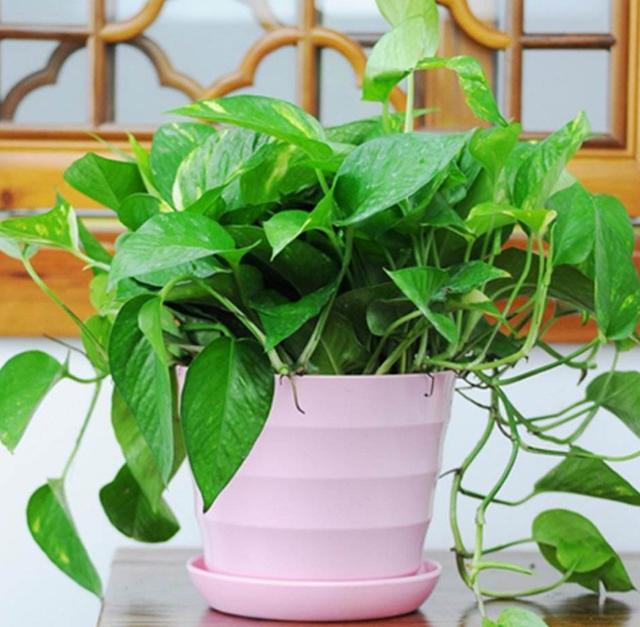
Pothos is a popular green plant, deeply loved by many plant enthusiasts for its easy-care habits. With the same growing methods, some enthusiasts find that their pothos does not grow as well as others' - not only are the leaves less glossy, but the branching is not as abundant as others', and the vines are not as long as others'. As some enthusiasts say, it is easy to keep alive but hard to keep well. Clearly, the problem lies in cultivation and management.
Pothos likes shade; providing a growing environment with ample scattered light is enough. Long-term excessive shade will cause slow growth and yellowing leaves. Pothos likes loose, breathable soil. For home cultivation, peat soil plus coconut coir plus an appropriate amount of perlite can meet its growth needs. Pothos is a water-loving plant. Apart from moderate water control during the low-temperature period in winter, the potting soil should always be kept slightly moist during the vigorous growth period. The reason some enthusiasts' pothos has more branches and longer vines is, besides being related to light and soil, also closely related to fertilizer and water management.
A crop's one flower depends entirely on manure. The same goes for growing flowers at home: if you want the plants to grow strong and bloom abundantly, sufficient fertilizer is indispensable. Among the fertilizers plants need, the three main elements nitrogen, phosphorus, and potassium hold a pivotal position. Among them, nitrogen is for growing leaves; it can promote chlorophyll synthesis in plants, making the leaves greener and more luxuriant. Phosphorus fertilizer can promote flower bud differentiation in flowering plants and more branching in foliage plants. Potassium, like a person's bones, can make plants grow stronger and at the same time enhance their disease resistance and lodging resistance. Therefore, for some enthusiasts whose pothos has few branches and short vines, besides the three major factors of light, soil, and watering, the main reasons are excessive nitrogen fertilizer application with insufficient phosphorus and potassium fertilizer, or no fertilization for a long time.
During the vigorous growth period of pothos, you can regularly apply a compound fertilizer containing the three elements nitrogen, phosphorus, and potassium to the plant, or you can use your own decomposed organic fertilizer such as soybean cake water or rice-washing water to drench the roots of the pothos. If you find that using organic fertilizer indoors has an odor, you can move the pothos outdoors to fertilize it, and move it back indoors after the smell has dissipated. If you are used to using nitrogen fertilizer, be sure to also spray a monopotassium phosphate solution on the leaves once every 10 days, which can more quickly promote the pothos to grow more branches and vines. The diluted beer water that enthusiasts share for watering flowers or wiping leaves is also a good method; it can not only make the leaves oily green and glossy, but also benefit the growth of the pothos root system.