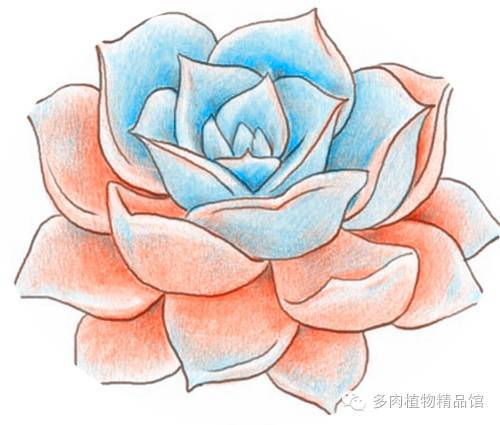
Succulent color change is actually this simple, no more worrying about your succulents turning ugly
Text
Text and images: Qingmeng
Many new succulent enthusiasts often ask, why are my succulents so green? How can I make them turn red or other colors? Here the editor will briefly explain why succulents change color and how to make them change color.
The red leaf phenomenon is very common in plants; the leaves of many plants change their color as the environment changes. Various pigments such as anthocyanins in the plant body also undergo chemical reactions that accelerate their production due to environmental factors, changing the pigment ratio of the succulent plant itself, thus allowing the succulent to display a variety of different colors.
There are mainly two ways to make succulents change color:
1. Increase light exposure
Succulents absorb ultraviolet rays from sunlight to achieve color change, and depending on the variety, the colors they change into vary widely. The main reason is that ultraviolet rays in sunlight affect the anthocyanins and chlorophyll in the plant body, changing the pigment ratio within. Because succulents grown outdoors can receive more ultraviolet radiation, their colors are richer compared to succulents grown indoors behind windows. Glass is very effective at blocking ultraviolet rays. Succulents grown indoors behind windows tend to be greener in color. Succulents grown outdoors have more vivid colors.
If succulents have been growing in shade for a long time, be careful to proceed gradually and do not let them suddenly receive strong light, as this can easily cause sunburn. You can first let the succulents receive indoor scattered light in the morning and evening, then slowly move them outdoors, giving them a transition period to adapt.
2. Increase the temperature difference
This is caused by the succulent's self-protection. Low temperatures stimulate the synthesis of anthocyanins in the plant body. Compared to chlorophyll, anthocyanins can better absorb ultraviolet rays from sunlight, providing heat for the plant and changing color to achieve the effect of protecting against the cold and keeping warm. When the proportion of anthocyanins increases, your succulents turn red. The greater the temperature difference between day and night, the faster the succulents change color, and the more vivid the colors become. In succulent greenhouses, the temperature difference between day and night can exceed 30 degrees, so the colors are richer than those of succulents grown at home.
To sum up, these are the well-known factors for coloring succulents: low temperature and light. And doing all these things is actually all for the formation of anthocyanins.
This article was compiled by the Succulent Boutique Pavilion. Copyright belongs to the original author. For some articles, the source cannot be identified and is marked as from the internet. If there is any infringement, please contact us immediately and we will handle it promptly.