What should you pay attention to when growing Streptocarpus saxorum (dolphin flower) into a bonsai?
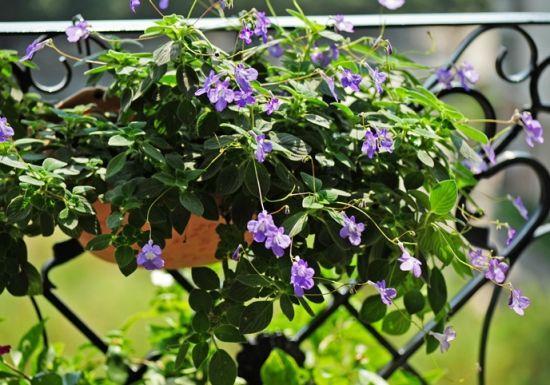
The dolphin flower originates mainly from southern Africa. When it blooms, the flowers sway in the wind and drift around like fairy sprites. In fact, before the buds of the dolphin flower fully open, their shape resembles a dolphin even more. As the flowering season gradually arrives, the flower's shape slowly swells, which is how the name "dolphin" came about. So how can such a wonderful dolphin flower be cultivated at home?
I. Propagation of the dolphin flower
Home growers usually propagate the dolphin flower by cuttings. Generally, in March-April each year, choose the relatively tender green upper branches from a robust mother dolphin flower plant as the cutting material. The reason is that if older, more mature branches are chosen, the cutting propagation speed will be relatively slower. If you want the dolphin flower cutting to succeed in one go, the ambient temperature is the most important point.
The temperature of the pot must be kept at 18-24 degrees; at this temperature the branches take root and sprout far faster than under other temperature conditions. When cuttings are taken at temperatures above 10 degrees or above 28 degrees, the branches often fail to sprout smoothly or grow extremely slowly. About two weeks after cutting, the plant will have completely taken root and sprouted. At this point you can transplant and grow the plant, or wait until the plant has grown several true leaves before transplanting. After that, it can enter normal growth management, with appropriate watering and fertilizing.
II. Care of the dolphin flower
1. Soil
Generally, choose soil with good drainage as the growing medium for the dolphin flower, because the dolphin flower is rather afraid of waterlogged soil. If the potting soil drains poorly, waterlogging can easily occur when care is relatively rough, and the plant may then develop root rot, causing a major impact on the dolphin flower. The fertility of the soil can be adjusted according to your own situation. Generally speaking, the dolphin flower can also grow in ordinary soil; the only difference is that the plant's growth rate will be somewhat slower. If you want to see the dolphin flower grow up quickly, you can use soil with good fertility, or add an appropriate amount of base fertilizer to the soil when cutting.
2. Light
The dolphin flower should not receive too many hours of light each day; usually 4-6 hours of light per day is enough to meet the plant's growth needs. If the plant is not grown under light, place the pot in a semi-shaded spot or under a small amount of scattered light. Depending on the season, the way the dolphin flower receives light also differs. In spring, autumn and winter, the sunlight is relatively warm, and even direct sunlight has little effect on the plant, so it can be grown in full light; but in summer, the intensity of the sunlight is far higher than in the other three seasons, and the dolphin flower should not grow under such direct sunlight, so the plant must be given some shading.
3. Watering
The dolphin flower does not need much watering during its growth period. On the one hand, its water requirement is not high; on the other hand, its internal water-storage function is outstanding. Usually, besides absorbing enough water for growth, it often draws excess water from the soil and stores it in its body, then provides it for its own growth when water is insufficient. If watered too much, its leaves often turn yellow, showing drooping and thickened leaves, which also has a great impact on the plant's flowering. And when water accumulates in the roots and stems and is not drained in time, it can also cause the plant to suffer diseases such as root rot or leaf spot. Therefore, reasonable watering is also relatively important for the dolphin flower.
4. Nutrients
Reasonable fertilizing is another important factor in ensuring the dolphin flower blooms normally. Usually, fertilizing once every half month or so is enough, until the plant's flowering period. During the flowering period, the dolphin flower does not need fertilizing; especially for dolphin flowers grown in fertile soil, you can even fertilize about once a month. When fertilizing, stick to the principle of "light fertilizer, applied sparingly."