The Calathea leopardina has diverse leaf shapes and strong ornamental appeal, and its four-step care method is simple and easy to learn
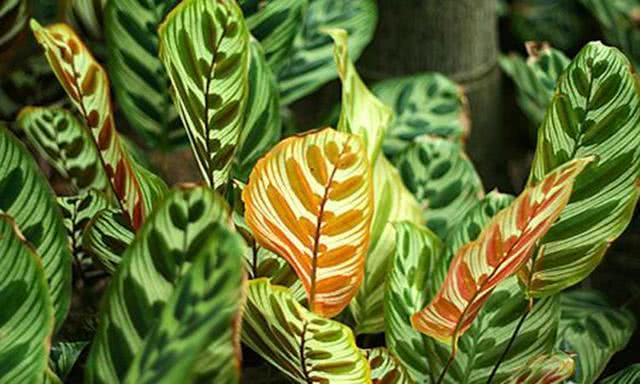
Calathea leopardina is mainly native to the Americas and the islands around the Indian Ocean, and it has been introduced for cultivation in many regions of our country. Because its leaf shapes are relatively diverse and its adaptability to the environment is strong, most Calathea leopardina are planted in patches or in clumps for applications such as landscaping and ornamentation, especially in gardens, where its bright appearance allows it to pair well with many plants as an ornamental garden landscape. The following mainly introduces the cultivation of Calathea leopardina from four aspects: soil, light, watering and fertilizing.
I. Soil
Choosing soil with good drainage and aeration to cultivate Calathea leopardina is most suitable. The soil's good drainage can greatly reduce the possibility of water accumulation in the pot; because the root growth ability of Calathea leopardina is relatively poor, good aeration provides convenient conditions to a certain extent for the growth of the plant's root system.
In addition, generally every so often, the potting soil needs to be loosened. This is because the long-term use of the soil by the plant easily leads to conditions such as hardening of the soil. If reasonable measures are not taken in time, it will become difficult for nutrients and water to penetrate through the soil, thereby affecting the plant's healthy growth.
II. Light
Calathea leopardina has very strong shade tolerance and is also suitable for growing in cool places. Therefore, during its growth period, if sunlight supplementation is needed, it should receive an appropriate amount of diffused light or be given semi-shade treatment. This can prevent damage to the plant's leaves from long-term direct sunlight and also ensure good ornamental value.
If management is improper and the plant's leaves are sunburned, the potted plant should be moved to a cool environment to grow, given an appropriate amount of watering, and the severely burned leaves should be cut off so that new leaves can slowly grow out. After the plant recovers, place the potted plant in a suitable environment for growth.
III. Watering
If it is during the peak growing season of Calathea leopardina, more water is often needed to maintain its normal growth. Generally, water 2-3 times per day in the Americas. Especially in the hot summer, high temperatures will accelerate the consumption of water in the plant. During this period, the plant needs to be watered frequently. In the early morning and evening of each day, an appropriate amount of watering is needed. If the air is too dry, water should also be sprayed around the plant to increase air humidity.
IV. Fertilizing
Since the most ornamental part of Calathea leopardina is its leaves, whether fertilizing is appropriate has a great impact on its ornamental value. If fertilizing is insufficient, it easily causes the plant's leaves to turn yellow, the leaves to not grow large, and the patterns to be fewer; while excessive fertilizing often leads to thick and fleshy leaves, dim leaf surface luster, and in severe cases may even cause leaf drop. Therefore, fertilizing Calathea leopardina needs to be properly controlled.