Tradescantia zebrina grows like crazy and turns into a messy tangle; without managing it, its growth will suffer
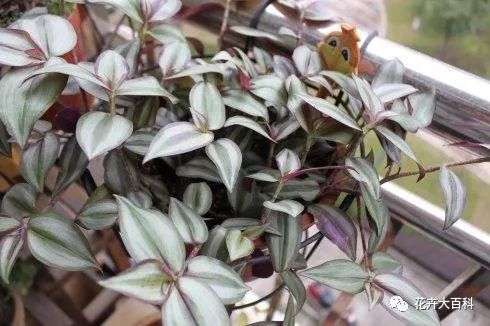
Tradescantia zebrina is one of the more common and attractive green plants grown indoors or in hanging planters on balconies. Reasonable, scientific pruning will make it more ornamental, and the plant's overall shape will become more graceful. Let's take a look at how to pinch back Tradescantia zebrina below.
Tradescantia zebrina grown on a balcony
Pinching back, also called topping, is a great way to control a plant's height or length. For flowering plants, pinching back can increase the number of flowers; for fruit-bearing plants, it can make the fruit larger and speed up growth. Most importantly, it makes the plant grow more vigorously and promotes new shoots and buds.
The flowers of Tradescantia zebrina
Tradescantia zebrina grows very fast in a suitable environment. To prevent its vines from growing too long, which affects the growth of its leaves and the plant's overall shape, you need to pinch it back to suppress excessive, unruly growth.
Tradescantia zebrina growing wildly like "Mei Chaofeng"
The timing of pinching back is mainly chosen when Tradescantia zebrina is growing most vigorously. Select the main vines and cut about 1-2 cm off their tips. After cutting, do not let the cut ends touch water; just place them in a cool, ventilated spot to dry naturally.
Pruning Tradescantia zebrina after it has grown too long
If there are overly long vines, you can cut them off directly, because the older leaves tend to drop easily. The main issue is that one long vine can ruin the plant's overall appearance.
Tradescantia zebrina
Although pinching back can promote plant growth, it is not suitable for all plants. You should adapt it to each plant; don't want to pinch back every plant you see. If done improperly, pinching back can backfire.
Tradescantia zebrina grown in a hanging pot