The Yaohan Group declared bankruptcy, and an era of a retail giant came to an end.
By: DaDa
In the Japanese TV drama "Oshin," the protagonist Oshin wrote the legend of Yaohan building an empire from small beginnings through her own perseverance, and the power of capital established Yaohan's position as a retail giant. However, excessive debt planted the seeds of destruction. Today, the editor wants to explain to everyone the bankruptcy of the once-flourishing Yaohan.
Shanghai Pudong New Area is one of the most economically vibrant regions in China. At the intersection of Pudong South Road and Zhangyang Road stands a large commercial building - Shanghai No. 1 Yaohan. It was China's first large-scale commercial retail enterprise with Chinese and foreign joint investment, and its foreign shareholder was once the Japanese Yaohan International Group. On December 20, 1995, No. 1 Yaohan opened for trial operation. That day, crowds surged, and a total of 1.07 million consumers entered to visit and shop, setting a new Guinness World Record. At that time, however, few people knew that the Yaohan International Group far away in Japan was already deeply mired in a debt crisis.
The Japanese TV series "Oshin" was introduced to China in the 1980s and once caused a sensation. Oshin's diligence, perseverance, and intelligence moved countless people. The prototype for Oshin in the TV drama was precisely the founder of Yaohan - Katsu Wada - but the person who truly made Yaohan grow and expand was her eldest son, Kazuo Wada.
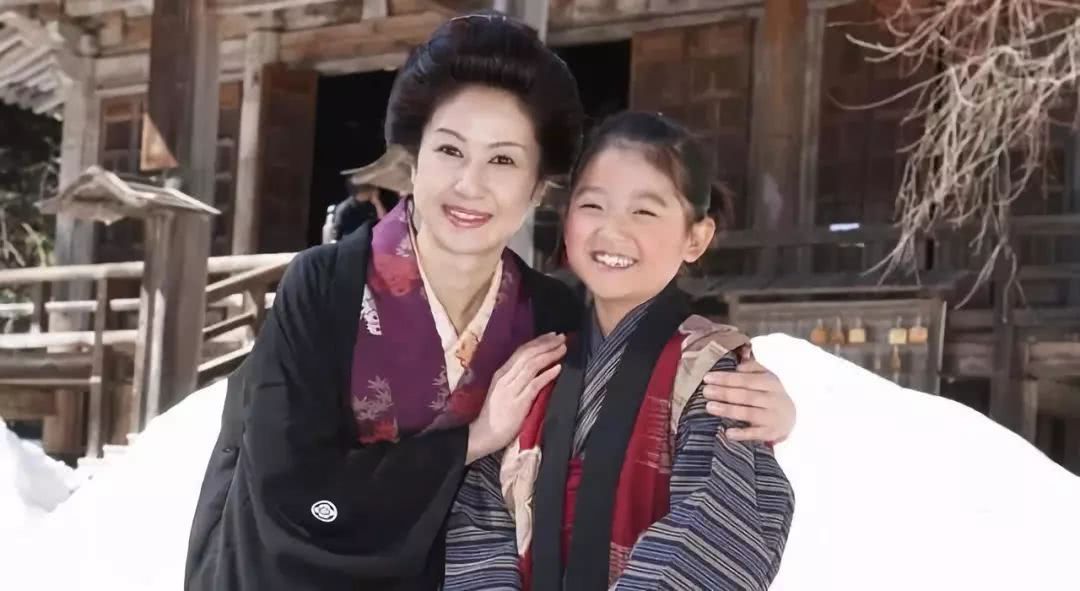
(Still from the TV drama "Oshin")
In 1962, Kazuo Wada returned to Japan after studying abroad and took over Yaohan from his parents. At that time, Japan's economy had already entered a stage of high-speed growth, and economic urbanization drove the rapid expansion of the retail industry. Kazuo Wada transformed Yaohan from a small mom-and-pop shop into a commercial retail chain enterprise. In 1986, Yaohan was successfully listed on the Tokyo Stock Exchange. At that time, Japan's bubble economy was inflating, and the stock and real estate markets were heating up substantially. Kazuo Wada keenly seized the opportunity and, through a business model of debt-fueled expansion, rose prominently in Japan's retail industry. Kazuo Wada believed that bank loans were inefficient and had high interest rates, so he wanted to bypass the banks and choose a shortcut, using his advantage as a listed company to issue convertible corporate bonds.
Convertible corporate bonds are bonds whose holders, when the bonds mature, can convert the bonds into company stock at a pre-agreed price. If during the conversion period the company's stock price is higher than the pre-agreed price, bondholders are naturally willing to exchange the bonds for stock, so the company's debt becomes stock that does not need to be repaid, greatly reducing the financial burden. Along with the prosperity of the Japanese stock market, Yaohan easily issued 60 billion yen in convertible corporate bonds. The business model of debt-fueled expansion brought Yaohan success in the Japanese market and also made Kazuo Wada tremendously confident, and he began to break out of Japan and move into Asia, fully implementing his Asia strategy.
(The image above shows Kazuo Wada)
In May 1990, Kazuo Wada moved the headquarters of the Yaohan International Group to Hong Kong, China. Within just a year and a half, Yaohan opened five branches in Hong Kong, China. In early 1992, Kazuo Wada planned to open his sixth branch in Hong Kong, China. Previously, Yaohan had always leased storefronts when opening stores. At this time, because the yen had appreciated substantially, Japanese people were competing to buy overseas assets, so Kazuo Wada decided that this time he would invest in purchasing his own storefront. Kazuo Wada invested 1.3 billion Hong Kong dollars at once and bought Yaohan's first piece of real estate - Hong Kong's Wai King Plaza. The Wai King Plaza store was Yaohan's first branch opened using its own property. However, at this time the Japanese economy had already peaked and begun to decline, the stock market crashed, housing prices plunged, and residents' purchasing power fell rapidly. Yet Kazuo Wada expanded against the trend and took desperate risks. Not only did he fail to shrink his battle lines in time, but instead he expanded overseas on a large scale. Kazuo Wada tried to use the development of overseas business to make up for the shrinkage of the domestic market, and he went further and further down the road of debt-fueled expansion.
Unfortunately, because the Japanese stock market crashed, when the bonds matured, Yaohan's stock price fell sharply. At that time, no one was willing to convert the bonds into stock, and instead they demanded that Yaohan repay the money upon maturity. As a result, Yaohan carried a heavy burden and had to pay as much as 10 billion yen in debt each year. Misfortunes never come singly. In the 1995 fiscal year, the Yaohan International Group also recorded an operating loss for the first time. In order to save the crisis, starting in 1994 Yaohan was forced to liquidate real estate it had bought earlier to repay debt. Although each asset sale brought substantial profit, all this money was still not enough to repay the debt, and income fell short of expenditure. In the end, all the assets Yaohan could sell were sold off, and it was still insolvent. On September 18, 1997, the Shizuoka District Court in Japan declared Yaohan bankrupt, involving an amount of 161.3 billion yen. This was the largest bankruptcy case in Japan's distribution industry after the war and caused a sensation in Japan.
Whether then or now, the story of Yaohan is nothing more than a small episode in the capital market. The rise and fall of Yaohan accompanied the inflation and bursting of Japan's economic bubble. Capital can enhance a company's competitiveness, but it cannot change the flaws of human nature. Any successful experience in the capital market may plant the seeds of failure.
Today, the editor's explanation ends here. See you next time.