How do you make an asparagus fern bonsai? Master these few small tips, and your asparagus fern will look even more beautiful
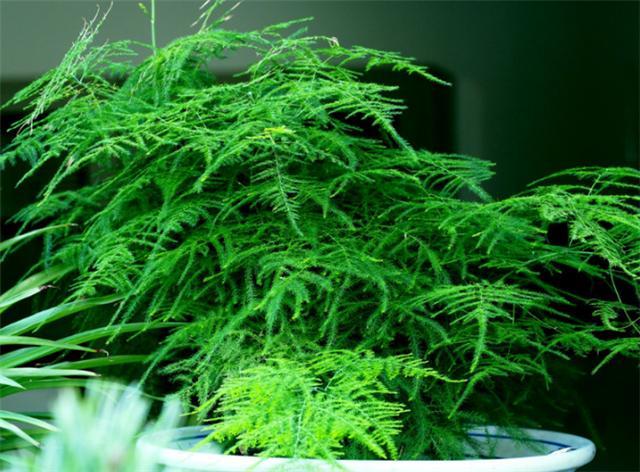
Asparagus fern, also called cloud-leaf bamboo, is an evergreen shrub in the Asparagaceae family and a common foliage plant. There are very many varieties, including dwarf asparagus fern, and the plant is very short, yet its branches and leaves are dense and solid, with very rich layering, making it very suitable for growers to use to make bonsai. So how do you make an asparagus fern bonsai?
Tips for making an asparagus fern bonsai
1. Selecting materials
Asparagus fern can be propagated by sowing and division. Asparagus fern is a common foliage plant, and you can buy potted plants at a flower market. Choose plants with a low, short form and rich layering to make bonsai, so it takes less time, pruning is simple, and you can make a fairly good bonsai.
2. Styling
Asparagus fern can be made into various styles such as forest style and water-and-land style. For the pot, you can choose a medium-depth or shallow pot; purple clay pots and common clay pots are both fine. You can pair it with landscape stones, or use a single clump as a scene, or combine several clumps of asparagus fern. Generally it is planted mostly as a single clump, two clumps, or three clumps, which can highlight the elegant, refined, and clearly layered characteristics of asparagus fern and avoid a messy look.
Styling methods:This is mainly done through pruning: cut off messy branches, shorten overly tall branches, and let the branches vary in height and be naturally harmonious. At the same time, you can use the phototropism of asparagus fern: place the branches you want to bend in a sunny spot, and the asparagus fern will grow lushly and naturally bend down.
3. Environment
Asparagus fern needs a humid environment. You can often spray water on the plant and around it to increase air humidity and make the leaves more glossy. Be careful to water frequently; do not let the asparagus fern dry out, and do not let water accumulate, so as to avoid root rot.
4. Fertilizing
During the growing season, asparagus fern can be given organic nutrient solution to make the leaves more emerald green and translucent. In winter, it can be placed in a sunny spot, and it can overwinter safely at 5-10 degrees.
5. Asparagus fern care
Asparagus fern can be kept in a warm, humid, semi-shaded environment. Do not let it be exposed to blazing sun; it can then be kept in a place with bright light but no direct sunlight, so that excessive shade does not cause the plant to grow leggy, thin and weak, and affect its ornamental value. At the same time, avoid blazing sun causing the leaves to turn yellow and fall off.
Growers now have some understanding of how to make an asparagus fern bonsai. Asparagus fern grows quickly, so you can repot it once every 1-2 years, then apply good fertilizer, or carry out division. Generally, asparagus fern has its most beautiful growth posture at 1-2 years; old plants take on a climbing form and have relatively low ornamental value. You can promptly cut off dead branches and branches that affect the appearance to keep the bonsai graceful.