Never put these potted plants indoors; they are better suited to being grown outside
Potted plants have already become an indispensable part of our homes; besides being ornamental, they can also purify the air, and some can even be eaten or used as medicine. But some are still toxic and can be harmful to children or pets, so it is better to grow them outside.
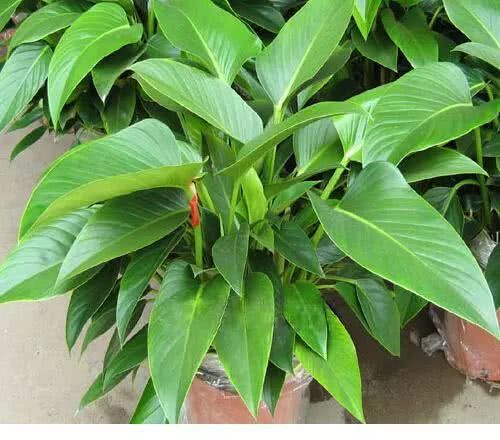
Philodendron
Because philodendron leaves are evenly matched, moderate in spread, thick and emerald green, when placed indoors they look elegant and refined and give a rich tropical rainforest atmosphere, making them one of the more common indoor foliage plants used in homes and public places.
However, note that its roots, stems and leaves are toxic. Accidentally touching or eating its sap can cause discomfort in the throat and mouth, and in severe cases can even cause suffocation, lead to cardiac paralysis, and may even result in death. Skin contact with its sap can cause itching or severe irritation, and eye contact with the sap can cause severe conjunctivitis and blindness, so families with small children should not grow it. But ordinary daily touching will not cause toxicity.
Golden Pothos
Golden pothos has an extremely strong ability to purify the air and is one of the best green plants for purifying indoor pollutants. Its leaves are beautiful and variegated, and it is very easy to care for and propagate, making it very suitable for growing in newly renovated houses.
But golden pothos is slightly toxic. Although the toxicity is not obvious to humans, its effect on small animals is relatively great. Accidental ingestion can easily cause swollen lips and swelling and pain of the tongue and throat, and some cases involve vomiting and diarrhea. After pets accidentally eat it, they will drool, have swollen mouth and tongue, or have difficulty breathing, and ingesting too much can easily cause kidney failure.
Syngonium
Because syngonium is easy to propagate, simple to cultivate, especially shade-tolerant and excellent in decorative effect, it is very widely used around the world. Its leaf shape and leaf color, which can change with the environment, can also be regarded as a major ornamental highlight. In addition, its leaves can also increase air humidity and can absorb large amounts of formaldehyde and ammonia, making it a very good indoor cultivated plant.
Syngonium is also slightly toxic, and its toxicity is mainly shown in the rhizomes and sap of the syngonium. After accidental ingestion, it generally causes a burning sensation in the throat, and can also cause numbness of the mouth and tongue and a feeling of oral mucosal ulcers; in severe cases there can also be edema, drooling, and difficulty opening the mouth, and medical attention should be sought promptly.
Lily
The lily has an elegant posture, green and graceful leaves, and a slender, upright stem, making it a valuable new star among cut flowers. In addition, lilies are also relatively easy to care for, and growing them as potted plants is also very popular.
It is relatively toxic to felines, but it is worth noting that not all lily varieties are toxic; only some varieties are more toxic to cats, so households with pets should be more careful.
Peace Lily
The peace lily is a year-round green plant native to South America. It is very beautiful when in bloom, and even when not blooming it is also an excellent indoor potted foliage plant. It can filter indoor waste gases and has a certain cleaning effect on ammonia, acetone, benzene and formaldehyde. It can also be used as a cut flower.
The flowers of the peace lily are toxic, especially the stamens. Accidental ingestion can easily cause swelling and pain of the mouth, oral cavity and tongue, and can also easily cause difficulty swallowing, vomiting, nausea or diarrhea.
Dieffenbachia
Dieffenbachia has broad, yellow-green leaves, with bright and strong colors, beautiful and elegant, and high ornamental value. It is currently one of the highly praised indoor foliage plants, suitable for potted viewing, and very comfortable and elegant when used to decorate the living room or study. Placed in public places with lower light, it still grows normally and is lush with branches and leaves, making it especially suitable for placement in modern buildings.
Accidental ingestion of the branches and leaves of dieffenbachia can easily cause swelling of the throat, numbness of the mouth and tongue, and a burning sensation in the oral cavity; in excessive amounts it can even cause muteness.
End