Make Your Own Automatic Drip Irrigation System with Simple Hoses, So Flowers Water Themselves
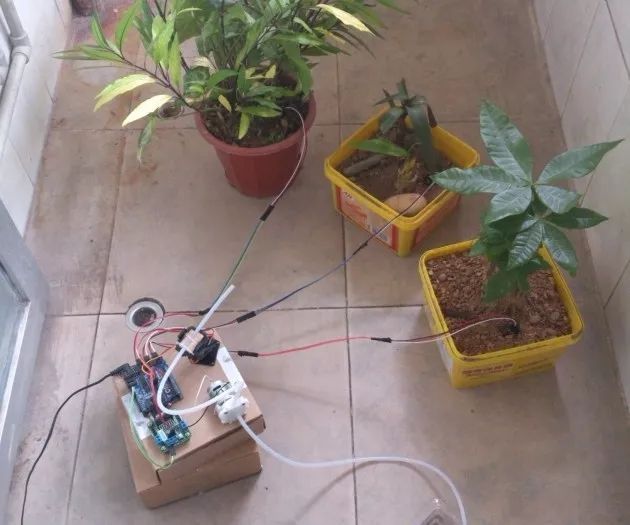
Whether plants are grown indoors or outdoors, an automatic watering system can be used; even if you occasionally forget to water, it does not matter, and it can make your flower-growing life easier and save you a lot of time. It can be made with a few bought hoses, and it does not take too much time. Let's take a look at how to make it.
The yard below faces south, so the sunlight is especially abundant, but the family has always been busy with work and does not have that much time to care for it, no time to look after the plants. By laying out some hoses here and installing some automatic watering devices, it can water automatically.
Some vegetables were planted in the yard before, and during the hot summer they needed frequent watering, sometimes even watering in the morning and evening; watering so frequently becomes very difficult.
Next, let's try an automatic watering device together and make some simple drip irrigation systems so that plants and flowers can be watered automatically.
You only need to make some small nozzles; buying hoses is fairly simple, only the timer is a little more expensive.
These are the materials to prepare for making an automatic drip irrigation system. You can just buy a drip irrigation kit at a hardware store; the main items are some hoses, a pressure regulator, irrigation drippers and a timer for drip irrigation.
An automatic drip irrigation system can also reduce pests and diseases, because if I water the plants frequently, it is hard to avoid watering the leaves and flowers. Long-term water accumulation on the leaves easily causes fungal diseases, and in severe cases it can cause the plant to rot.
The making process is also very simple: directly connect the connector to the faucet, connect the hose to the socket, then connect the pressure regulator, and reinstall the faucet hose connector.
Next, connect the other end of the hose. When connecting, make sure no water leaks out. Of course, before connecting the hose, you need to make sure of the distance to the drip head. It sounds complicated, but it is actually very simple.
Next, measure the length of each tiny hose until the round tube reaches directly to the potted plant's position. Of course, leave a little slack to avoid pulling the hose too straight, otherwise it will affect the dripping effect.
After that, you can install the drip line. You can directly use a drip hole punch to make holes, and then add the micro drip irrigation line.
Installing the drip irrigation dripper is very simple; basically you just insert it into the open end of the hose. Finally, bury this section of hose slightly in the soil, hiding it appropriately.
Next, connect the drip line connector to the main line pipe, then connect the micro hose to the other end.
The last step is to set the timer for automatic irrigation. Set the timer at the beginning section of the hose so that it waters on schedule. Once the automatic drip irrigation system is set up, it can run automatically.
After that, check regularly to make sure the plants can get the right amount of water. If it is rainy and overcast, you need to turn off the drip irrigation timer, and when it is dry, you need to increase the watering frequency.
An automatic drip irrigation system can deliver water directly to the base of the plant's roots and stems, which avoids long-term water accumulation on the leaves and can effectively prevent black rot and leaf spot disease.
What do you think of this idea? If you have some hands-on ability, you might as well give it a try.