Horned melons are hitting the market in large quantities; how can you grow them to improve melon quality?
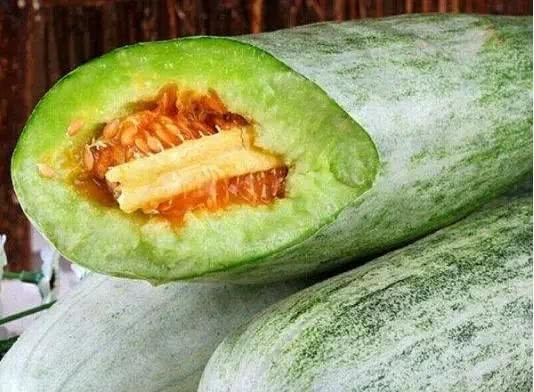
Around here, we call the horned melon "horned honey" or "horned crisp." Every time I eat a horned crisp, it always looks to me like a vegetable melon, but the taste is still especially good. Crisp and crunchy, and very sweet.
The planting time for horned crisp is generally April each year, which echoes the saying, "Around Qingming, plant melons and sow beans." So as things stand now, it is too late to plant them, but August happens to be the season when horned honey hits the market in large quantities. Even though you cannot plant them, you can still eat them.
Here I will share how to grow horned honey.
Horned honey melon has been very popular in the market these past two years, because its skin is very thin, its texture is crisp, its sweetness is high, and its size is moderate, making it very suitable for people to eat. Naturally, market recognition of it is also high.
Replace with a high-definition large image
The growth habits of horned honey melon
Horned honey melon is generally planted around April, when the temperature is about 15 degrees. The soil needs to be fertile and loose, preferably sandy soil. With ample sunlight and moderate moisture, melons are not tolerant of waterlogging.
How to grow horned honey
First, you need to choose a high-quality horned honey melon variety. Be sure to buy varieties with guaranteed quality, and do not buy unlabeled products of unknown origin. Some growers report that the horned honey they grew turned out like cucumbers, not sweet at all, and this has a lot to do with variety selection. Open-field planting generally starts in mid-to-late April, but many growers now use greenhouse cultivation, which allows an earlier market launch. Generally, seedlings are raised starting in January each year, and the melons can reach the market around May.
Replace with a high-definition large image
Before planting, the land needs to be prepared first and sufficient base fertilizer applied. Generally, one mu of land requires 3000 kg of farmyard manure, with ridge cultivation. Generally, about 1800 melon seedlings are planted per mu, and transplanting should be done on a sunny day.
After transplanting, if the soil in the melon field is moist, there is no need to water again. When the melon seedlings grow to about 10 cm, water once. Watering should be done on a sunny day, and topdressing can be combined with watering. For topdressing, potassium nitrate compound fertilizer is best. Generally, each mu of melon field needs about 5 kg of compound fertilizer.
Replace with a high-definition large image
Melons have a relatively high water requirement and the field soil needs to be kept moist. Generally, water once every week. The amount of water during the seedling stage should be slightly less than during the full fruiting stage. About every two weeks, combine watering with topdressing of potassium nitrate compound fertilizer, using about 5 kg each time. Water control should be carried out before fruit harvest.
In addition, after melons flower, it is best to carry out artificial pollination to increase the fruit-setting rate. Also carry out reasonable vine hanging and pinching of the plants. Control pests and diseases in time.
This is Science Xingnong. You are welcome to follow, and I will take you along to grow your knowledge together.