There are many types of peanut growth regulator products; how do you choose the right one?
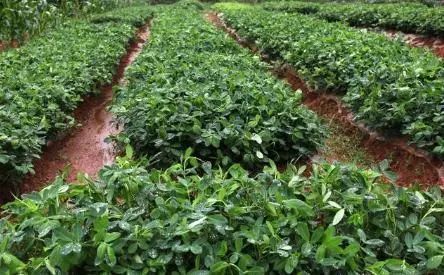
At present, there are already a great many growth-regulating retardants used in agricultural production, including mepiquat chloride, maleic hydrazide, trinexapac-ethyl, flurprimidol, paclobutrazol, uniconazole, chlormequat chloride, and mepiquat chloride, which have been used in agricultural production one after another; to date some of these agents have already been phased out, while most of them are still widely used. In terms of their major categories, most retardants belong to the triazole class.
Although triazole growth regulators have a decent retardant effect, their efficacy lasts too long, their pesticide residues are relatively high, and the harm to succeeding crops is relatively serious. Prohexadione calcium, however, overcomes the above problems: on the premise of efficiently inhibiting crop growth, it leaves no pesticide residue in rotational crops and causes no pollution to the environment.
Replace with a large high-definition image
Although quaternary ammonium salt (chlormequat chloride, mepiquat chloride), triazoles (paclobutrazol, uniconazole) and cyclohexanecarboxylic acid (prohexadione calcium, trinexapac-ethyl) can all regulate and inhibit gibberellin biosynthesis to achieve the goals of controlling crop growth, promoting photosynthetic metabolism and increasing crop yields, prohexadione calcium can be called a rising star, and its advantages have already gradually emerged in production; it can be said that it is more welcomed by the market, and its application prospects are broader.
As a highly efficient plant growth regulator, prohexadione calcium is also very efficient at regulating plant growth. This regulator was synthesized in Japan in 1983 and applied to the growth control of grasses and fruit and vegetable crops, and the agent has also applied for patent protection in China. This is also the currently widely used cyclohexanecarboxylic acid compound.
Replace with a large high-definition image
After peanuts are treated with prohexadione calcium, the leaf color becomes noticeably greener and the thickness also improves noticeably, raising the photosynthetic efficiency of peanuts and achieving the goal of increasing yield. Studies have shown that after spraying prohexadione calcium and paclobutrazol, photosynthesis measured in the first week after spraying showed little difference between the two treatment groups, but when measured in the second week, the photosynthetic efficiency of the prohexadione calcium group was noticeably much higher than that of the paclobutrazol group. (Prohexadione calcium sprayed at 30 g per mu.)
Compared with paclobutrazol, after spraying, peanuts treated with prohexadione calcium senesce more slowly in the late stage, whereas peanuts treated with paclobutrazol or chlormequat chloride often show symptoms of premature senescence in the late stage; this is also a major advantage of prohexadione calcium. Prohexadione calcium can significantly increase the vitality of peanut root systems and avoid or delay premature senescence.
Replace with a large high-definition image
In terms of yield, the prohexadione calcium treatment is also not weaker than the paclobutrazol treatment group. However, from the perspective of the growth-retarding effect, prohexadione calcium seems inferior to paclobutrazol, but the plants perform excellently in pod weight, dry matter weight and yield. The yield-increasing effect is noticeably better than that of paclobutrazol.
In summary, when choosing a peanut growth retardant, Kexue Xingnong suggests considering prohexadione calcium. I would not dare say it is the best peanut growth-retarding regulator, but as far as current production is concerned, it is a very good choice.
This is Kexue Xingnong; you are welcome to follow us and grow your knowledge with us.