Direct-seeded rice saves time and labor - which rice varieties are suitable for direct seeding?
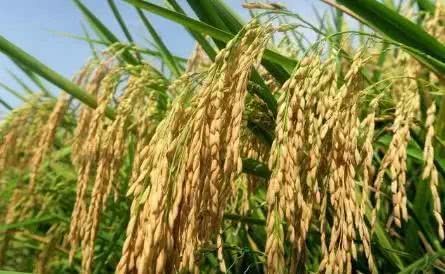
As a large amount of labor migrates to cities and towns, and with the development of herbicides, direct-seeded rice has developed quite rapidly in our country because it saves labor, especially in the middle and lower reaches of the Yangtze River. In some provinces, the area of direct-seeded rice has reached more than half, and with the development of agricultural machinery, it continues to show a trend of further expansion.
However, compared with seedling-throwing and transplanting rice, direct-seeded rice still has quite a few disadvantages. In view of these disadvantages, what kind of direct-seeded rice varieties should we choose to plant in order to get a good harvest? Below, we will discuss the disadvantages of direct-seeded rice and, around avoiding these disadvantages, explore the selection of suitable direct-seeded rice varieties.
Replace with a high-definition large image
Disadvantages of direct-seeded rice
First, direct-seeded rice has a short growth period. Compared with traditional transplanted rice, as the sowing date is delayed, the growth period of direct-seeded rice is noticeably shortened. For example, rice is raised as seedlings around May 15 (transplanted rice), but direct-seeded rice cannot be sown until late May to early June. Calculated this way, the growth period of direct-seeded rice is about half a month shorter than that of transplanted rice. As sowing is delayed, temperatures in the later stage are relatively lower, and the heading stage is relatively later, directly affecting grain filling and seed setting in rice.
Second, direct-seeded rice has relatively more weeds.
Direct-seeded rice has three peak periods for weeds. The first is 3 days after sowing, mainly barnyardgrass, Rotala indica, and so on. The second is around the 4-leaf stage of direct-seeded rice, about 13 days after sowing, mainly barnyardgrass, Chinese sprangletop, and so on. The third period is about one month after sowing, mainly Monochoria vaginalis, and so on. Compared with transplanted rice, weeds occur more frequently and in greater numbers. Without strong weed control techniques, this is indeed a rather troublesome matter.
Replace with a high-definition large image
Third, rice suffers relatively severe damage when encountering a late spring cold spell. In the early stage of direct-seeded rice, low-temperature freezing damage can easily cause large-scale damage to rice. If low temperatures continue, rice seedlings will turn yellow, die back, or even die. Therefore, when choosing direct-seeded rice seed, tolerance to early low temperatures is a very important selection criterion.
What kind of direct-seeded rice seed should be chosen to achieve the goal of high yield? Options include Huai 9508, the super hybrid rice Zhuliangyou 819, and so on.
Huai 9508 is a late-maturing variety bred by the Huaiyin Institute of Agricultural Sciences. It performs relatively well in high yield, stable yield, and quality. In field demonstrations, the yield is generally about 650 kg per mu, and in years with relatively suitable weather, the yield can reach more than 750 kg. It can be directly seeded in early May. This variety is a japonica rice variety.
Luliangyou 819 is a two-line hybrid indica rice variety suitable for planting in the middle and lower reaches of the Yangtze River. Its growth period is about 107 days, and it is highly resistant to rice blast, bacterial leaf blight, and so on. In the 2006 variety demonstration, it could currently exceed 500 kg, and high-quality, high-yield fields can reach more than 576 kg.
Replace with a high-definition large image
The selection of direct-seeded rice seed must be combined with direct-seeding techniques to bring about high yield. In direct-seeding techniques for rice, attention needs to be paid to weed control and fertilization techniques. For direct-seeded rice, chemical weed control can be carried out by spraying butachlor and so on. During the growth period, chemical herbicides such as Lejiding can be sprayed together with shallow water for weed control.
Fertilization for direct-seeded rice is about 20% higher than fertilization for transplanted rice. Apply heavy basal fertilizer in the early stage, pay attention to appropriate topdressing in the middle stage, and suitably drain the field with shallow water in the later stage. It is believed that with the selection of better rice varieties and later-stage management, a relatively ideal harvest can be obtained.
Direct-seeded rice has disadvantages such as early late spring cold spells, a shorter growth period, more weeds, and greater fertilizer use. If suitable rice varieties are selected in view of these disadvantages and combined with scientific cultivation techniques, the advantages of direct-seeded rice will be better demonstrated.
This is Science Promoting Agriculture. You are welcome to add a follow, and we will take you to learn together.