Dried purslane buried under flower pots as fertilizer really works well
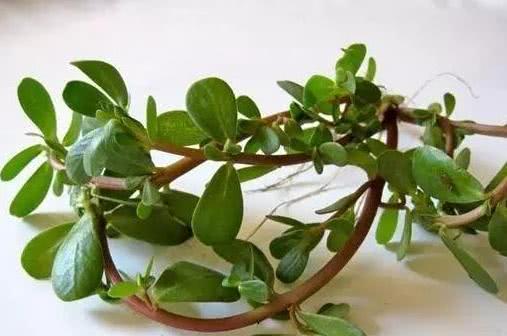
When I was a kid, my family lived in the countryside. As soon as school let out, I would wander along the riverbanks in the wild, and occasionally I would find a kind of wild vegetable. Where we lived, it was called "horse wasp vegetable," and only later did I learn its scientific name is "purslane" (Portulaca oleracea). Most people who have lived in the countryside know this plant, because its appearance is very easy to tell apart from other wild vegetables and weeds. Maybe it is also because we ate it often!
Besides being edible, purslane is actually also a kind of Chinese medicinal herb - of course, the dried kind. Many people say that eating it has health benefits and many other effects, and that is absolutely true. Growing a few pots of it on the balcony makes it a real "longevity vegetable"! After purslane is dried, it has another clever use, which is "using it as flower fertilizer."
Purslane itself contains many nutrients, such as calcium and phosphorus and vitamins, and there is scientific basis for this - of course, that is also why it is used as a Chinese medicinal herb. If there were nothing special about it, how could it be used as medicine? In the past, I shared with gardening friends that when growing flowers, burying some Chinese medicine residue in the potting soil can do a very good job of promoting lush branches and leaves.
And dried purslane is, of course, also a truly good fertilizer.
Use it to line the bottom of a flower pot, or mix some into the soil when making nutrient soil, and it is equivalent to putting various trace elements and nutrients into the nutrient soil. All of these can promote the health and strength of flowers and plants.
After picking purslane in the wild and bringing it home, wash it clean first, then just spread it out in the yard or on the balcony. Usually two days of strong sun is enough to dry it, just like in the picture above, and then it can be crushed and mixed into the potting soil.
After learning this little tip, I believe gardening friends now have another fertilization trick when growing flowers. Whether used as a base fertilizer or a top dressing, purslane is a good choice. Of course, all flower-growing techniques are actually discovered bit by bit by gardening friends through trial. If you are also a gardening friend who loves growing flowers and is good at experimenting, I believe you can discover quite a few flower-growing tips too.
Looking back at purslane now, you realize this thing is simply wonderful. It can be enjoyed as an ornamental, eaten, and used as flower fertilizer. If such a powerful plant is not grown in a few pots at home, that would really be a shame. By the way, purslane now sells at market for several tens of yuan per jin. If you grow some on the balcony or in the yard, wouldn't that be a huge gain! Haha, just kidding, but growing one or two pots is indeed quite nice.
That is all for sharing the knowledge about using dried purslane as flower fertilizer. Thank you for reading!
Remember to like and share~