Pay attention when growing orchids: this is one thing you must never do
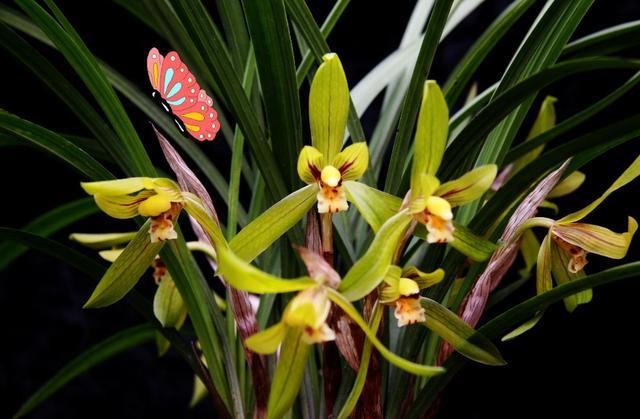
Simple and quiet, noble and elegant. Although it does not have large, stunning flowers and leaves, its delicate temperament best suits traditional Eastern aesthetics! That's right, what I am really talking about is one of China's traditional famous flowers, one of the Four Gentlemen of flowers: the orchid! Chinese people have a long history of loving and growing orchids, and over that time they have summed up quite a few excellent growing experiences and precautions. I have to say, these are especially helpful for today's growing enthusiasts. So today I will introduce one of them: the technique for caring for orchids after watering. This is a place where many people easily make mistakes!
As for watering orchids, I believe everyone already understands it very well: water when dry, stop when wet, and appropriately adjust the amount and frequency of watering according to the different water needs of orchids in different seasons. Basically, there is no problem following this method. But what should we do after watering? Many friends say that in order to inhibit bacterial growth, of course you should immediately put it in a cool, ventilated place. In fact, this idea has a certain misunderstanding. It does not apply to all plants, such as the orchid we are introducing today. This is because usually, whether it is the potting soil that comes with orchid seedlings when we buy them or the substrate we mix according to online formulas, the particles in it are relatively large. Although its water-draining ability is strong, looked at from another angle, its water-retaining ability is also insufficient.
And if orchids are ventilated immediately after watering, water is lost even faster. The orchid roots have just taken a sip or two of water, and the thick, fleshy roots are swelling and about to drink their fill, but the water is lost. Without water replenishment, the orchid roots quickly shrink again. If this state is maintained for a long time, it is extremely unfavorable for the growth of orchids. Not only do the roots fail to get the water needed for development, but the whole plant also becomes wilted and listless, with none of the elegance an orchid should have!
At the same time, if you grow orchids in the city, then ventilating immediately after watering is even worse! Because here we need to consider the problem of "stale air." This is a brand-new concept for plants, because on urban balconies, due to space limitations, it is impossible to satisfy all wind directions from every side, so stagnant air is bound to occur. And stagnant air will prevent the stale air in the potting soil from dispersing. Anaerobic bacteria multiply in large numbers under conditions where aeration is less than ideal, thus harming root growth.
So what should we do? The most correct method is to water the orchid thoroughly in the evening, then after a night has passed, the next morning wait until the orchid roots have fully absorbed and drunk their fill of water and transported it to the flowers and leaves of the whole orchid, then place it in a cool, ventilated place so that excess water can be expelled. As for the problem of stale air, if conditions permit, we can place an electric fan beside the orchid and keep blowing air, so that the orchid can truly be grown strong.