Avoid these five taboos when growing flowers at home, and every pot will burst into bloom
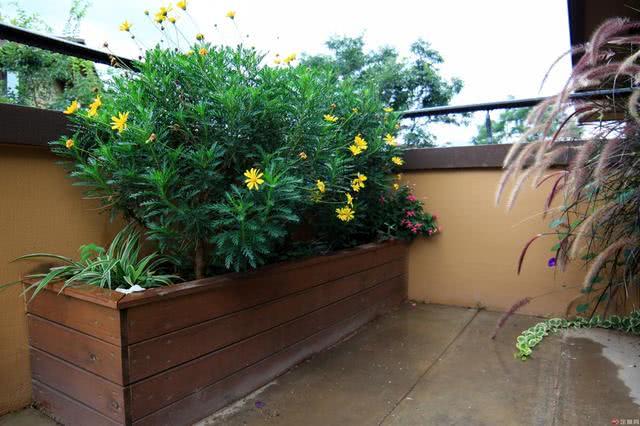
Growing and planting flowers cultivates character and mind. It must be said that in such a fast-paced life, we still need to find some ways to gain a moment of peace, and growing flowers is a very good way. Because it not only cultivates your hands-on ability and level of care, but also adds more bright spots to the entire home life. However, wanting to plant flowers is easy, but planting them well is not easy, and it is not something we can handle just on a whim. In fact, there are many taboos in flower growing. If you do not follow them, then the flowers you plant will very likely end up dying at your own hands, with more loss than gain! So what exactly are these taboos? Let us take a look together!
Potted plants tragically become trash cans
It is unclear when it started, but this kind of argument began circulating online: "Leftovers can be used as flower fertilizer," so some people simply treat flower pots as their own trash cans, throwing leftover fruit peels and fruit pits directly into the pots, and tossing eggshells and walnut shells in without hesitation. In addition, things like beer, rice-washing water, and soybean water are also poured in directly. In fact, this is a very big misunderstanding. We also believe that some kitchen scraps can be used as flower fertilizer and have a certain amount of fertility to support growth, but pouring them in directly without fermentation is the wrong approach. The reason is that these things may still contain residual sugar and so on, which can easily cause soil compaction and easily attract all kinds of small flying insects in the hot summer.
Watering is never done with care
Watering has always been a relatively key item in our flower and grass growing, but unfortunately it has also become the most easily neglected point. The specific manifestation is that many beginners are careless and not careful at all when watering plants! This mainly refers to two aspects. First, watering does not soak through, which is what we commonly call "half-way water." In this way, the water does not flow to the bottom of the flower pot, and the flower's roots do not absorb water either. After a long time, the plant will lose leaves or even wither and die. Second, watering too much. Often, upon seeing a flower pot, people pour in a whole large kettle of water. This is especially true for soil that has already become muddy, which has even worse water permeability and often causes water to accumulate in the pot, reducing the soil's oxygen content and ultimately causing root hypoxia and rot.
Potted plants are never pruned
Many planting enthusiasts treat their potted plants as their own biological children, feeling heartbroken at the slightest bump or knock, let alone taking scissors to prune them. Proper pruning of plants will make them grow more delicately beautiful and stronger. If they are not pruned for a long time, it will instead affect their normal growth. Think about it: no matter how much parents cherish their children, they still have to cut their children's nails and hair, right? So understanding the issue of pruning from this direction may help you relax a lot.
Flower pots are always placed randomly
I once met a person who bought a whole set of tools before growing flowers and also did his utmost during cultivation, but the flowers he grew never thrived. Later, after we looked into the actual situation, we found that the place where he placed his flower pots was incorrect. Different types of flowers differ somewhat in their degree of sunlight exposure and ventilation requirements, and it is incorrect to randomly place flower pots before understanding their habits. Moreover, if you have a sick person at home, you should be even less casual about placing flowering plants indoors, because pollen may very likely cause infection or allergies in the patient. Be sure to remember this!
Fertilizing as soon as yellow leaves are seen
This point is actually very common. Many inexperienced growers, upon seeing yellow leaves on plants, subconsciously think it is "malnutrition" caused by a lack of fertilizer! In fact, this is not the case. There are many reasons for yellow leaves. Besides lack of fertilizer, there may also be lack of water, blocked photosynthesis, slow metabolism, or even natural phenomena. We need to understand the specific cause of the yellow leaves and then prescribe the right remedy!