Asparagus fern just sprouted and easily dies? Add a drop of this and it will grow into a full pot in 20 days
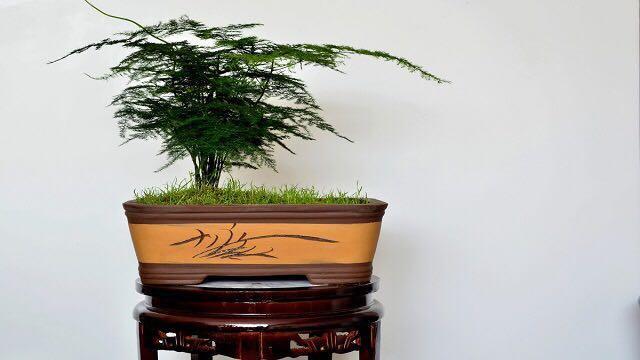
Asparagus fern (Asparagus setaceus) has quite an elegant air, also known as cloud bamboo. Although it is named a bamboo, its appearance is similar to pine and cypress, and it is a bonsai plant. People often place it on living room shelves or in the study, and of course a desk is also a good spot, because it helps purify the air and reduce radiation.
Asparagus fern is nice to look at but not easy to care for, especially during these hot dog days of summer. Quite a few gardening friends have complained to Huahua that although their asparagus fern has grown new shoots, the leaves are still turning yellow. In fact, there are many reasons for this situation, so let Huahua teach you step by step how to care for asparagus fern.
First, asparagus fern has its own ideas about light requirements. It does not like overly strong sunlight, and soft, diffused light is the best choice. In spring and autumn, when the sunlight is not too strong, you can take the asparagus fern out to the balcony to receive some sunshine. In summer, absolutely do not let it be exposed to direct sunlight; quickly move it to a shady place and quietly wait for it to grow. In winter, because the temperature is too low, sun exposure is also good for the asparagus fern's photosynthesis.
Second, the soil needed for caring for asparagus fern also has requirements. Asparagus fern loves loose, fertile, sandy soil, so garden soil and leaf mold can be mixed together, which can ensure the nutrients the asparagus fern needs during growth.
Fertilizer does not have a great effect on asparagus fern, but going without fertilizer is absolutely out of the question. Just as people eat small meals more often, the same principle applies to fertilizing asparagus fern; try to use a small amount each time and do it more frequently. Asparagus fern, like most potted plants, likes diluted weak fertilizer water, which when applied helps the soil absorb nutrients and provide energy. Of course, during the peak growing season, the interval between fertilizing can be appropriately shortened.
Watering has always been a hard aspect to control: water too much and it easily drowns, water too little and it dries out. Asparagus fern is a water-needing plant and should be watered regularly and in fixed amounts. If watering is not timely, the yellowing leaves mentioned earlier will appear. Try to water more in summer and less in winter. When necessary, you can use a small spray bottle to moisten the leaves and enhance water evaporation. If you encounter a situation where new leaves are not growing, dropping in a few drops of nutrient solution can solve it perfectly.
In addition to the above points, Huahua also has a few precautions for caring for asparagus fern to share with everyone. The first point is that asparagus fern is best repotted once every one to two years, because using the same pot for a long time will cause the soil nutrients in the pot to be insufficient. If you really find repotting troublesome, changing the flower soil is also an acceptable option.
Also remember to regularly prune the flower branches of the asparagus fern, which can avoid the problem of uneven nutrient distribution caused by branches and leaves becoming too large, and if some branches grow too tall, it will also reduce the ornamental value of the asparagus fern. I hope gardening friends, after learning these methods, can quickly bring their asparagus fern back to life.