What to Do When a Desert Rose's Roots Go Soft? Here's the Correct Way to Handle It
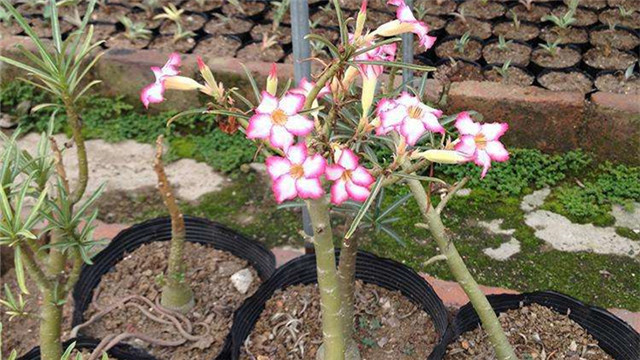
1. Reduce Watering
1. Cause: The desert rose (Adenium obesum) is a drought-tolerant plant, so watering it too much can cause the roots to go soft.
2. Solution: When growing a desert rose, water it sparingly and avoid letting it sit in a damp environment. During its growing season, watering once a week is enough. Before watering, check its condition, and only water when the potting soil, branches and leaves are completely dry. Do not water during its dormant period; if you water too much, it cannot absorb it, which will cause the roots to go soft.
2. Reduce Fertilizing
1. Cause: Most desert-type plants do not like fertilizer. Too much fertilizer is a burden instead, and can cause the roots to go soft.
2. Solution: The desert rose grows very slowly, so you should apply mild fertilizers, such as animal manure or bean cake. Fertilize during its growing season, once or twice a month is enough; no fertilizer is needed at other times.
3. Increase Light
1. Cause: Drought-tolerant plants are all sun-loving plants, and the stronger the sun, the better they grow. If the desert rose does not get enough sunlight, its roots will go soft.
2. Solution: It is best to grow it in a sunny spot with all-day sunlight.
4. Adjust the Temperature
1. Cause: The desert rose needs fairly warm temperatures to grow, and above 30°C is most suitable for it. If the temperature is too low, it will affect its health and cause the roots to go soft.
2. Solution: The higher the temperature when growing it, the better. Desert-type plants all like high temperatures.