Succulents Survive the Peak of Summer Only to Die in Early Autumn: 99% of Cases Are Due to Ignoring These Few Things
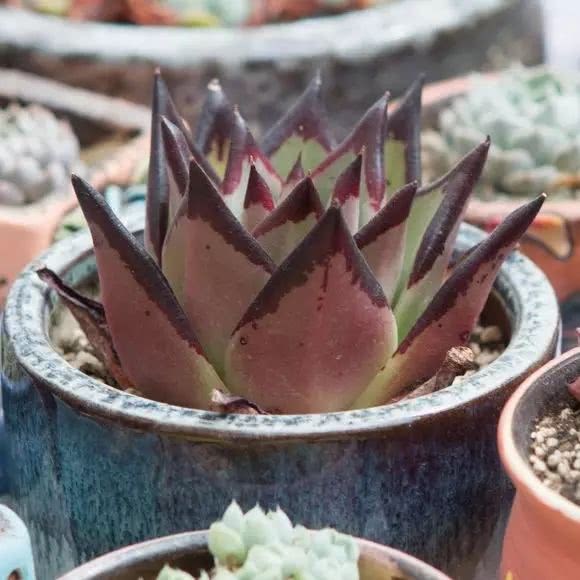
Thanks to the author: Laomao solo for sharing
Early autumn has arrived, but the battle for our succulents is far from over. Starting today, our care priorities also need to shift...
After early autumn passes, in a little while longer, friends in Beijing will be welcoming cooler days. I am not too familiar with the climate in the south, but it should be developing in a good direction too, right?
Succulent growers who have been holding back all summer have many plans waiting to be carried out, such as repotting, changing soil, sowing, leaf propagation, watering, and of course all kinds of buying, buying, buying...
Having brought succulents through several summers, I have found that right at the beginning of autumn, if you are not careful, the casualty rate can suddenly spike. So this article is based on some of my experiences, as well as the experience of some succulent-growing friends around me, to talk about a few things that need attention.
1. The first thing to be careful about is watering after early autumn
Many friends restrict water or even cut it off entirely for their succulents in summer. Of course, some water normally too. Everyone has their own method.
For those who have restricted or cut off water, after the weather turns cool, it is recommended not to soak the soil thoroughly right away for the first watering or two. The water amount should be gradually restored to give the succulent roots a period to adapt, so as to avoid increasing the chance of rot.
2. Also pay attention to shading
In summer, many friends put up shade nets, and the succulents spent one or two months in the shade. During this time, the succulents have already adapted to an environment without direct sunlight.
If the shade net is suddenly removed, and the autumn sunlight is not as gentle as we imagine, sunburn can easily occur at this time.
I suggest everyone still remove the shade net gradually, for example by gradually reducing the time the net is up each day, or only putting it up during the strongest midday sun.
3. Repot and change soil a bit later, and rooting will be easier
Among all the factors that affect rooting, I have always felt that climate is the most important, while watering and soil mix are relatively secondary.
Although early autumn has already arrived, the weather is still muggy and humid. It is better to wait until the highest temperature of the day stabilizes below 30 degrees before repotting and changing soil. You can also take the opportunity to trim the roots, let them dry, and then plant them. Combined with reasonable watering and soil mix, this can lay a good foundation for the succulents.
If you can wait until the highest temperature is around 25 degrees and the lowest temperature at night is in the teens, then rooting will be much easier.
Actually, succulents do not necessarily need soil and pot changes every year. If they are growing well and you are satisfied with everything, then there is no need to change. If the pot is too small, or the roots have not grown well, or you think the pot is not attractive, then consider changing it.
4. Pay attention to the weather forecast, especially the 15-day forecast
Although weather forecasts are not very accurate, the 15-day forecast can show the trend of the climate, which helps us judge whether the good days for succulents have really arrived... Hahaha, only when the temperature truly continues to drop can we consider summer to be over.
5. Be careful about pest prevention
Recently some friends have reported that mealybugs are starting to increase. I remember one year there was a mealybug outbreak right after early autumn, when the temperature dropped slightly.
Later I looked up some materials and learned that mealybugs are afraid of heat too. During the hottest part of summer, their activity decreases, and when it gets a little cooler, they perk up, come out to party, start having babies, and are overjoyed.
So at this time I suggest that on one hand we apply medication when needed, and on the other hand observe more, especially under the leaves, lift them up and take a look, and also carefully check the base of old stems. Sometimes there will be surprises...
If you find mealybugs, there is no need to panic. My old method is to apply preventive medicine and killing medicine together, and the problem is usually not serious. For example, spray some killing medicines such as mealybug spray, and at the same time apply DX to prevent recurrence.
6. Clean up dried leaves in time
After a summer has passed, those who are not diligent may have accumulated a lot of dry leaves in the pots. At this time they should be cleaned up properly. The temperature and humidity have not truly dropped yet, and if the succulents are further smothered by dry leaves, problems may occur.
There is a principle for pulling off dry leaves: only pull off those dry leaves that come off with a light touch. If a leaf is not completely dry yet and you force it off, it will leave a relatively large wound on the succulent, increasing the risk of infection.
7. Be cautious about pulling off leaves for leaf propagation
This point is best discussed together with the previous one. When pulling off leaves for leaf propagation, the leaves you pull are inevitably not completely dried out, but relatively plump leaves. After such leaves are removed, they will leave relatively large wounds on the succulent, increasing the chance of infection in this season, so be careful.
Moreover, the sprouting rate of leaves has not yet returned to a very high level now, and the removed leaves are also relatively prone to rot, so everyone should still be careful and cautious.
8. If you have nothing to do, you can mix soil
We can do some basic work now, such as mixing soil. On one hand, it prepares us for the wonderful days ahead; on the other hand, it gives us something to do and keeps our hands from getting restless, haha.
Those who have always used ready-made soil can look into methods of mixing soil, buy various media themselves, sift the soil, and mix it.
Those who already mix their own soil can try improving their mix, see what media have become popular this past year, and take the opportunity to test how effective they are. Many times what is popular is hype by sellers, but sometimes it really does have a certain effect.
9. In the days ahead, keep your eyes open when buying succulents
Many sellers also suffered losses in summer, and some old stems became diseased or even black and rotten. After summer, many sellers have branch tips cut from diseased old stems, which may be sold as small old stems.
When buying succulents, be careful with those that obviously have no roots and were cut not long ago. Some obviously look like just a branch. It is best not to buy this kind of succulent for the time being.
Buyers are never as shrewd as sellers. This is true in every field, because the resource information we and the sellers possess is completely asymmetric. Sometimes we really do still need to choose honest sellers with a good reputation.
10. Before winter, do not buy too many succulents
In winter, the outdoor temperature will drop below 0 degrees, or even below minus 5 degrees. At this time, many of us succulent growers have to choose to move our succulents indoors for the winter.
Then the problem comes. When they were outside, we may have had balcony hanging racks or other facilities that could hold a lot of succulents.
But when winter comes, there is no room to place them indoors, so we have to use multi-tier racks. In this situation, lighting and ventilation for the succulents become problems again. So this point is mentioned up front: please pay attention to controlling the number of succulents during the wonderful days that are about to come.
In summary, that is all for now. All this rambling may have annoyed everyone. Actually the core message is just do not rush. Hold on a little longer, and the good days for our succulents will arrive.
If you also like growing flowers, then follow us!