Bonsai Master Hu Leguo Passes Away, Rest in Peace
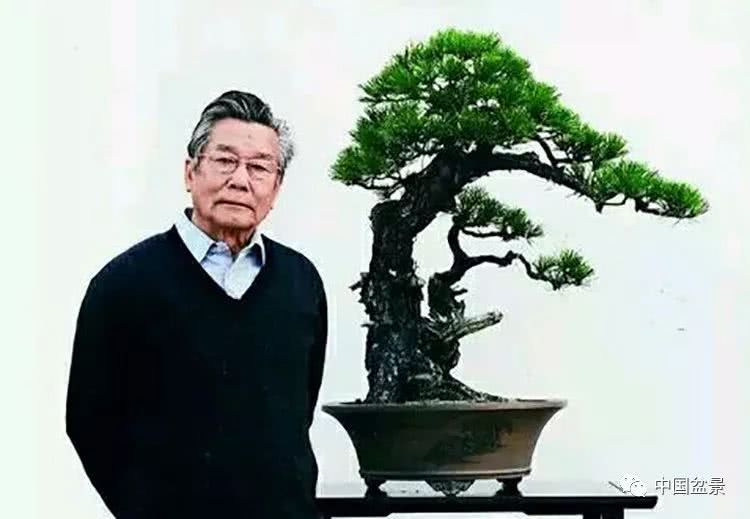
Rest in peace, Master Hu Leguo!
Photos and text by Shanye
This article is dedicated to Mr. Hu Leguo. Our bonsai colleagues in Nanyang, Henan thank you for your guidance and teaching! On July 13, 2014, the Nanyang Bonsai Cultural Village welcomed a distinguished guest - Master Hu Leguo. Accompanied by President Hu Dayu, Mr. Hu Leguo visited each bonsai garden in the village and gave high praise and guidance for Nanyang bonsai and the development of the Nanyang Bonsai Village! Grateful! Thankful! I have gathered a few photos to remember Mr. Hu Leguo - your voice and face are still with us!
This article was recommended by President Hu Dayu and is selected from "Shanye's Meipian". Copyright belongs to the original author.
Work by Master Hu Leguo (Japanese red pine, height 120 cm)
Remembering Chinese Bonsai Art Master Hu Leguo
When we walk into the Wenzhou Bonsai Garden on Jiangxin Island in Zhejiang, we are quickly captivated and filled with admiration by the bonsai of all different forms, with their fresh and graceful compositions, and landscapes that harmonize movement and stillness. Especially those "tall-trunk, weeping-branch style" pine bonsai - the small reveals the large, fully displaying the uprightness and vigor of the pine.
The "tall-trunk, weeping-branch style" pine form was the specialty of Chinese Bonsai Art Master Hu Leguo, and because it is so rich in poetic and painterly quality, it is much loved by bonsai enthusiasts at home and abroad. Hu Leguo was born in Wenzhou in 1934. After graduating from high school in 1957, he worked as a farmer on a school-run farm, as a factory worker, and as a substitute teacher at a school. In 1959, through someone's recommendation, he entered the Wenzhou Municipal Garden Management Office as a temporary worker, writing artistic characters, cutting wax stencils, and then helping plant flowers and grass at the Miaoguo Temple flower nursery. And it was precisely this job of planting flowers and tending plants that let him find the joy of life.
From then on, the young Hu Leguo settled contentedly into this work. He took the bonsai technician Mr. Xiang Yanshu as his teacher and learned to make bonsai. At that time, Wenzhou bonsai was influenced by the Su, Yang, and Tong schools, all following the same pattern, and the quality of a work was expressed and judged merely through the carefulness and refinement of technique during production. Rule-based bonsai works neither conformed to the laws of natural growth nor had any poetic or painterly quality, let alone artistic conception.
"Teacher Xiang also felt that the old production methods were wrong and asked us to innovate." Hu Leguo inherited his respected teacher's spirit of bold innovation. He began to teach himself knowledge of botany, soil, gardening, and other disciplines. Taking advantage of opportunities when his work unit sent him out to purchase flowers and trees, he traveled to Shanghai, Suzhou, Guangzhou, and other places to visit senior masters of the bonsai world such as Yin Zimin, Zhou Shoujuan, Zhu Zi'an, Kong Taichu, and Lu Xueming, and he also traveled through famous mountains and great rivers, fully enjoying natural beauty. Through study and travel, Hu Leguo gradually came to understand that bonsai art originates from nature. But how could it rise above nature? He believed one had to "learn flexibly and apply flexibly," and that the word "flexible" was the key. If one could not be flexible, then it could only be regarded as the arbitrary fabrication of craftsmen. Therefore he boldly based his work on the original tree forms of the natural world and broke from rule-based styles into natural styles. For example, his early work with black pine, "Soaring into the Sky," broke a new path for bonsai innovation. In the technique of wiring and shaping, he drew on Shanghai's methods and changed coir rope to metal wire, allowing the branches and trunk to stretch out naturally.
After Mr. Xiang Yanshu passed away in 1965, Hu Leguo took over and presided over the Miaoguo Temple Bonsai Garden and began boldly transforming old works according to new methods. Even during the period when bonsai was criticized as "feudal, capitalist, and revisionist black goods" and as "a pursuit that saps the will," Hu Leguo still devoted himself single-mindedly to creating bonsai works, absorbed in them.
Hard work pays off, and the moment to review the results finally arrived! From September 11 to October 24, 1979, the Garden Greening Bureau of the State Bureau of Urban Construction hosted the first nationwide "Bonsai Art Exhibition" at Beihai Park in Beijing. At the exhibition, as soon as Hu Leguo's works were displayed, they immediately caused a strong response. Among them, two works, "Weather-Beaten" (Chinese juniper) and "Love Between Life and Death" (Chinese cypress), were even selected by the Ministry of Posts and Telecommunications as designs for special stamps. Even today, 31 years later, when we read again the book "Bonsai Art Exhibition" compiled by the Bonsai Art Exhibition Office, we are still amazed by Hu Leguo's works from that time, such as "Aspiration Does Not Depend on Age" (five-needle pine), "Tranquility" (podocarpus), "Looking Far Ahead" (podocarpus), and "Delightful Charm" (black pine) - natural and fresh, combining strength and elegance, truly brilliant among the many bonsai works and full of new ideas.
Speaking of the "Bonsai Art Exhibition," Hu Leguo was extremely moved: "This exhibition had a great impact on me. It enabled me for the first time to understand the situation of the national bonsai world in a relatively comprehensive way, to recognize my own level, and to clarify the people and goals I should learn from in the future."
After the Bonsai Art Exhibition closed, Hu Leguo returned to Wenzhou from Beijing and studied how to both preserve the local traditional artistic style and achieve innovation, just like some of the excellent works in the exhibition. After years of exploration and refinement, Hu Leguo successfully created a large number of outstanding tall-trunk, group-planted five-needle pine bonsai works well known in the bonsai world, such as "Toward the Horizon," "Facing the Wind," "Iron Bones Piercing the Clouds," "In the Mountains of Lanke," "The Sound of Waves Remains," and "Xintianyou." At the same time, he also gradually refined the production techniques and artistic styles of other types of bonsai. For example, in cypress bonsai, he began to use techniques such as deadwood trunks and divine branches to strengthen the twisting sinews and turning bones of the main trunk and its ancient, vigorous ruggedness, and combined this with the lush branches and leaves of the crown to express the atmosphere of dense ancient cypress; for deciduous tree bonsai shaping, he advocated combining Wenzhou's traditional techniques with Lingnan bonsai's "trunk chopping and branch storage," so that the extension of branches better conformed to the basic tree form of deciduous trees and the individual characteristics of the branches. Hu Leguo successively created works such as "Lofty and Fierce in Spirit" (Chinese juniper), "Righteous Spirit of Heaven and Earth" (Chinese juniper), "Fierce Wind Shakes the Earth" (Chinese juniper), "Youthful Ambition" (Chinese juniper), "Alone Loving the Remote and Secluded" (Chinese boxwood), "Pure Delight" (Chinese boxwood), "Autumn Countenance Newly Drunk" (maple), "Morning Glow" (camellia), and "Hanging Lanterns and Festoons" (pomegranate). These bonsai works successively won 9 gold awards at past Chinese Bonsai Evaluation Exhibitions, the Bonsai Exhibition of the China Flower Expo, and the Fifth World Flower Exposition held in Italy in 1986.
From 1979 to 1994, the bonsai works created by Hu Leguo had diverse forms of expression, fresh and graceful compositions, and landscapes harmonizing movement and stillness. They overflowed with a strong sense of the times and a rich scholarly air, and had a positive influence on the formation of the contemporary Zhejiang bonsai style. Under his leadership, Wenzhou bonsai gained widespread praise and recognition in the national bonsai world, forming a pattern in which "Zhejiang bonsai centers on Hangzhou and Wenzhou." Wenzhou bonsai entered the ranks of the nation's strongest.
In 1994, Hu Leguo retired from the Wenzhou Bonsai Garden, which he had helped found. After retirement, he opened a 120-square-meter bonsai plot on his rooftop and continued to devote himself to bonsai art, striving for newer breakthroughs and development.
Through research into a large number of ancient books and ancient paintings, Hu Leguo discovered that, compared with modern people's pine bonsai works, ancient pine bonsai works carried a certain more original natural beauty and a stronger literati flavor and scholarly air. He believed this situation arose because today's bonsai works, influenced by long-term creative activity, had gradually formed certain patterns or rules of their own, and with the additional influence of some foreign patterns and rules in recent years, bonsai creation had deviated somewhat from the original shaping principle of "as if made by heaven." Hu Leguo believed that ancient bonsai were still worth learning from by modern bonsai practitioners. From ancient paintings he summarized the "tall trunk, weeping branch" pine bonsai form.
On the basis of this theory, over more than ten years Hu Leguo created a large number of tall-trunk, weeping-branch style pine bonsai works, such as "Head Held High Beyond the Sky" (five-needle pine), "Mountain Dwelling" (five-needle pine), "Song of the Road" (Huangshan pine), and "Hidden Dragon in the Empty Valley" (Huangshan pine), all extremely rich in poetic and painterly quality.
Once the concept of the "tall-trunk, weeping-branch style" was advocated by Hu Leguo, it immediately won the enthusiastic pursuit of bonsai enthusiasts at home and abroad. Many people believe that, compared with the short and sturdy style of Japanese pine bonsai, the elegant, unrestrained, grand and expansive "tall trunk, weeping branch" style is the most Chinese. It is rooted in Chinese culture, full of Chinese national characteristics, and best embodies the stylistic characteristics of Chinese pine bonsai.
In talent cultivation, he also spared no effort. To date he has cultivated more than 50 outstanding professional talents for the domestic bonsai world, including Liu Rongsen, Jin Yulin, Ren Xiaoming, Chen Xinshen, and Wang Haiping. It can be said that he witnessed and promoted the development of contemporary Chinese bonsai.
In view of Hu Leguo's outstanding contributions to the Chinese bonsai cause, in 2001 the Urban Construction Department of the Ministry of Construction and the Chinese Society of Landscape Architecture jointly awarded him the title of "Chinese Bonsai Art Master." In 2011, the Urban Construction Department of the Ministry of Housing and Urban-Rural Development and the Chinese Society of Landscape Architecture jointly awarded him the "Lifetime Achievement Award in Bonsai Art."
"Bonsai is a kind of spiritual support for me after retirement, and also an important part of my life." Hu Leguo said that with regard to bonsai art, he would continue to explore as always.
The man has passed away, but his exemplary style endures forever
- This article is respectfully dedicated to the revered Mr. Hu Leguo
Original author: Xu Hao (Chinese Bonsai Art Master)
This article is original by Mr. Xu Hao and was first published in "Chinese Bonsai and Viewing Stone." Copyright belongs to the original author.
Getting to know Mr. Hu Leguo began with getting to know his works.
In the early 1980s, by chance, I saw several bonsai photos published in Zhejiang Daily, among which was Mr. Hu's five-needle pine work "Welcoming Guests." Later, from the first set of bonsai stamps issued by the Ministry of Posts and Telecommunications, I saw Mr. Hu's Chinese juniper work "Weather-Beaten" and his Chinese cypress work "Love Between Life and Death." Their fresh, refined, graceful, and elegant forms made me regard them as heavenly works, so I engraved them in my memory, often reviewing them, and even now I remember them vividly. Even when examined with today's eyes, these early works of his still shine brilliantly, and the fresh and meaningful scholarly air contained in the works makes them ever new to look at.
Work by Master Hu Leguo, "All Mountains Look Small from the Summit" (five-needle pine, height 92 cm)
The first time I met Mr. Hu was in 1986. He had come to Huzhou to select bonsai works from Zhejiang Province for the Fifth International Horticultural Flower Exposition in Italy. After his careful selection, one of my pearl boxwood bonsai works was among the 5 selected works. For someone who was then still a young man in his early twenties, this was undoubtedly a great encouragement.
Work by Master Hu Leguo, "Cold Cannot Take Away Its Green, Its Verdure Grows Richer Still" (black pine)
Later, because of my full-time work in bonsai, my contact with Mr. Hu gradually increased. Whenever there was a bonsai event, he would be invited to give guidance. Mr. Hu was amiable and happy to teach. Whenever you asked him about any problem, he would guide you carefully, and when he saw your progress, he would give praise and encouragement, filling you with confidence and hope.
Work by Master Hu Leguo, "Unending Love" (Huangshan pine)
Mr. Hu Leguo devoted his entire life to bonsai work and produced a great body of works. He drew rich nourishment from traditional culture, took the essential principles of traditional bonsai theory as his foundation, and combined them with the spirit of the times to continuously open up and innovate. Therefore, the bonsai works he created had diverse forms of expression, fresh and refined compositions, and forms combining strength and elegance. They overflowed with a strong sense of the times and a rich scholarly air, had a positive influence on the development and elevation of contemporary Chinese bonsai, and he was also one of the main founders and representative figures of the contemporary Zhejiang bonsai style.
Work by Master Hu Leguo, "Each Year It Withers and Flourishes" (Chinese juniper, rock-clinging style, height 40 cm)
Work by Master Hu Leguo, "Hidden Dragon in the Secluded Valley" (Huangshan pine)
His early works were rigorous, steady, and dignified without losing an air of extraordinary elegance. His representative work "Toward the Horizon" is a double-trunk group planting, with primary and secondary clearly distinguished. The composition's arrangement is ingeniously unusual: on the left, branches emerge from an extremely low position, rising layer by layer, with well-balanced spacing, branches stretching out, and lines bright, crisp, and flowing; the right trunk bears not a single branch, branching and forming a crown only at the tip. Between the two trunks, branches interweave and connect, making the two trunks seem formed as one by nature. The author grasped the essential beauty of the pine and let the work display the bearing of pure strength soaring into the clouds and the atmosphere of lofty vastness.
Work by Master Hu Leguo, "Toward the Horizon" (five-needle pine)
After retirement, Mr. Hu Leguo still persisted in the study and creation of bonsai. He cultivated and created bonsai on his own rooftop balcony, gradually reaching several hundred pots. Even in his eighties and nineties he still worked diligently without stopping, pursuing a freer and more unrestrained means of expression. He pondered pine creation methods from traditional painting, combined them with the expression of contemporary pine bonsai, and advocated and summarized the tall-trunk, weeping-branch method for pine bonsai, making pine bonsai more national in character and more expressive.
The Huangshan pine work "Song of the Road" is a representative work of his later years. With the arrangement of two trunks leaning and slanting into space, an ancient and twisting trunk, carefully composed yet spontaneous weeping branches, and a formal construction that expresses the mind and spirit while secretly matching nature, it brings a rush of ancient meaning and clear charm, making one feel as if breathing in the freshness of ink.
Work by Master Hu Leguo, "Song of the Road" (Huangshan pine)
Mr. Hu Leguo once said: "In my whole life, I have done only one thing, and that is making bonsai." In these words there was both emotion and pride. He had once dreamed of becoming a singer. His first job was as a substitute music teacher, and he also published musical works in "Shanghai Radio Song Selections." Unfortunately, the circumstances of the times prevented this dream from coming true. I also once occasionally heard his beautiful, soaring tenor singing during bonsai activities.
In 1959, an accidental opportunity bound him indissolubly to bonsai. Over more than half a century of long journey, he always pursued it diligently and worked hard. His efforts brought him remarkable achievements, many awards and honors, and he also made outstanding contributions to the development and progress of Chinese bonsai.
In 1994, he was awarded the title of "Chinese Bonsai Art Master" by the China Bonsai Artists Association. In 2001, the Urban Construction Department of the Ministry of Construction and the Chinese Society of Landscape Architecture jointly awarded him the title of "Chinese Bonsai Art Master." In 2011, the Urban Construction Department of the Ministry of Housing and Urban-Rural Development and the Chinese Society of Landscape Architecture jointly awarded him the "Lifetime Achievement Award in Bonsai Art."
He was one of the founders of the China Bonsai Artists Association and also served several consecutive terms as its vice president. He should rightly feel proud. Bonsai fulfilled his dream and displayed the value of his life. The bonsai world should also feel proud, because with him, Chinese bonsai is even more brilliant and dazzling.
Mr. Hu Leguo not only worked diligently at bonsai creation, but also compiled practical theory into multiple monographs to teach later generations and younger students, and he was enthusiastic about cultivating bonsai talent. He was always happy to participate in various forms of bonsai teaching and demonstration activities. Even in his lifetime, his figure could always be seen at bonsai events, so his students were everywhere, and he was honored as "the evergreen pine of the bonsai world"!
In my bonsai life, Mr. Hu Leguo was undoubtedly a teacher I respected. His early book "Production and Appreciation of Five-Needle Pine Bonsai" was something I often read in my youth. His spoken teachings often echo in my ears, and his works have always influenced my growth. This Spring Festival, I again received a message from Mr. Hu: "Xu Hao, Happy New Year! You are doing very well with pine shaping. I am very happy!" His deep affection was evident in his words.
In the early morning of August 11, 2018, when the sun rose, Mr. Hu Leguo departed facing the morning sun. He left us forever, leaving the bonsai that accompanied him day and night. May Mr. Hu Leguo rest in peace! May there also be bonsai accompanying him in heaven!
Looking up, there is one more shining star in the sky. The man has passed away, but his exemplary style endures forever!
All members of the China Bonsai Artists Association express deep mourning for the passing of Master Hu Leguo! Your departure is a tremendous loss to the bonsai art cause of China and even the world. Though the master has gone, his spirit endures forever. We younger generations of bonsai practitioners will follow in your footsteps and continue the bonsai art cause to which you devoted your entire life!
Wonderful replay:
Chinese bonsai welcomes you!
Enjoy at any timethebonsai exhibition hall
Promote bonsai culture, exchange bonsai techniques!
Appreciate bonsai art, share a happy life!