Perennial flowering plants can be propagated by division and will quickly spread to fill a large area.
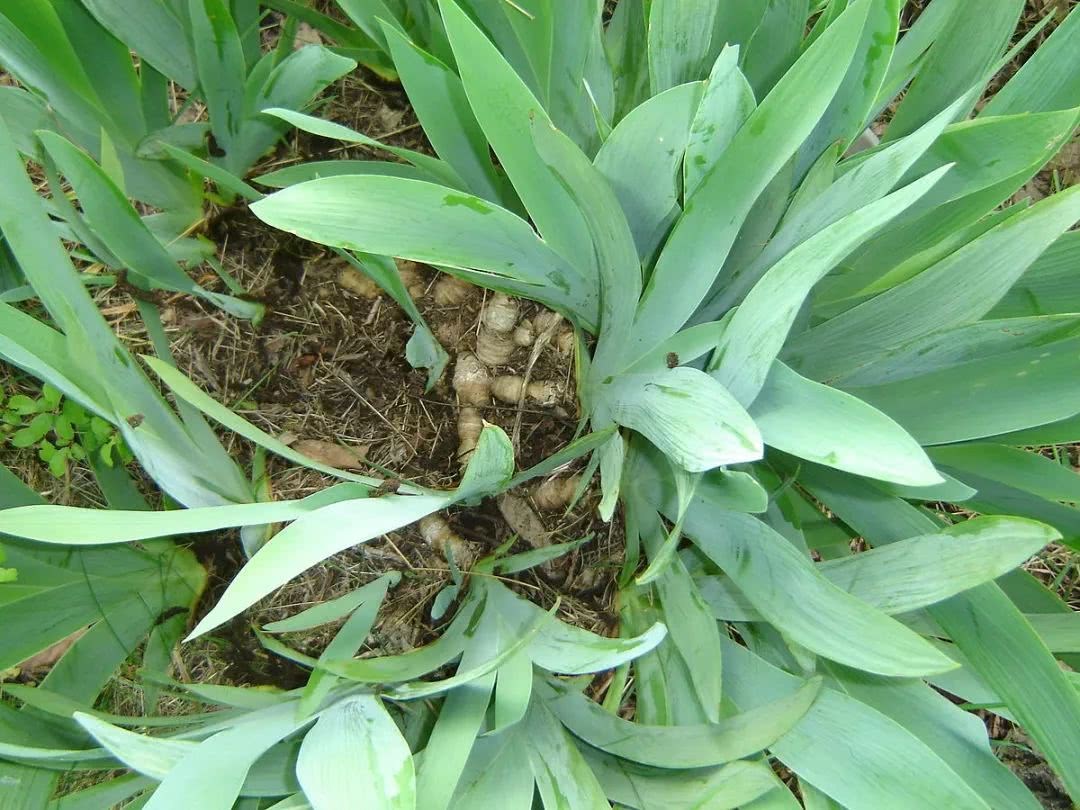
Perennial herbaceous plants need to be divided every few years to avoid the plants becoming too crowded and to give them more growing space, so that they grow better and bloom better.
The ideal time to divide them is in autumn, before the plants enter winter dormancy, after the flowers have faded and the leaves have withered; the next best time is in early spring, just as the plants are waking up but before they have started to sprout. Dividing at either of these times will not affect the plants' growth, but autumn is better because most plants bloom in spring or early summer, and if you divide them in early spring, it may affect that year's blooming.
Dividing plants in autumn gives them a better chance to rest and recover during winter dormancy without affecting their growth.
If you do not divide them, these plants will become more and more crowded as they grow, with too many stems squeezed together, and of course they will not grow well; the stems will be weak and may even start to rot in the middle. Otherwise they are prone to dying young, getting pests or developing mold.
Most perennial herbaceous plants need dividing, including peonies, daylilies, daisies, coneflowers, phlox, hostas, blazing star (liatris), bee balm and so on. Many plants with rhizomes and bulb plants need dividing every few years; for bulb plants such as tulips and daffodils, you dig up the underground bulbs and pull the offsets apart to divide them. As for rhizomatous plants such as lily of the valley and iris, you dig up the rhizomes, cut them and divide them.
Some plants do not need dividing, or even cannot be divided; these are all shrubs or small shrubs, such as roses, rhododendrons and lavender, or herbaceous plants that do not spread from the roots, such as bleeding heart and Christmas rose.
Actually, division is very simple: you dig up the roots, separate them into several plants, and replant them in different locations, but the soil must be wet before you dig. First, it is easier to dig, and second, the roots are less likely to be damaged. This is because the most important thing for a plant is healthy roots. So it is best to do this after rain; if it has not rained for a long time, you must first water heavily to make the soil completely wet, and then dig.
It is also best to do this on a cloudy day, not on a very hot day, as this causes less damage to the plants.
In order not to damage the roots, do not dig too close to the plant; usually the spread of a plant's roots matches the spread of its leaves, that is, the drip line I mentioned in the article on how to water.
Most plants, after three or four years of growth, become deeply rooted and are not so easy to dig up. At this point the best tools are a fork like a garden fork, or a spade.
After you have dug out the plant's roots, you can divide them. Usually the roots of herbaceous plants separate very easily and can be pulled apart with both hands. But if they have not been divided for many years, they may be tangled into a ball and very difficult to separate, and then you can use a spade.
However, any knife used to cut plants should preferably be sterilized beforehand to avoid introducing disease. In addition, for example when dividing the rhizomes of iris or lily of the valley, the knife used must be completely clean. After cutting the rhizomes, you can actually spray the cut surface with a disinfecting powder, such as garden powder sold in garden shops, sulfur powder or the like; any kind of disinfecting powder or fungicide works.
Before replanting after division, make sure that each new plant has enough roots and enough leaves, so that the new plant will be healthy and its future growth and blooming will be at their best.
At the same time, do not delay between dividing and planting, and do not let the plant's roots dry out completely. If you cannot plant immediately after dividing, it is best to keep the roots moist, wrap them in newspaper and place them in a cool place. But try not to drag out the time. Because if this period is handled poorly, the consequences drag on for a long time.
After dividing, you can cut off some of the leaves, or the upper part of the plant, because leaves give off moisture. Cutting off some leaves or stems reduces the chance for the leaves to give off moisture and lets the plant concentrate on growing roots.
When planting, do not bury too deeply, that is, do not place the plant too deep, and not too shallow either. Too deep or too shallow will harm the plant, and may even kill it. After planting, firm the soil so that no gaps remain; if gaps remain, they may accumulate moisture in the future and cause root rot. These newly planted pots should be placed where there is no direct sunlight, and the pot's drainage must also be very good, and keep the potting soil moist; you can use a little bone meal at planting time.
Newly planted plants must not lack water; water as soon as the soil surface dries. But do not water too frequently either, otherwise the soil will always be wet and the roots will rot. It also easily causes damp mold to grow in the soil. Whether it is damp mold or root rot, both will cause the plant to die young, so soil drainage is very important.