How to Grow Tomatoes Well? A Detailed Guide to Open-Field Cultivation Techniques
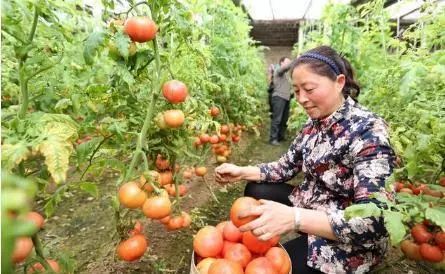
Tomatoes like warmth and light. The most suitable temperature for photosynthesis is 20-25°C. Temperatures that are too high or too low will affect their growth and development. With advances in technology, people can now eat tomatoes all year round. So how do you grow open-field tomatoes well? Next, we will discuss the cultivation and management methods for tomatoes:
First, seed selection
Choose mid-to-late maturing seeds that are heat-tolerant, disease-resistant, suitable for storage and transport, and of high quality and high yield (for example, Maofen 802, L-402, Jiafen 10, etc.). To break seed dormancy, promote seed germination, sterilize and prevent disease, and enhance seed resistance, the seeds need to be treated. Common seed treatment methods include seed soaking, high-temperature disinfection, warm-water soaking, and dry heat treatment.
The specific methods are: 1. Soak the seeds in water at 50-52°C, or soak them in a 0.2%-0.3% potassium permanganate solution for 20 minutes, then remove, rinse, and air-dry.
Replace with a high-definition large image
2. Put the seeds into warm water at 55°C and scald them for 10 minutes. Keep adding hot water to maintain the water temperature at 55°C. This disinfection method can prevent the occurrence of tomato leaf mold, canker, early blight, and other diseases. Then put them into a 10% trisodium phosphate solution and soak for 20 minutes. After washing them clean with water, proceed to germination.
Second, tomato seedling raising and field planting
Generally, tomato seeds contain about 300 seeds per gram, and the seeding rate is 20-30 grams per mu. Each square meter of seedbed can be sown with 10-15 grams. If the seed germination rate is below 85%, the sowing rate should be appropriately increased. The seeds need to be soaked in warm water for 6-8 hours first, so that the seeds fully swell, and then placed under a temperature condition of 25-28°C for 2-3 days to sprout. For seeds soaked in chemicals, simply rinse the seeds clean with water and then germinate them directly.
Replace with a high-definition large image
During germination, suitable temperature, moisture, and air must be provided. For this reason, check and turn the seeds frequently to keep them loose, and rinse them with water 1-2 times a day to renew the air and maintain humidity. It is best to use a constant-temperature incubator for germination. When the seedlings grow 1-2 true leaves, spray once with 100 mg/kg of mepiquat chloride. When 2 true leaves have grown, thin the seedlings by removing the weak and keeping the strong. When 3-4 true leaves appear, transplant the seedlings, with a row spacing of 8 cm x 5 cm. Insert arched bamboo strips into the seedling transplant bed, and on rainy days cover with plastic film to protect the young seedlings from rain.
During the seedling stage, spray 99 plant protection liquid fertilizer on the leaves, which can improve the disease resistance of tomatoes. When the seedlings grow 5-6 true leaves and the soil temperature stabilizes at 10°C or above, they can be planted in the field. The tomato planting site should be land where solanaceous plants have not been grown before. Before planting, deep plow and sun the soil to improve the soil's water-holding capacity and reduce pests and diseases.
While deep plowing and turning the soil, apply 5000 kg of decomposed barnyard manure, 50 kg of NPK compound fertilizer, 50 kg of superphosphate, 20 kg of cake fertilizer, and 150 kg of plant ash per mu. The planting method can use high ridges and wide-narrow rows. The planting density is generally 0.6-0.7 m between rows and 0.4 m between plants. After planting, water with root-setting water to promote rooting.
Third, prevention and control of pests and diseases
The main pests and diseases of tomatoes are: (1) Early blight can be sprayed with 1500-2000 times dilution of Lüheng Juqing. In severe cases, spray with Hurricane + Lüheng No. 6 + Tianbao.
(2) Late blight can be sprayed with 1500-2000 times dilution of Lüheng 50% dimethomorph, or sprayed on the leaves with 400-500 times dilution of Lüheng 90% fosetyl-aluminum. In severe cases, spray with Hurricane + Lüheng No. 6 + Tianbao.
(3) Gray mold can be sprayed with 700 times dilution of Lüheng No. 5 at the early stage of the disease, or with 1000 times dilution of Lüheng 70% pyrimethanil. In severe cases, spray with Huibike + Tianbao + clove carvacrol.
(4) Leaf mold can be sprayed with 1000-1500 times dilution of Lüheng No. 6 at the early stage of the disease, or with 800-1200 times dilution of 86.2% cuprous oxide.
(5) Bacterial spot disease can be controlled with 400-500 times dilution of 77% Kocide wettable powder, 600 times dilution of 53.8% Kocide 2000 dry suspension concentrate, 500 times dilution of 20% thiazole (Longkexin) suspension concentrate, 300 times dilution of 14% copper ammoniate aqueous solution, or 0.3%-0.5% copper hydroxide solution, spraying once about every 10 days for 3-4 consecutive sprays.
(6) Bacterial wilt can be controlled by drenching the roots with 4000 times dilution of 2% agricultural streptomycin soluble powder, 300 ml per plant, once every 10 days, for 2-3 consecutive drenches.
(7) Aphids can be controlled by spraying with 1000-1500 times dilution of 2.5% Baoyawuzong emulsifiable concentrate or 2000-2500 times dilution of imidacloprid wettable powder.
Finally, although tomatoes like warmth and light, strong light and excessively high temperatures can cause tomato fruits to be sunburned, so in summer, shading work must be done well to block strong light.
This is Science Xingnong. You are welcome to follow, and we will grow knowledge together.
The original copyright of this article belongs to the Science Xingnong account. Infringement will be prosecuted.