Peanut crops severely damaged over large areas by cabbage worms: how should this be handled?
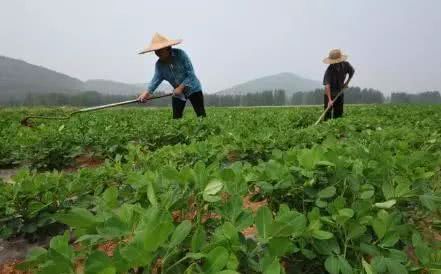
Peanut cabbage worms occur over a relatively large area in the northern growing regions of China. Henan is especially hard hit, with 5-6 generations possible; control of the 1st-2nd generations is generally relatively simple. After that, this pest develops strong pesticide resistance, and a single class of pesticide has an unsatisfactory control effect. The larvae mainly feed on new peanut leaves and flower buds; the adults not only gnaw the leaves but also gnaw the flowers. Peanut leaves are very important for the later yield of peanuts. And if the leaves are bitten by cabbage worms, gaps will appear; in severe cases, only the bare peanut stems remain. After the leaves fall off, the plants cannot carry out photosynthesis, which will seriously affect yield.
So how should peanut cabbage worms be controlled?
First, pest damage nowadays does not occur as a single pest; it is always multiple pests occurring together, such as cutworms, tobacco cutworms (Spodoptera litura), cotton bollworms, and beet armyworms, etc. From the image, this kind of cabbage worm should be the larva of the "beet armyworm" (Spodoptera exigua). For this pest, prevention should be the main approach; if you wait until you find the worms and then manage them, the worms have already caused irreparable damage to the peanut leaves. When moths are found in the field, pesticides should be applied. Use a 20% chlorantraniliprole solution diluted 3000 times and spray it evenly on the peanut leaves; at the same time, dilute 1.8% abamectin emulsifiable concentrate 2000-3000 times + imidacloprid (4000 times) or 50% phoxim emulsifiable concentrate diluted 1000 times for spraying.
Second, when applying pesticides, attention should be paid to the spraying time. The weather is relatively hot now, and during the day the cabbage worms hide on the undersides of the leaves, so spraying should preferably be done before 8 a.m. or after 6 p.m. Choosing a three-way mix of beta-cypermethrin + chlorantraniliprole + abamectin gives a relatively good control effect.
Finally, for the control of peanut cabbage worms, there is another effective method, which is biological control. During the peak egg-laying period of peanut cabbage worms, release Trichogramma 2-4 times, 20,000 wasps each time. When the cabbage worms lay eggs, they release a signal; Trichogramma can use this signal to quickly find fresh pest eggs, and then lay eggs and reproduce there.
From egg to larva to pupa, Trichogramma completes all of this inside the cabbage worm eggshell. In this way, once Trichogramma matures, it breaks out of the cabbage worm eggshell. By destroying the eggs of other pests to reproduce itself, using Trichogramma both saves costs and is relatively safe.
What has been said above is all about spraying pesticides after pest damage has occurred and pests have been found. So how can they be eliminated at the root? First, deep plowing and winter irrigation to kill overwintering pupae. Also, after moths are found and before cabbage worms are found, use black light lamps to trap and kill noctuid moths, which can effectively reduce the number of eggs.
This is Science Promoting Agriculture; you are welcome to follow and join us to grow your knowledge together.
The original copyright of this article belongs to the Science Promoting Agriculture account, and infringement will be pursued.