How to grow camellias? Remember these 4 points for bright blooms and emerald-green leaves
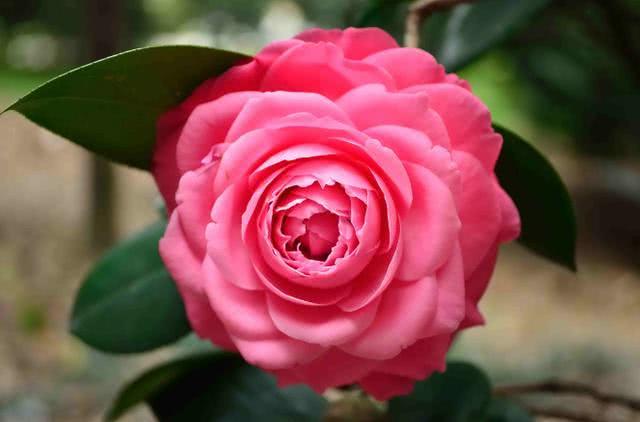
Many people say camellias are hard to grow and that no matter what they do, they just can't keep them alive. The editor wonders why every camellia the editor grows thrives so well. Actually, when the editor first bought a camellia, it was quite worrying too, because a newly bought camellia often drops its leaves easily and is also prone to yellowing leaves. Later, during the growing process, the editor gained experience and this never happened again.
First, the timing of purchase.
Although camellias can be planted at any time, we will certainly want to choose a suitable time so that our success rate in growing camellias will be relatively high. So when buying camellias, it is best to buy small seedlings, and it is best to buy them in spring, because camellia seedlings grow easily in spring. The two hardest seasons for camellias are summer and winter. We certainly cannot plant camellias in these two seasons, otherwise we are pushing them toward a dead end, and that is absolutely not allowed.
We plant camellia seedlings in spring, then care for them carefully, raising them strong throughout the whole of spring so they can get through summer, and then through careful care in autumn, letting them get through the entire winter. If through all four seasons of the year they can grow and can bloom, that shows they have truly grown up on their own, and afterwards there will be no problem with their care.
Second, the choice of soil.
Because what we choose are camellia seedlings, we must be careful about the soil we choose. Although we need nutrient-rich soil, this is relative. The seedlings are too small to absorb too many nutrients, so when choosing soil, ordinary soil is enough. At most, add some leaf mold to it. Do not use soil that is too nutrient-rich, otherwise it will only backfire.
We can just choose ordinary garden soil for planting. If you are really worried about insufficient nutrients, you can mix leaf mold into the soil for growing. Leaf mold is formed from fallen leaves rotting, and it itself has high nutrients and is natural and harmless. This can be used to grow camellias without causing the camellias to have excess nutrients.
Third, watering.
When we usually water plants, we normally water once the surface of the soil in the pot is dry. Actually, by the time the surface of the soil in the pot is dry, it is already too late to water. So we must always pay attention to the changes in the camellia. We can choose a small tool, something like a small spoon. When we feel it is time to water, use the small spoon to gently push the soil aside. At about 3 cm, if we find the soil inside is dry, then we can water. If it is still moist inside, then we can wait a while before watering.
Fourth, fertilizing.
There is a method to fertilizing camellias; it is not just a matter of adding fertilizer. Because the environment camellias like is an acidic environment, we need to apply some acidic fertilizer to camellias. Usually we choose ferrous sulfate, because this not only supplements iron, but also makes the soil environment acidic. In addition, when camellias are in their growing period, we need to apply compound fertilizer. Usually we apply a light layer of compound fertilizer on the surface of the soil and let it slowly dissolve on its own. After you find it has completely dissolved, then we continue to apply more, until it has passed its growing period.