Rose care in summer: do these 3 steps well, and at 40°C high temperatures one branch blooms with over a dozen large, vivid flowers
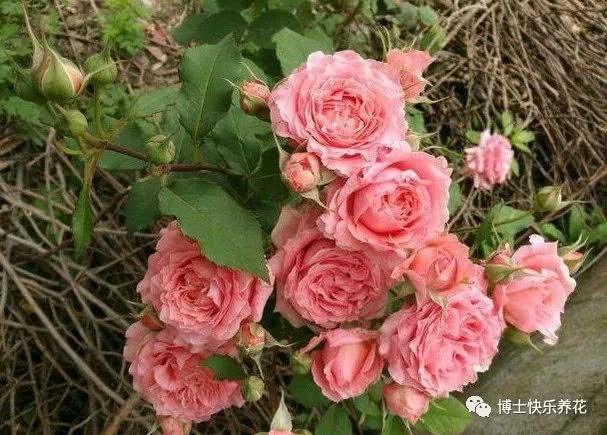
Growing roses in summer brings both hardship and joy. Some flower lovers' roses have leaves turning yellow in droves, but some flower lovers' roses, even at 40°C high temperatures, can still produce multiple heads, with over a dozen flowers on a single branch, and the flower shape doesn't fall apart either - truly makes one envious and jealous. Is there any secret to it?
This is a flower lover's Coral Jelly. This summer, it has performed the best of all - blooming continuously, the flowers haven't gotten smaller, the color is rich, the flower shape is good, and it's even multi-headed. To make roses bloom beautifully in summer too, these 3 steps are indispensable.
1. Must be sun-tolerant, roots must be good
Coral Jelly is quite sun-tolerant. Grown in the ground, under high temperature and blazing sun, it can still hold on for over a week without falling apart - truly a good child. But because it's grown in the ground, its roots can spread freely, so they're relatively well developed and absorb more water and nutrients, so it grows better than potted ones, and blooms more diligently and abundantly. Although potted growing has limitations, when growing flowers you must first grow the roots. Once the roots are well grown, potted roses can likewise burst into bloom.
For potted roses, besides the soil needing to be loose and breathable, there must also be sufficient nutrients. During the growing season, pay attention to supplementing fertilizer. For potted plants, it's better to mainly use organic fertilizer, as the soil is less likely to become compacted. You can use a general-purpose organic nutrient solution, fully fermented from pure plants, which can be applied to both roots and leaves, promoting and strengthening roots. Once every 10 days, and the roses will grow rapidly, sending out more branches and shoots, with lush green leaves.
2. For multiple heads, fertilizer must be sufficient
In summer's high temperatures, many people say to stop fertilizing for fear of fertilizer burn. Look at this Coral Jelly - even under high temperatures it can still produce multiple heads, and fertilizer plays a role in this. So if you want high yields from roses, fertilizer should still be used. But if the usual concentration is 1:1000, in summer you can use 1:2000, then water back the next day, and generally there won't be any problem. If it's a stretch of consecutive high-temperature days, it's better to temporarily stop fertilizing.
When fertilizing, avoid concentrated fertilizer and raw fertilizer. Using homemade compost indoors inevitably has a foul smell and easily breeds pests. We can use a rose-specific organic nutrient solution, with no added hormones, no irritating odor, and it won't affect the indoor environment or your health, so it's quite reassuring to use. Once every 15 days, and the roses will burst into multiple heads, blooming continuously, large and vivid, and not easily spoiled.
3. To avoid wilting, water must be plentiful
When growing roses, you still have to pamper them with plenty of water and fertilizer, especially in summer, when water evaporates quickly and roses easily wilt and yellow from lack of water. So replenish water in time. Generally, when the surface of the potting soil dries out and turns white, and at a depth of 2-3cm the soil is dry, you can water.
But summers have a lot of rain, the potting soil easily accumulates water, and it's also prone to black spot disease. So on consecutive rainy days, remember to let the potting soil drain as quickly as possible. Whether grown in the ground or in pots, spraying to prevent disease is still indispensable. Of course, if conditions allow, collecting rainwater to water the roses is also very good - after all, rainwater is natural nourishment.
This summer, how did everyone's roses bloom - were there many ugly flowers, or were the flowers so beautiful they made people jealous?
Author: Yueba Xiaoyuanding (Moon Fat Little Gardener)