80% of flowers die because of this, and many people don't know it
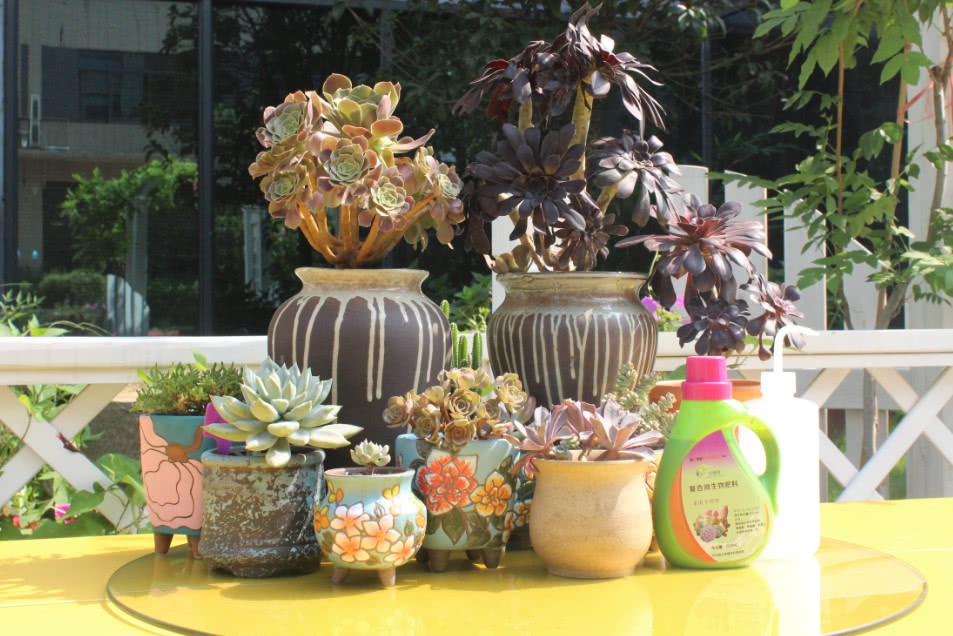
Flowers, delicate and gorgeous, slowly release their fragrance in the wind. Planting locations have gone from growing in the ground to growing on balconies, and the age of growers has gradually shifted from retirement age to around 30 now. Growing and planting flowers has gradually become deeply rooted in our daily lives. If you are a "balcony gardener," to grow flowers well, you must learn to use pots.
Flower pots are an indispensable carrier for growing flowers. Simply put, they are the "home" of flowers and plants. So what kind of flower pots should the flowers and plants at home use? Simply put, when choosing a flower pot, the first thing is that it must be able to support and protect the root system of the flowers and plants, allow them to absorb sufficient water and nutrients, and develop and grow. Below is a detailed introduction to the advantages and disadvantages of several common types of flower pots.
1. Plastic pots. Plastic pots are relatively common flower pots, with the advantages of being lightweight, good-looking, and cheap. This kind of pot is mainly used for the care and repotting of medium and small flowers or succulents, because plastic pots have poor breathability and water permeability, and their service life is relatively short. Many flower bases use this kind of pot for planting. After we buy the plants back, we need to replace this kind of plastic pot.
2. Porcelain pots. Porcelain pots are relatively refined, and some are coated with various colored glazes, while some are also painted with exquisite patterns. Their shapes are beautiful, making them quite suitable as cachepots or as ornamental pots for moisture-tolerant plants, such as Haworthia fasciata, Tradescantia zebrina, spider plant, and Maranta. The disadvantage of porcelain pots is that their breathability and water permeability are relatively poor, and they are extremely easy to damage.
3. Clay pots. This is the one I prefer to use. Basically all the flowers at home are grown in clay pots. Clay pots are made by firing clay, and have the advantages of good breathability and not easily accumulating water. If you are a beginner at growing flowers and do not know how to judge watering at first, or if you have itchy hands and like to water, then use clay pots, and you are guaranteed not to kill the plants.
4. Purple clay pots. Purple clay pots not only have the characteristic of an elegant and dignified appearance, but also have relatively good drainage and breathability. They are the aspiration of many bonsai enthusiasts, but their price is relatively more expensive than other flower pots. For example, using purple clay pots for orchids, camellias, azaleas, jasmine, Chinese peonies, narcissus, and osmanthus is the most ideal pairing.
Of course, there are still many other kinds of flower pots. The most important thing when choosing a flower pot is to choose one that suits the plant. Flowers and plants and the flower pot should be balanced, harmonious, and have a sense of overall unity. Be sure to avoid the phenomena of top-heavy imbalance or a small seedling in a large pot.