Follow these 4 tips for growing jasmine, and it will bloom into late autumn even with little care
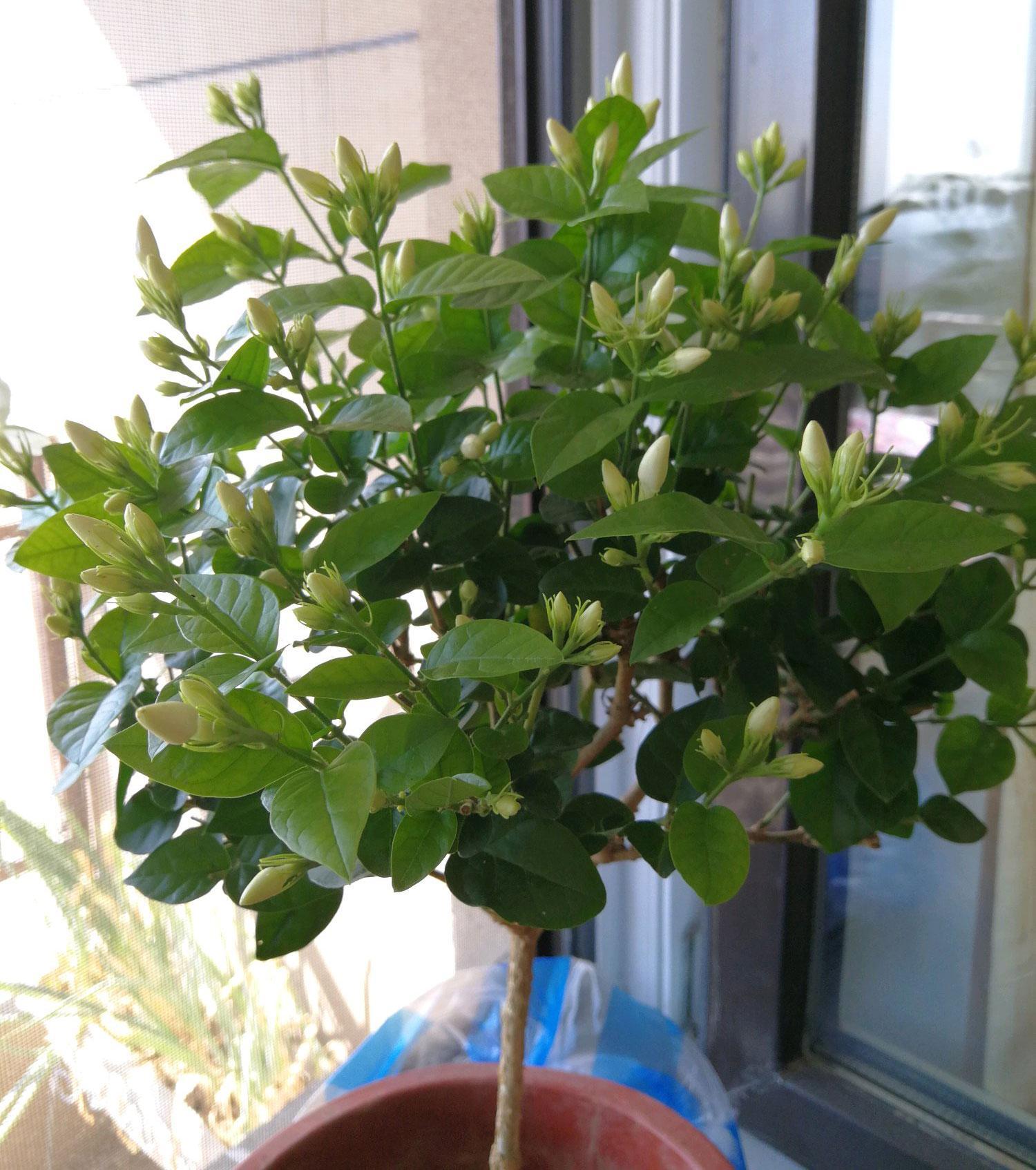
Jasmine, with its small pure white flowers and delicate fragrance, is a well-known repeat-blooming variety. With proper care, its flowering period runs from late spring all the way to late autumn, blooming throughout the whole summer. This is probably why so many flower lovers adore jasmine. Plant one at home and you get a fresh fragrance that lifts your spirits. Jasmine is usually easy to care for, and autumn is once again its growing season. If you want wave after wave of blooms, just do the following well.
1. Give it plenty of sun. There is a saying among gardeners: "Jasmine can't be sunburned to death." Jasmine is a plant that loves strong light; the more sun it gets, the more lush its branches and leaves and the more intense its fragrance. During its growing season, we should give jasmine 8 hours of light. Now that the Start of Autumn has passed, you can give jasmine full-day sun; if you are in the north where nights are rather cool, it is best to move jasmine back indoors to a south-facing balcony, because jasmine is not cold-tolerant.
2. Prune frequently. Another gardening saying goes: "Prune hard, and the blooms will be steady." Under sufficient light, jasmine will grow lush branches and leaves. If you want wave after wave of flowers, you must prune frequently to encourage new shoots. Jasmine is a relatively difficult plant to prune. The principles of pruning are: heavy pruning in early spring, light pruning after flowers fade, and heavy pruning in deep winter for overwintering.
When heavy pruning, you generally need to cut off all secondary branches and above, keeping only the woody branches about 10-15cm above the potting soil. Light pruning after the flowering period is a required lesson for every flower lover. Each time the jasmine flowers fade, promptly cut off the 3 pairs of leaves below the spent flowers and remove the flower receptacle to stimulate the jasmine to differentiate lateral flower buds and reduce nutrient loss. The harder you prune, the more and the more vigorously your jasmine will bloom.
3. Feed frequently. If you want jasmine to bloom more, after providing light and frequent pruning, you need to replenish nutrients in time. Jasmine is in its flowering period for two-thirds of the year, like a hungry baby that cannot bloom without enough to eat. After pruning jasmine, you can apply an acid-loving organic nutrient solution. This acidic flower fertilizer is rich in organic matter, can improve soil acidity, and promote the jasmine roots' absorption of nutrients, so the jasmine will grow thick branches and green leaves and quickly branch out, preparing for blooming.
Some people grow jasmine whose leaves are especially green, but with only a few scattered flowers, which is disheartening to see. In fact, after jasmine buds appear, we should change its diet: "Phosphorus promotes flowers, potassium gives strength." At this time, use a nutrient solution that promotes flowering, and the jasmine will burst with many buds on a single branch, with fragrance carrying for miles.
The above 3 points are things everyone needs to do diligently. The next point is one where you can be a bit lazy, and that is watering. "Dryness grows roots, moisture grows leaves." If the potting soil is too wet, jasmine will frantically grow leaves and bloom less; it also must not be too dry, as jasmine fears drought. If you want jasmine to bloom nonstop, in autumn just keep the potting soil moist. You can use a plant and flower monitor to help: insert it into the potting soil, check the soil moisture value on your phone, and water according to the prompts.
Fellow flower lovers, if you have any jasmine care experience, you are welcome to share it with everyone too.