A flowerpot the size of a palm bears 100 fruits, making people's mouths water
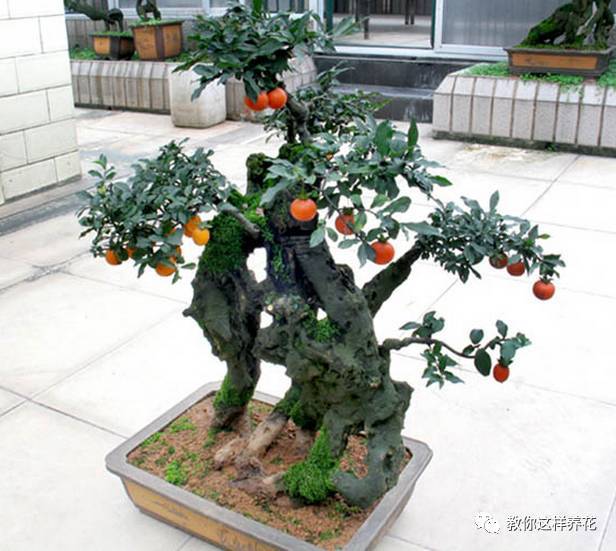
Are you getting a little tired of flowers and plants every day? Today let's look at several ornamental fruit plants, with golden and bright red little fruits that make people's mouths water! But pay attention! Some fruits are poisonous, so don't try them casually! Just enjoy them properly!
“
Ornamental fruit plants
”
Jerusalem cherry
Quite a few of our gardening friends grow Jerusalem cherry. Some have sent us pictures of Jerusalem cherry before, and it goes by different names; in some places it is called Jiqing fruit, coral bean, or wild chili. Jerusalem cherry is native to tropical Eurasia, and wild populations are distributed in East China and South China.
Jerusalem cherry wins people's affection with clusters of red fruits hanging all over its branches, and it is very festive. The fruits hang for a long time and do not fall off easily, and can remain on the branches until after Spring Festival. Most of those cultivated now are dwarf types, with a short, much-branched plant form.
Jerusalem cherry likes sunlight and warmth, tolerates high temperatures, and shows no sunscald above 35°C. It is not shade-tolerant, nor cold-tolerant, nor drought-tolerant, and in hot summers it fears rain soaking and waterlogging. It is not strict about soil, but grows vigorously in fertile, loose, slightly acidic or neutral soil with good drainage. For ornamental pot cultivation in the north, it needs to be moved into a cold room to overwinter.
Pinch back 1-2 times to encourage more branching. In late spring, February to March, keep the room temperature as high as possible, strengthen water and fertilizer management, and apply liquid fertilizer mainly based on phosphorus and potassium, and it will soon bud and bloom.
The whole Jerusalem cherry plant is poisonous, and the leaves are more toxic than the fruits. Symptoms of poisoning include dizziness, nausea, drowsiness, severe abdominal pain, and dilated pupils. So never eat it!
Nertera
Nertera is generally sold as a succulent, but actually nertera is not a succulent. Nertera is a herbaceous plant in the genus Nertera of the family Rubiaceae, and its scientific name is Nertera granadensis.
Although nertera is short and small, almost every young plant bears fruit. The fruits can be white, orange, or yellow, and hanging on the branches they really look as beautiful as little pearls, very cute and lovely!
Nertera likes a bright, indirect-light environment. The suitable growing temperature is 18-24°C, and in winter the ambient temperature should not be lower than 8°C. For the growing medium, choose a loose, breathable soil mix. In summer nertera can be placed outdoors, but it also needs shade, though it must not be too shady, as that will affect flowering and fruiting.
Nertera likes a slightly moist growing environment. In summer the potting soil needs to be kept moist, while in winter it should be kept slightly dry. Water moderately, and make sure not to water the leaves or fruits, so as to avoid rotting the plant. You can water by the soak-pot method or by spraying. Fertilize moderately as well; during the growing period it needs fertilizer once every 1-2 weeks.
Nertera can be propagated by sowing, carried out in February to March, or by division, carried out in August.
Food lovers often ask Huahua, but Huahua herself does not dare try it either. However, I have heard that one or two are fine, but the taste is not good either, so it is still best not to eat them.
Coral ardisia
Coral ardisia is an evergreen small shrub in the family Myrsinaceae. Its drupe is round, about the size of a pea, light green at first and bright red when ripe, and it remains on the plant for a long time without falling, making it very attractive. There are also white or yellow varieties, and they can generally all be used medicinally. Among the people, it is also affectionately called "ten thousand taels of gold", "gold and jade filling the hall", and so on. It represents festivity and good fortune, wealth and prosperity, and also the meaning of many children and much blessing.
Coral ardisia likes a shady, humid environment. In spring it should be placed on a windowsill with morning and evening light for cultivation, keeping the potting soil moist, and it should often be sprayed with water around it and on the leaves several times to increase air humidity, while paying attention to indoor ventilation. Start fertilizing after new leaves emerge. When the outdoor temperature is stable above 15°C, it can be moved to a semi-shaded balcony or courtyard for cultivation. After the temperature rises in late spring, growth speeds up, so pay attention to replenishing water and fertilizer.
Kumquat
Ju means luck and jin means wealth, so kumquat carries the meaning of good fortune and bringing in wealth. A kumquat tree can be placed at home, and can also be used as a congratulatory gift. Putting some kumquats in a fruit basket used for New Year greetings is a very good way to give blessings. It should be noted that when choosing a potted kumquat, you must pick one full of fruit, because sparse fruit carries the meaning of "much bad luck and little good", the fruit color should be rosy, and the branches and leaves should be emerald green with no yellow leaves.
Kumquat is slightly shade-tolerant and likes a warm, humid climate. It is not cold-tolerant; when the temperature is below -7°C, cold damage occurs. It is suitable for growing in deep, fertile, neutral to slightly acidic sandy loam. Potted kumquats like a bright, ventilated environment and a place with plenty of sunlight; such an environment is conducive to healthy growth, a high flowering rate, and plump, glossy fruits.
Nandina
Nandina is a very common type of woody ornamental flower in the south. Because of its graceful plant form, bright fruits, and strong adaptability to the environment, it often appears in landscaping applications.
As early as the Ming and Qing dynasties, nandina was listed as a garden plant for classical courtyards, and later it was also introduced into bonsai, and it is deeply loved in the bonsai world. However, this evergreen upright shrub has a tall trunk and few branches, and grows extremely vigorously in spring, making its shape difficult to control, which brings great disadvantages to bonsai styling.
Nandina has many varieties and a graceful plant form. In autumn and winter the leaf color changes from green to red, and it bears red fruits that remain for a long time without falling, making it an excellent choice for foliage and fruit appreciation.
Nandina likes warm and humid environments and is relatively shade-tolerant. It is also cold-tolerant. It is easy to care for. The growing soil should be fertile, well-drained sandy loam. It is not very strict about water, as it can tolerate both moisture and drought. It relatively likes fertilizer, and more phosphorus and potassium fertilizer can be applied. During the growing period, apply liquid fertilizer 1-2 times a month. After a potted plant has been enjoyed for several years, its branches and leaves age and fall off, and it can be reshaped by pruning. Generally, leave about 15cm of the main stem, prune in April, and by autumn it can recover to 1m tall, with a full crown.
Nandina is poisonous, and the toxicity is in the whole plant, so it cannot be eaten. Nandina is an ornamental fruit plant, and the bright red, tempting fruits it bears in autumn are very easy for young children to eat by mistake, so pay attention.
Nipplefruit
The scientific name of nipplefruit is Solanum mammosum, and it is also called five generations under one roof and five-fingered eggplant. Among the people, nipplefruit is an auspicious plant, symbolizing five blessings arriving at the home, gold and jade filling the hall, and wealth and prosperity, and because it is also named five generations under one roof, it implies endless descendants and passing from generation to generation. The nipplefruit fruit is also a very good offering, and people often place it as an offering on altars.
In the West, the flower language of nipplefruit is "peace and health for young and old, no lack of gold and silver". At the annual New Year flower markets, nipplefruit products are rich and varied. Besides potted fruiting plants, fruit branches, and fruits, there are also bound and shaped arrangements of fruit branches or fruits in various containers, and these products are all very popular.
Nipplefruit likes a warm, humid environment with plenty of sunlight. The suitable growing temperature is 15-25°C. It has some cold tolerance and fears waterlogging and drought. It can tolerate low temperatures of 3-4°C. Fertile, loose, well-drained sandy loam is suitable. In winter the temperature must not be lower than 12°C.
Bergamot
Actually, bergamot and kumquat are relatives. Bergamot is a strange-shaped citrus fruit, not some special plant. Its shape is like a fist or a palm, resembling opened fingers, so it is commonly called "bergamot". It is native to Asia, and it is cultivated throughout southern China. Many people call bergamot "bergamot citrus" because it is a type of citrus fruit and a variety of citron. It is a common evergreen small tree or shrub among plants, and its leaves are long and oval, with serrated edges.
Bergamot ripens in winter and is golden yellow in color, with the upper part split open like fingers, and it can be used medicinally. Because its color is golden yellow, it matches the meaning of a hall full of wealth and honor pursued by Chinese people, and it also fruits in winter, so generally during Spring Festival bergamot appears in homes as an auspicious and prosperous feng shui plant.
Bergamot has a unique form, like the "hand of Buddha", and displaying it can ward off disasters. China has believed in Buddhism since ancient times, and "Buddha" sounds close to "blessing", which also satisfies people's psychology of praying for good fortune. Therefore, in Chinese people's hearts, bergamot can be considered a very traditional auspicious object.
Bergamot likes a warm, humid environment with plenty of sunlight. It is not tolerant of severe cold, and fears frost and drought, while being shade-tolerant, barren-tolerant, and waterlogging-tolerant. It is suitable for cultivation in areas with ample rainfall and no freezing in winter. The most suitable growing temperature is 22-24°C, and the overwintering temperature should be above 5°C. It is suitable for growing in acidic loam, sandy loam, or clay loam with deep soil, loose fertility, rich humus, and good drainage.
Firethorn
Firethorn has a graceful tree form, with abundant flowers in summer and red fruits in autumn. The fruits remain on the branches for a very long time. It can be used as a hedge in courtyards and as landscaping material, and along roadsides it can be used as a hedge to beautify and green the environment.
Firethorn fruit is rich in organic acids, protein, amino acids, vitamins, and various mineral elements. It can be eaten fresh and can also be processed into various beverages. The fruit, roots, and leaves are used medicinally; it is neutral in nature and sweet and sour in taste. The leaves can clear heat and detoxify, and when applied externally they treat sores and swellings, making it an excellent plant for viewing flowers in spring and fruits in winter.
Remember this: firethorn fruit can be eaten, but never eat nandina!
Firethorn likes strong light, tolerates poor soil, resists drought, and is not cold-tolerant. South of the Yellow River it can be planted in the open ground; in North China it needs pot cultivation and overwintering in a plastic shed or low-temperature greenhouse, where the temperature can go as low as 0°C. It is not strict about soil, but neutral or slightly acidic loam that is well-drained, moist, and loose is best.
Ornamental fruit plants are mostly very beautiful!
Layer upon layer of golden and bright red fruits
They also carry very beautiful meanings
If you like them, get a pot!
Show this to gardening friends who need it!