Six major factors that make fish prone to illness or death, analyzed by Hangtai Aquarium
There are many reasons why fish get sick, and not all of them are infectious diseases. Only by observing carefully and finding the real cause can you treat the right problem. Today, the editor will share with you the non-pathogenic causes of fish illness.
1. Mixed stocking
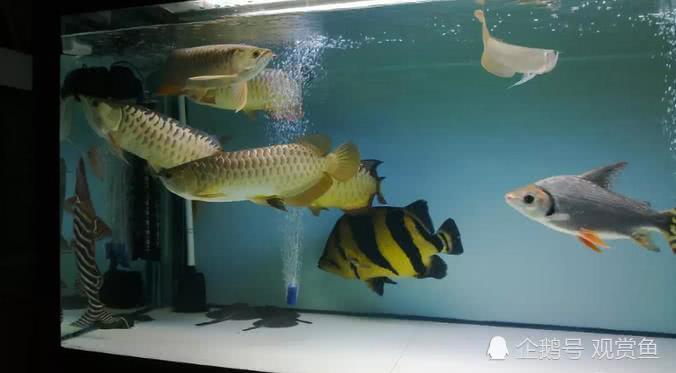
Keeping the same species of fish together, or mixing different species of fish, involves a great deal of knowledge. We should first understand the temperament and body shape of these individual fish. Sometimes, in two mixed-stocking tanks with identical equipment, size, species and number, the way the fish get along will be completely different. Whether mixing is suitable depends not only on following biological rules, but also on careful observation before drawing a conclusion. Otherwise, train them from a young age to accept the rules of group life and get used to living together.
If the temperaments of the mixed fish do not match, fighting and chasing with biting will definitely occur. If the fish are usually kept well and are strong, they should be fine after isolation and treatment, with at most torn fins or fallen scales. But what often happens is that fish with weak resistance develop inflamed, red and swollen wounds. At this point, bacteria and parasites will invade the fish body through these physical injuries, and white fuzz, fin rot, tail rot, lymphocystis and other problems will occur.
2. Aquascaping
Sometimes the aquascaping in a fish tank is very beautiful, but sometimes it can also become a burden for the fish, especially large fish. Take discus for example: the activity space in the tank must be sufficient. If too many decorations are placed, or the materials are too sharp, the fish will bump into them while moving and suffer physical injuries, and then there will be many opportunities for infection. In my personal opinion, it is best not to use coral-type items. Also, driftwood must be sterilized before use.
Also note that when changing water and catching fish, care should be taken not to cause physical injuries to the fish. If such injuries occur, some preventive fish medicine can be added to reduce the chance of pathogen infection.
3. Insufficient activity space
If you do not have a large tank, it is best not to keep large fish. Even for juvenile fish, as they grow, their constitution will decline because of insufficient exercise, causing spinal curvature or skin abrasions, and they become very prone to illness. In addition, it is relatively difficult to maintain water quality balance in a small tank, and almost all factors become uncontrollable!
Another thing is that beginners must pay attention to fish density, and when mixing fish, pay attention to the balance of distribution among the upper, middle and lower groups of fish. The relationship between fish and water is interactive. Once the fish exceed the carrying capacity of the water, the entire cyclical relationship will collapse!
4. Water quality
There is a common saying: "To keep fish, first keep the water." Besides referring to the water in a new tank, this saying also shows that the water in the fish tank is the key to keeping fish well!
The factors that determine whether water is good or bad are mainly the filtration system, the temperature control system, and the source of the water. Motors and filters are essential equipment for maintaining constant conditions in an ecological tank. But if we choose the wrong equipment, sometimes the filtration system cannot fully function, causing water quality to deteriorate. Conversely, if the water flow in the tank is too strong and the impact force is too great, it will also be harmful. Sometimes neon tetras (or other small fish) die for no apparent reason, and arowana curl their gills; these are caused by excessively strong water flow.
A good filtration system can cultivate a microbial filter bed, allowing them to metabolize nitrogenous waste themselves. When there is less nitrogenous waste in the water, water quality naturally becomes stable and there is less disease. If nitrogenous waste accumulates too much in the water, it can cause ammonia poisoning in fish. Also, when nitrogenous waste accumulates too much, the number of some pathogenic organisms will rise, causing fish to become ill from being parasitized by them.
Another issue is unstable pH, or being in a range beyond the fish's tolerance for a long time, which can cause acidosis or alkalosis in fish. With acidosis, when the pH changes drastically, the fish will suddenly become very excited, swim faster, and die relatively quickly. Being in an overly acidic environment for a long time causes the gills and body mucosa to secrete large amounts of mucus due to irritation, which easily triggers bacterial infection. Alkalosis is similar to the above, but fin tissue is more easily damaged. The best ways to avoid these are to stabilize water quality, oxygenate appropriately, reduce nitrogenous waste in the water, and be sure to change water regularly.
5. Nutritional imbalance
If you feed the fish only one kind of bait or feed, it will cause "picky eating" in fish. If they eat only certain nutrients for a long time, nutritional imbalance will occur. You can observe and diagnose by checking whether the fish's appearance is too fat or too thin, whether body color changes are normal, whether the eyes are bright and lively, and whether the swimming posture is strong. In severe cases, immunity will decline and infection and illness will occur.
6. Medication damage
Finally, there is a problem that everyone often overlooks. Overuse of medication, or incorrect medication methods, can leave fish with aftereffects after recovery, such as swollen internal organs or damage to nerve tissue, which may change the fish's appearance and, in severe cases, deform the body. I have seen red arowanas with hunchbacks like this.
If you have anything unclear about the content of the above article, you can leave a comment at the end of the article to consult me~