Grow flowers for ten years without root rot: put a dishcloth at the bottom of the pot, and the flowers grow vigorously and easily fill the pot
Put loofah sponge at the bottom of the pot, and there will never be root rot again!
1. Pick the old loofah sponge from home, remove the seeds, and cut it into small pieces of about 3-5cm.
2. When potting your flowers at home, directly place the loofah sponge at the bottom of the pot. It drains water and allows air through, so the flowers will never get root rot again. Moreover, the loofah sponge will continuously decompose in the soil, supplementing nutrients for the flowers. It kills two birds with one stone!
Put a dishwashing cloth at the bottom of the pot, and growing flowers will never cause root rot again!
1. The main component of a dishwashing cloth is sponge. When repotting, directly place it at the bottom of the pot, then add nutrient soil and fill the flower pot.
2. When you usually water the flower pot, the sponge at the bottom of the pot can absorb excess water, so the flowers at home will never get root rot again!
Put a piece of gourd at the bottom of the pot, and there will be no root rot for 10 years!
1. If you have a mature gourd at home, you can dig out the seeds inside, and directly smash the rest into small pieces.
2. Place the gourd fragments at the bottom of the flower pot, then fill it with soil and directly plant the flowers! The gourd fragments placed at the bottom of the flower pot have relatively large gaps, which can effectively achieve water drainage and air permeability, thereby preventing root rot in your flowers at home!
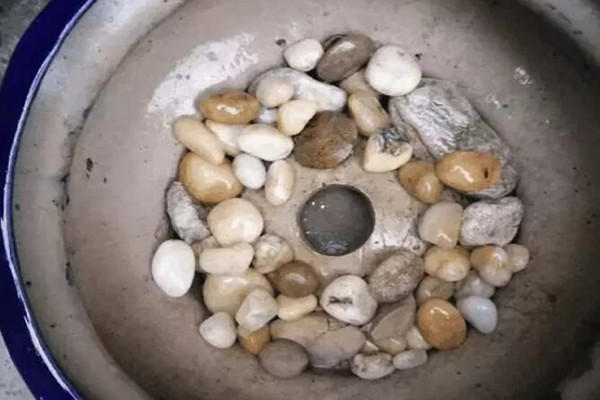
Put stones at the bottom of the pot, loose and breathable!
1. Stones picked up by the river or at a construction site can also be used at the bottom of the pot. Soak the stones you picked up in clean water for about 3 days, wash off the dirt on the stones, then take them out and dry them in the sun.
2. When repotting, directly place the dried stones at the bottom of the pot. A thin layer is enough. Do not put too many, otherwise it will be quite heavy when you move the flower pot later. The stones drain water and allow air through, so placing them at the bottom of the pot can prevent root rot!
Put cypress seed shells at the bottom of the pot, and root rot is hard to happen even if you want it!
1. When you usually go to the park or out in the wild, remember to pick up some cypress shells under the cypress trees. Remember to choose those on the ground that are completely dry and cracked. If they have already decayed and turned black, even better!
2. After picking the cypress shells and taking them home, dry them in the sun for 2-3 days, or directly heat them in a microwave for 3-5 minutes. After thorough sterilization and disinfection, directly place them at the bottom of the pot.
Put some rotten wood at the bottom of the pot, and the water drainage and air permeability are excellent!
1. When you usually go for a walk in the wild, you can pay a little attention. If there is that kind of rotten wood, hurry up and pick it up and take it home! Boil it in boiling water for 5 minutes, or add a little potassium permanganate and soak it for half an hour. After sterilization and disinfection, dry it for later use.
2. Rotten wood that has already decayed breaks apart with one squeeze. It can be directly placed at the bottom of the pot. This is a good thing for growing Dendrobium orchids. It can also be crushed and mixed into the soil. The effect is excellent either way!
Put some fruit shells at the bottom of the pot, and the flowers at home will never get root rot again!
1. Do not throw away the fruit shells after eating at home. Just collect them and put them at the bottom of the pot. Things like peanut shells, lychee shells, and edamame shells are all fine, but you must ensure there is not the slightest bit of salt. For edamame shells, it is best to boil them in clean water and use them after drying.
2. Directly placing fruit shells at the bottom of the pot can also achieve the purpose of water drainage and air permeability, and the flowers at home will never get root rot again!
Put some pinecones at the bottom of the pot, and the flowers at home will never get root rot again!
1. If you take advantage of the weekend to go play in the mountains, you can pick up some fallen pinecones under the pine trees. After taking them home, soak them in carbendazim for a few days to sterilize and disinfect them.
2. Just spread a layer of the washed and dried pinecones at the bottom of the flower pot. The pinecone particles are relatively large, so the gaps are also relatively large, thereby achieving the purpose of water drainage and air permeability.
Put some bricks at the bottom of the pot, and the flowers will grow more and more vigorously!
1. When you usually pass by a construction site, if you see bricks, you can directly pick them up and take them home. After smashing them with a small hammer, soak them in clean water for about 1 day. This can remove the alkalinity in the bricks and prevent root burn.
2. Take the bricks out and expose them to the sun to sterilize and disinfect them. After they dry, they can be directly placed at the bottom of the flower pot. Bricks about the size of a thumb placed at the bottom of the pot can exactly achieve the purpose of water drainage and air permeability, so the flowers will never get root rot again!
Put some coal cinders at the bottom of the pot, and the flowers will grow more and more vigorously!
1. Similar in effect to bricks, there is also coal cinder. Unfortunately, now rural areas do not allow coal burning, so coal cinders are hard to get. Smash the coal cinders you take home into pieces the size of a thumb, soak them fully in water, then put them in the sun to dry.
2. Use a sieve to screen out the large pieces of coal cinder and directly place them at the bottom of the pot. The water drainage and air permeability are excellent!
Put some gauze or window screen at the bottom of the pot, and soil will never leak out again!
1. If you have replaced window screens or gauze at home, you can trim them a little and use them as something to place at the bottom of the pot.
2. When repotting flowers, the gaps at the bottom of the flower pot always leak soil. Adding a layer of fine-mesh gauze can effectively avoid this problem!
Put some non-woven fabric or wet wipes at the bottom of the pot: drains water, allows air through, and does not leak soil!
1. When buying shoes at home, it is best to collect the non-woven fabric wrapping the shoes, cut it into small pieces, and directly place it at the bottom of the pot, or place a clean wet wipe at the bottom of the pot.
2. The non-woven fabric or wet wipe placed at the bottom of the pot has good water drainage and air permeability, will not break easily when pulled lightly by hand, and can also prevent soil from leaking down. It is very suitable for use at the bottom of the pot!