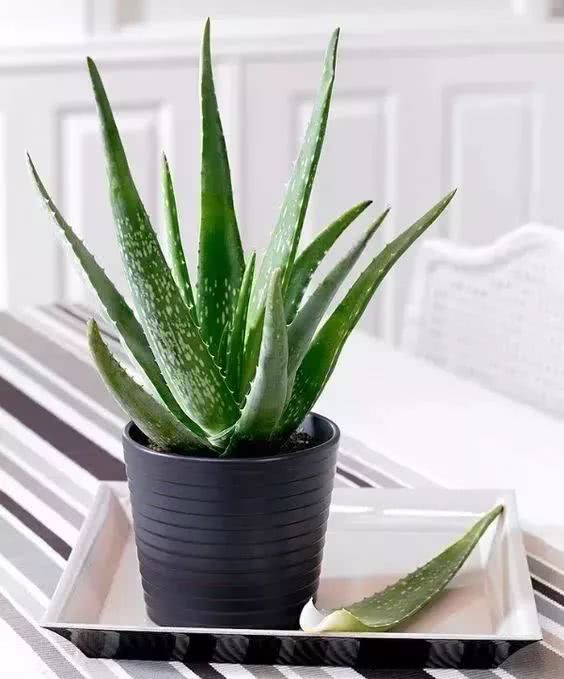
Grow an aloe vera at home: good for both medicine and ornamental enjoyment
Naodong Shouzuo
You have 40 friends following this official account!
When we talk about aloe vera
our first thought is "beauty"
But in fact, besides beauty
aloe vera can also help us solve many common minor ailments
With an aloe vera plant at home
good for both medicine and ornamental enjoyment, worth it!
"Medicinal benefits"
Aloe vera is a plant used both as medicine and as food. Traditional Chinese medicine holds that aloe vera is bitter and cold in nature, with effects of cooling the blood, brightening the eyes, clearing liver heat, relieving constipation, and strengthening the stomach. Many ordinary minor ailments can be solved with aloe vera!
Anti-inflammatory and antibacterial
Aloe vera has antibacterial and anti-inflammatory effects, so skin inflammation problems such as mosquito and insect bites can all be treated by applying aloe gel.
Heals wounds
Aloe vera also has strong effects of relieving pain, stopping bleeding, and promoting wound healing, and it does not leave scars. Applying fresh aloe juice to a wound has a pain-relieving and bleeding-stopping effect.
Oral health
Aloe vera contains vitamins and minerals, which can maintain the health of teeth and gums. In addition, aloe latex contains anthraquinone compounds. Gently biting the flesh of an aloe leaf with an aching tooth can treat and relieve toothache symptoms.
Nourishes blood vessels
Effective substances in aloe vera such as isocitrate calcium can strengthen the heart, promote blood circulation, soften hardened arteries, lower cholesterol levels, and dilate capillaries.
"Beauty benefits"
Reduces sun spots
Aloe vera has the effect of fading spots and can treat sunburn and sun spots. Regular use can not only make sun spots lighter, but freckles will also gradually fade.
Tips:
You can first test it on the inside of your wrist by applying aloe vera there, then wait half an hour to see whether it turns red. If there is no allergic reaction, you can apply it to your face.
Hydrates and moisturizes
Aloe vera's moisturizing function must be known to everyone by now. Many beauty products today contain aloe vera ingredients. Using fresh aloe vera to obtain aloe gel directly and using it as a wet compress has a very good moisturizing effect.
Apply the aloe gel exuded from a freshly cut aloe vera directly to the skin, then wash it off after ten minutes. With long-term persistence, the hydrating effect is remarkable.
"Lowers the three highs"
Aloe vera can be used both externally and eaten. Research has found that aloe vera is also beneficial for lowering blood sugar levels in diabetic patients or the risk of developing diabetes. When taken internally, it can improve blood quality and help lower cholesterol.
Aloe vera can be eaten; making a bowl of aloe sweet soup can also detoxify and nourish the skin. There are many varieties of aloe vera, but the most common edible one is Aloe vera (Curaçao aloe).
First peel the aloe vera, then use a small knife to cut open both ends of the aloe's serrated edges.
Then directly scrape it with a knife or spoon, and strips of white, tender flesh can be easily removed.
The method is also very simple: peel the aloe vera, cut the flesh into pieces, put them into water and bring to a boil, then add goji berries and rock sugar. You can also add red dates, white fungus, chrysanthemum, etc. according to your own taste and boil them together. Aloe mixed with yogurt also tastes good! However, aloe vera is a cold-natured food, so do not eat more than 15g at a time, about the amount of one strip of flesh.
Here is an extra bit of trivia: much of the aloe in dessert shops is a processed product made from aloe gel, made with peeled Aloe vera (Curaçao aloe) flesh plus some sweet-and-sour flavoring. Although it really does contain aloe, it only contains it. If you want to eat it, you might as well make it yourself with fresh aloe vera.
"Sleep-promoting benefits"
The scent released by aloe vera has a relaxing and mentally pleasant effect. Placing one pot in the bedroom can let you sleep soundly all night~
At night, aloe vera absorbs carbon dioxide indoors and can also purify carbon monoxide, sulfur dioxide, etc.~ Placing one pot is like installing a mini "biological air freshener," constantly helping your home circulate fresh air.
Grow a pot of aloe vera, this lazy person's plant, at home
Not only is it easy to care for, it can also be used in many ways
And it looks beautiful as an ornamental display!
Tips for growing aloe vera:
1. Soil selection:Choose loose, breathable sandy loam soil, preferably neutral soil. In such soil, aloe vera develops a strong root system and has strong absorption capacity.
2. Reasonable fertilization:Aloe vera is especially tolerant of poor soil, but in order to promote its growth and make it grow strong, a small amount of fertilizer should also be applied. The commonly used fertilizer is a compound fertilizer with an N-P-K ratio of 15-15-15. If the pot diameter is 25-35 cm and the height is 15-40 cm, applying 3-7g each time is enough, once every two months. Apply decomposed organic fertilizer once every half year, such as cake fertilizer, chicken manure, compost, etc., applying 0.5-1.0kg per pot. 3. Reasonable watering
3. Watering:Aloe vera originates from desert regions and is especially drought-tolerant, so the frequency of watering must be controlled. Do not water if it is not dry; when watering, water thoroughly. In spring, generally water once every 5-7 days; in summer, generally once every 3-5 days; in autumn, once every 6-8 days; in winter, once every 10-15 days. Generally speaking, this watering frequency is enough, but it should also be adjusted according to your actual situation.
4. Protect against freezing in winter:Aloe vera originated in the tropics and is typically fond of warmth and afraid of cold. Its suitable growth temperature is 25-30°C. When the temperature drops to around 5°C, aloe vera will stop growing, so some insulation measures should be taken, such as moving it indoors or covering it appropriately.
All the excitement, all in the Huayipai Youzan Mall
Flowers and love | Huayipai