The decade of agricultural loss: what exactly was lost?
By: DaDa
The rapidly appreciating yen brought soaring stock and property markets. In pursuit of virtual wealth, capital fled the real economy, leaving the Japanese economy with nothing but a lost decade. Today, what I want to explain to everyone is the Japanese bubble.
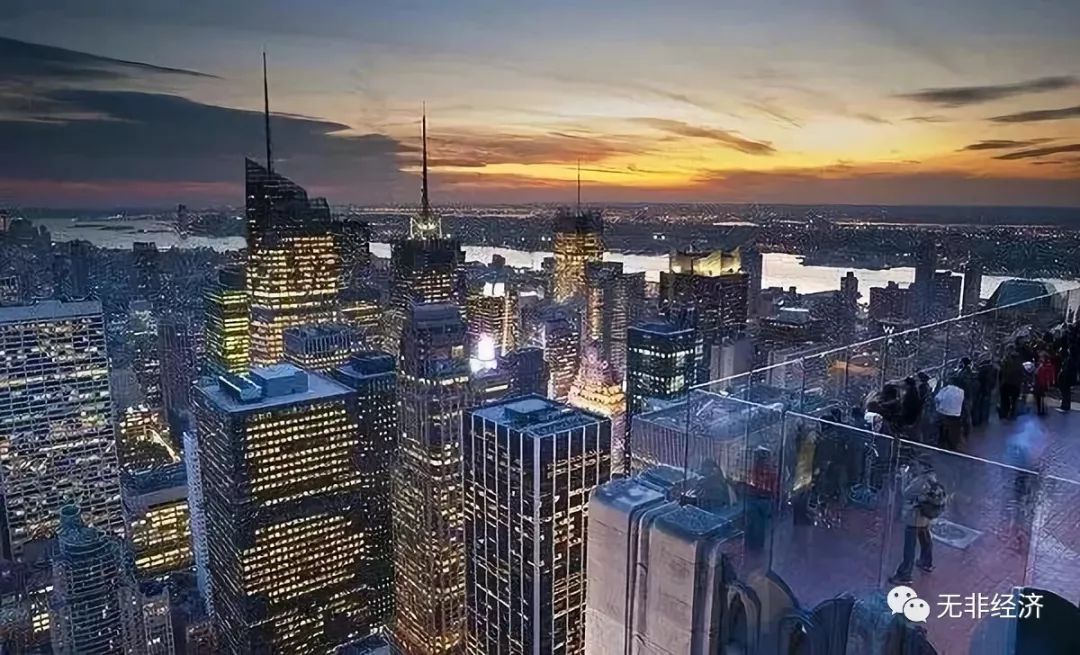
Rockefeller Center is located on Fifth Avenue in Manhattan, New York City. It is named after the American oil tycoon Rockefeller, and is one of America's landmark buildings and a symbol of wealth and power. However, in the 1980s, Rockefeller Center was acquired by Japan's Mitsubishi Corporation, and at the time some media exclaimed that Japan was invading.
This is the famous work "Sunflowers" by the Dutch painter Van Gogh. In March 1987, at a Christie's auction in London, a Japanese company paid nearly 40 million US dollars for this famous painting, setting a new auction record for a Van Gogh work, and the world was shocked. Between 1985 and 1990, the auction prices of many world-famous paintings were broken, and the buyers were almost all Japanese. This is merely a famous case of Japan's large-scale acquisition of overseas assets, and the direct reason Japanese residents and companies acquired overseas assets was the sharp appreciation of the yen, which began with a secret meeting in 1985.
On the morning of September 22, 1985, a Japanese official hurriedly boarded a plane to New York dressed in golf attire. He was Takeshita Noboru, then Japan's Minister of Finance. At the time, the Minister of Finance controlled fiscal taxation and finance, and was the core decision-maker in Japan's economic affairs. The purpose of Takeshita Noboru's trip was to attend an important international conference, whose participants also included the finance ministers of the United States, Germany, France and the United Kingdom. At the meeting, the finance ministers of the five countries reached a series of agreements, the most important of which was to jointly intervene in the foreign exchange market to make the US dollar depreciate in an orderly manner against major currencies. Because the meeting was held at the Plaza Hotel in New York, this agreement was called the Plaza Accord by the media. Before the Plaza Accord was signed, Japan had experienced more than 20 years of high-speed growth, and its total economic output had leaped to second place in the world. At the time, Japan relied on the cheap yen and superb craftsmanship to make products manufactured in Japan sell well around the world, becoming the largest trade surplus country at the time. Because large amounts of US dollars poured into Japan, Japan's foreign exchange reserves invested heavily in bonds. By 1985, Japan had replaced the United States as the world's largest creditor nation, while the US foreign trade deficit continued to expand. Therefore, the United States hoped to enhance the export competitiveness of American products through the depreciation of the US dollar and improve the US international balance of payments.
(The picture above shows Takeshita Noboru)
In less than three years after the Plaza Accord was signed, the yen seemed to ride a rocket, soaring from 1 US dollar to 250 yen all the way to 1 US dollar to 120 yen. At the time, Japan had already passed its golden decade and completed the National Income Doubling Plan. Under loose monetary policy, Japan's urbanization process accelerated significantly. The yen appreciated externally, and the domestic currency was loose, which directly drove a wave of investment at home and abroad in Japan. Large-scale acquisitions of assets overseas, and investment in the stock and property markets at home, made two super bubbles rise into the sky. The Nikkei stock index rushed from more than 10,000 points to more than 40,000 points, and the property market was even more boisterous. At the craziest time, the land value of Tokyo alone was equivalent to the total land value of the entire United States. In the clamor of asset bubbles and urbanization, the Japanese economy once again entered a period of high-speed growth, and the Minister of Finance Takeshita Noboru, who signed the Plaza Accord on behalf of Japan, also ascended to the post of Prime Minister in 1987.
Loose money brought inflation, and the Japanese government began to implement a tight monetary policy. Between 1989 and 1991, the Bank of Japan raised interest rates five times in a row and tightened credit to curb speculation. The two major bubbles burst in response. The stock market plunged by more than 70% between 1989 and 1990, and the property market also plunged by more than 70% between 1990 and 1992. The Japanese economy thus bid farewell to the era of high growth, and by then Takeshita Noboru was already powerless to turn things around. In 1989, he stepped down in disgrace because of a political scandal.
In 1995, due to poor management, Rockefeller Center, which had been acquired back then, was sold back to the Americans at half price; many of the famous paintings that Japanese people had acquired back then were shipped back to auction houses before their crates had even been opened. Around 1990 is called the turning point when the Japanese economy went from peak to decline. After that, Japan formed a model of low growth, low interest rates and high debt, which later generations called the decadent decade. Yet the large amounts of overseas assets purchased back then because of the yen's appreciation became a major pillar of the Japanese economy. Therefore, there is the saying of two Japans today. One is the long-term sluggish domestic Japanese economy, and the other is the continuous repatriation of income from Japanese citizens' overseas assets back to the homeland. To this day, the overseas assets owned by Japanese citizens and the income repatriated from them still rank first in the world.
For many years, the rise and burst of the Japanese economic bubble have puzzled people like a mystery. Some blame the yen's appreciation and capital outflow brought by the Plaza Accord, some interpret it as speculative capital and the burst of the bubble leading to decline after reaching the peak, and some believe this is simply the inevitable course of an economic development model.
That's the end of today's explanation. See you next time.