The wheat market is volatile: hold and watch for high-quality wheat, but sell low-quality wheat early
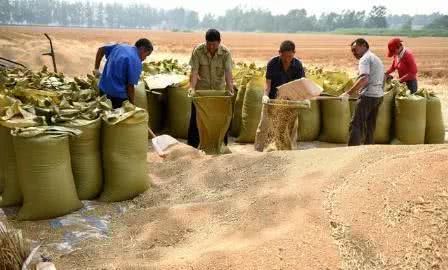
There has never been a fixed time for buying and selling grain, since the market is volatile and there are many influencing factors. Grain storage policies, international policies, the domestic environment and so on all have a major impact on grain prices. As for farmers, all they can do is choose a reasonable target price for themselves based on market prices and sell at the right moment.
This year, both the total output and the quality of wheat in China declined. Some media organizations estimate that the national wheat output in 2018 was 126.73 million tons, a decrease of 3.04 million tons from last year. Overall, the contradiction between the main supply and demand sides of the market has intensified, which helps push grain prices up. However, we must also note one situation: this year the market supply of high-quality wheat is lacking, while low-quality wheat is plentiful. Given that farmers' planting returns have already declined somewhat this year, the only way is to seize market timing and strive to sell for more money. Science Xingnong offers the following suggestions for your reference.
1. Sell low-quality wheat as soon as possible
This year, wheat in many places has become moldy, with toxin levels exceeding the standard. Not only are market prices low, but there is even a situation where selling grain is difficult. For this wheat, there is little point in storing it, since moldy or sprouted wheat has limited uses, market demand is low, and there is little room for price increases later. Being able to sell it at all is quite good.
2. High quality, high price - keep waiting on high-quality wheat
For the high-quality wheat that is scarce on the market this year, farmers can consider continuing to store it and hold on for a while. At any time, market demand for high-quality wheat is very great. Since this year's wheat came onto the market, prices for high-quality wheat have kept rising. Although the market occasionally adjusts, overall it remains relatively strong, and the overall price trend is positive.
Therefore, for high-quality wheat, everyone can choose to continue waiting for the right moment and sell at the right time, striving to sell at a high price. In terms of timing, Science Xingnong believes that September and the period before Spring Festival are two points worth considering.
Replace with a high-definition large image
September
September is a very delicate time. It is the last month of this year's market-support procurement, grain storage auctions are suspended, and market supply is entirely replenished by new wheat. You could say grain storage is competing with grain enterprises for grain. In addition, with the Mid-Autumn Festival and National Day holidays approaching, market demand for high-quality wheat becomes even more urgent. At the same time, September is also the start of the school term for traditional universities, colleges and secondary schools in China, a peak season for canteen flour demand. This series of positive factors all support the upward movement of wheat prices.
Spring Festival
Based on past patterns, the period before Spring Festival is often a peak period for wheat demand. After Spring Festival, work generally does not gradually resume until more than ten days after the holiday. Grain enterprises increase stockpiling before the holiday and operate at high capacity, so market demand for high-quality wheat is relatively high, supporting grain prices to continue rising.
The market is volatile, and storing wheat also involves a certain degree of difficulty and loss. If storage conditions are not very good, it may be more suitable to sell as soon as possible. Once stored improperly, even if wheat prices rise later, you may face a situation where prices rise but income does not increase.
This is Science Xingnong. You are welcome to follow us and learn together.
The original copyright of this article belongs to the Science Xingnong account, and infringement will be pursued.