Give pothos and Christmas cactus a bath every 7 days, and their leaves will be deep green and grow vigorously
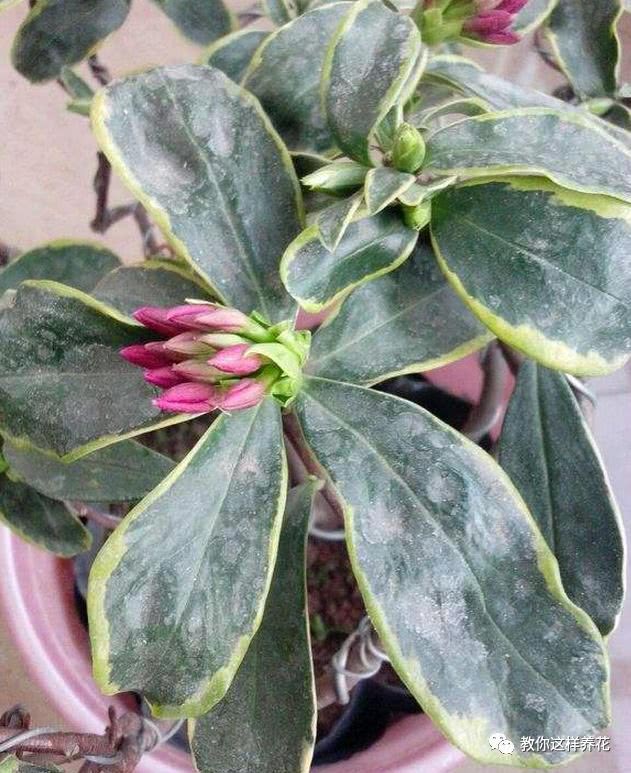
Many flower lovers grow plants, but many people don't pay attention: after growing flowers for a long time, a thin layer of dust accumulates on the leaves. If there are industrial factories, mines, or construction dust nearby, the dust will be even thicker. After dust accumulates on the leaves, many people will find that pothos and spider plants not only grow slowly, but also easily turn yellow, and the dirty leaves also affect their appearance. If you can give the flowers a bath regularly, you will find that the leaves grow much better. Let's take a look!
“
Dust accumulating on leaves
”
-Cleaning plant leaves-
If dust on the leaves sticks to the leaf surface for a long time, it will clog the leaf stomata, reduce the efficiency of photosynthesis, and prevent the leaves from absorbing moisture from the air well, leaving them without much vitality. Not only that, dust also makes flowers look dusty and dirty, and after watering they become even more stained and look very unsightly. So generally, people regularly give the flowers a bath.
For large-leaved flowers, such as pothos, Aspidistra elatior (cast iron plant), Monstera deliciosa (Swiss cheese plant), Ficus elastica (rubber tree), Dracaena fragrans (corn plant), Clivia miniata (clivia), Spathiphyllum (peace lily), Pachira aquatica (money tree), Calathea species, Philodendron species, Codiaeum variegatum (croton), Hippeastrum (amaryllis), and so on, you can first spray them with water to remove most of the dust, then hold the back of the leaf with your hand and gently wipe the leaf surface clean with a soft wet cloth. These flowers are relatively easy to clean, and generally cleaning once every seven days to half a month is enough.
If the leaves are relatively small and not suitable for wiping with a cloth, such as Asparagus setaceus (asparagus fern), Asparagus cochinchinensis, Cycas revoluta (sago palm), Dypsis lutescens (areca palm), and so on, you can directly rinse them with sprayed water, taking care not to use too much force. You can also use a pressure spray bottle to spray-wash them. After spraying, pay attention to ventilation to let the moisture dissipate. Once a week is enough.
Many flowers have fuzzy leaves, and if residual water remains, the leaves easily rot; if water remains in the leaf center, the leaf center easily rots, such as Calceolaria, Sinningia speciosa (gloxinia), Begonia, Kohleria, Gerbera jamesonii (Gerbera daisy), and so on. These flowers cannot be rinsed with clean water; instead, use a soft brush or air blower to sweep away the dust on the leaf surface.
Succulents are rather special and cannot be washed casually, especially some succulents with a waxy powder coating. After rinsing, it is hard for them to recover, making the succulent leaves look unsightly.
Generally speaking, if there is no white powder coating, relatively smooth-leaved succulents can be directly rinsed with water, but note that you should use an air blower to dry off residual water, and do not place them in a sunny spot. It is best to put them in a cool, ventilated place, or choose a cloudy, ventilated day, first blow-dry most of the moisture. If there is sun and small water droplets remain on the leaves, it can easily act like a convex lens focusing sunlight and burn the leaf surface.
If the succulent leaves have a white powder coating or fuzz, generally just use an air blower to blow away the dust.
Cleaning flower leaves is generally done together with watering; after rinsing, it is equivalent to watering once. Besides normal cleaning with water, many flower lovers also add something to the water to rinse or wipe plant leaves, and find that the leaves become more and more emerald green and shiny!
-Wiping with beer-
Keep a little beer from what you drink at home, dilute it 10 times and use it to wipe leaves. Beer is rich in B vitamins, amino acids, phosphates, sugars, and so on, and some of the small-molecule substances can be directly absorbed by the leaves, benefiting flower growth. For plants with thick, substantial leaves such as Clivia miniata (clivia) and Ficus elastica (rubber tree), you can also regularly wipe the leaf surface with beer, or spray it with a pressure bottle, which can make the leaves glossy and add luster.
-Wiping with rice vinegar-
Rice vinegar is rich in nutrients such as amino acids, organic acids, and vitamin B1. After wiping the leaves, it allows the leaves to absorb these nutrients and improves the efficiency of photosynthesis, making them greener and shinier! Generally, dilute it 100 times with water and stir, then use a soft towel or cotton cloth dipped in the rice vinegar solution to gently wipe both the front and back of the leaves once.
-Wiping with wood ash water-
Flower lovers in rural areas may be more familiar with wood ash. Wood ash is the residue after plants are burned, and contains the mineral elements contained in plants as well as a large amount of potassium. During the flowering and fruiting period, spraying a little can help increase the fruit-setting rate, increase the sweetness of the fruit, and speed up the ripening time. It can also make flowers such as spider plants more upright and spirited. In addition, it also has a certain effect in preventing pests such as aphids and red spiders. Wood ash is alkaline and must not be mixed with acidic fertilizers or pesticides.
Dilute wood ash with 10 times its amount of water, then spray the leaf surface with a pressure bottle.
Give the leaves a bath regularly
It turns out the effect is so good
You should try it too
Show it to flower lovers who need it!