What plants should you keep in the living room to better show the host's taste?
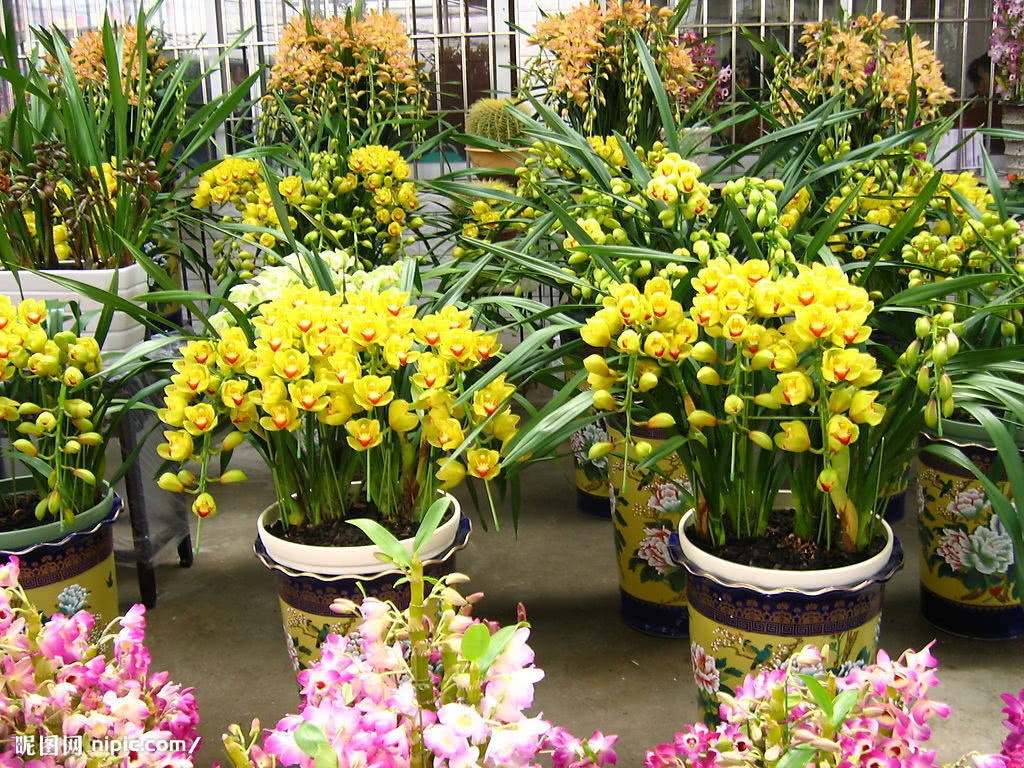
Many people like to place some green plants in their living room at home, so what plants are best to put in the living room? Since ancient times, plum blossoms, orchids, bamboo and chrysanthemums have always been the ink paintings under the pens of literati and the verses chanted on their lips, full of noble purity and incomparable beauty, so placing orchids in the living room also fully displays the host's taste. The orchid's elegant posture and its fragrant, flowing flowers can also nicely accent the space, creating a visually striking enjoyment. Orchids on the market today come in all shapes and colors; whether it is a single-stemmed clivia (Clivia miniata) or a phalaenopsis (Phalaenopsis) with flowers covering every stem, both are very suitable for creating a space, and the plants' auspicious meanings can also bring the host good fortune, with out of the worst and into the best.
Alocasia (Alocasia macrorrhizos), also known as "Dishui Guanyin," is a kind of green potted plant, and it is now grown in very many households, which is very beneficial to one's health. Especially for some elderly people, watering flowers and keeping some green plants when they have nothing to do is of great benefit to the body and can also add pleasure to life. When conditions reach the right moment, water will slowly drip from the leaf tips or leaf edges of the Alocasia, just like Guanyin's jade vase, benefiting the world; the peaceful meaning it brings is probably one of the reasons it is sought after. The flowers of the Alocasia are always half-hidden among the green leaves, making it a very suitable ornamental plant.
Lucky bamboo (Dracaena sanderiana) has never lost its popularity over the past more than ten years. If there is an exam candidate in the family, a pot must be placed, as its meaning of "rising higher step by step" has a very special significance. Bamboo is the gentleman among flowers, noble in character, and doing things with a well-thought-out plan.
Lucky bamboo can be grown either in water or in a pot. By comparison, pot cultivation lasts longer than water cultivation, grows more vigorously and is easier to manage. Lucky bamboo is a shade-loving plant and rarely blooms; if it blooms, it represents that it can bring you good luck. It grows easily and vigorously, with upright stems and dark green leaves, staying evergreen in winter and summer. Whether potted or cut stems are placed in a bottle, or processed into "fortune bamboo" or "curved bamboo," it all appears sparse, upright and noble, with slender stems and leaves, soft and elegant, with a natural and unrestrained posture, full of bamboo charm, and extremely high ornamental value. The beauty of lucky bamboo is inseparable from its auspicious name. It has slender and graceful leaves with emerald green color, and its stem nodes show a feature resembling bamboo joints. In China there is the congratulatory phrase "when flowers bloom, prosperity comes; when bamboo is reported, peace arrives." Because lucky bamboo has slender stems and leaves, is soft and elegant, and is extremely rich in bamboo charm, it is very much loved by people. Lucky bamboo is extensively managed, has few pests and diseases, is easy to cultivate, and also symbolizes "great fortune and great profit."
The plants placed in the living room should usually be mainly medium and small potted plants or flower arrangements, avoiding the choice of large potted plants, so as not to easily attract mosquitoes and create a sense of pressure. For special festival activities, a short-term arrangement can be made. Families busy with work on ordinary days can choose green foliage plants to relieve stress, and on holidays and leisure days they can change to more colorful flowers and leaves for decoration.